

Daily Dose Of Jazz…
Robert Falk was born in Paris, France on September 22, 1953 but soon moved to Brussels, Belgium where he studied guitar at the Université Libre de Bruxelles. He started playing folk-music, then jazz-rock before getting interested in computer-aided musical composition.
He played in several bands in the 80’s such as Spring with Michel Delory and François Garny, and Falklands with Alain Rochette and Sam Mc Kinney. In 1989 he visited Zaire giving him the opportunity to get acquainted with African music.
He became active as a producer-arranger for various African artists in the Nineties and has produced Embowassa, Dominic Kakolobango, Malick Pathé Sow & Welnere, and early in the new century Diariyata and Pas Mal +.
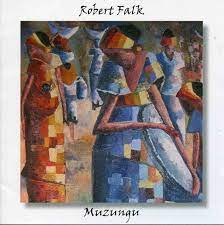
He recorded and released his debut album Muzungu as a leader in 2006 featuring his afro-jazz compositions. Mixing intello jazz with african rythms that mainly come from the Congo, Rwanda and Burundi.
His sophomore project is afro-jazz centered around West~African music but includes Brazilian influences as in a congolese samba. It is titled Xelu Sowu, which translates to The Spirit of the West in wolof.
Guitarist and composer Robert Falk continues to perform and record.
More Posts: bandleader,composer,guitar,history,instrumental,jazz,music

Daily Dose Of Jazz…
Sir John Phillip William Dankworth was born on September 20, 1927 in Woodford, Essex, England. He grew up within a family of musicians and attended Selwyn Boys’ Junior School and later Sir George Monoux Grammar School. Prompted by hearing a Benny Goodman Quartet album at 16, before settling on the clarinet he took violin and piano lessons. Soon afterwards he was inspired by Charlie Parker and learned to play the alto saxophone.
Beginning his career on the British jazz scene after studying at London’s Royal Academy of Music and then national service in the Royal Air Force, during which he played alto sax and clarinet for RAF Music Services. By 1947 he was working on the Queen Mary in Bobby Kevin’s band, and in London with Les Ayling. Through the rest of the decade he performed with Tito Burns, with Charlie Parker at the Paris Jazz Festival, and a tour of Sweden with Sidney Bechet. In 1949, Johnny was voted Musician of the Year.
The Fifties saw him forming a small group, the Dankworth Seven, as a vehicle to showcase his writing as well as several young players, Jimmy Deuchar, Eddie Harvey, Don Rendell, Bill Le Sage, Eric Dawson, Tony Kinsey and Frank Holder. also sang and recorded with this ensemble. Forming his big band in ‘53 and Cleo Laine was now a regular voice on appearances and recordings.
The band came to the States and performed at Newport, Birdland had Louis Armstrong sit in for a set and shared several stages with the Duke Ellington Orchestra. In 1959, John became chair of the Stars Campaign for Inter-Racial Friendship, set up to combat the fascist White Defence League.
The following decades saw him working and recording with numerous American and British jazz musicians, began composing for film and television, and received commissions all while performing live and on the radio.
As an educator his enthusiasm for jazz education led him to run for many years the Allmusic summer schools at the Stables in Wavendon and from 1984 to ‘86 he was a professor of music at Gresham College in London, where he gave free public lectures.
He was awarded an Honorary Doctorate of Music from Berklee College of Music, was made a Knight Bachelor in the 2006 New Year’s Honours List, and was made a Commander of the British Empire (CBE). In 2009 he fell ill and while he had to cancel several concerts he made one last appearance in December.
Saxophonist, clarinetist, composer, educator John Dankworth, who along with his wife Dame Cleo were one of a few couples to hold British titles, transitioned on February 6, 2010 at the age of 82, on the afternoon before a show celebrating the 40th anniversary of the foundation of The Stables.
Confer a dose of a Woodford saxophonist to those seeking a greater insight about the musicians around the world who are members of the pantheon of jazz…
More Posts: bandleader,clarinet,composer,educator,history,instrumental,jazz,music,music director,saxophone
Daily Dose Of Jazz…
Rodney Charles Levitt was born on September 16, 1929 in Portland, Oregon and studied composition at the University of Washington, where he took his BA in 1951.
He was in the Radio City Music Hall orchestra from 1957 to 1963, and during those years he performed with Dizzy Gillespie, Ernie Wilkins, Kai Winding, and Sy Oliver. In 1959 Rod worked with Gil Evans when his orchestra accompanied Miles Davis. The following year he played with Gerry Mulligan and Mundell Lowe, with Quincy Jones in ‘61, and with Oliver Nelson in 1962.
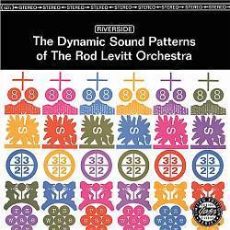
He recorded four albums as a leader of an octet between 1963-66 and continued to work with this combination into the 1970s, when he played with bassist Chuck Israels.
Later in his career he worked with Cedar Walton and Blue Mitchell, and wrote music for commercials with a company he ran from 1966-1989. The late Seventies saw him teaching at Fairleigh Dickinson, Hofstra University, CUNY, and Hunter College.
Trombonist, composer, and bandleader Rod Levitt transitioned from Alzheimer’s disease in Wardsboro, Vermont at the age of 77 on May 8, 2007.
More Posts: bandleader,composer,history,instrumental,jazz,music,trombone
Daily Dose Of Jazz…
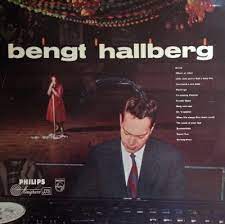
Bengt Hallberg was born on September 13, 1932 in Gothenburg, Sweden and studied classical piano from an early age. He wrote his first jazz arrangement at the age of 13. By 15 he recorded his first record as a member of a group led by bassist Thore Jederby and in 1949 he recorded with the Swedish alto saxophonist Arne Domnérus for the first time. The two musicians continued to play together for several decades.
During the Fifties, Bengt played with leading visiting American musicians tenor saxophonist Stan Getz and altoist Lee Konitz in 1951, and trumpeters Clifford Brown and Quincy Jones in 1953. During the same period he worked with Swedish baritone saxophonist Lars Gullin.
Hallberg had a versatile style and in his later years he wrote music for film and television, as well as choral arrangements. With Domnerus and Georg Riedel among others, he participated in the Jazz at the Pawnshop sessions in 1976.
Pianist, composer and arranger Bengt Hallberg, who also played accordion, transitioned on July 2, 2013 from congestive heart failure at the age of 80 in Uppsala, Sweden.
More Posts: arranger,bandleader,composer,history,instrumental,jazz,music,piano
Daily Dose Of Jazz…
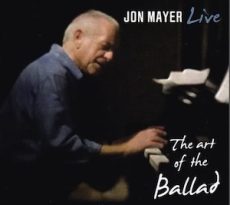
Jon Mayer was born September 7, 1938 in New York City and grew up in the fertile modern jazz evolution. Learning piano in childhood he confidently expresses strong emotions in his playing.
He also spent time in the Thad Jones-Mel Lewis Band as well as on the road with Dionne Warwick, Sarah Vaughan, Anita O’Day and Manhattan Transfer. Mayer’s compositions have been recorded by Les McAnn, Barry White’s Love Unlimited Orchestra, Nancy Wilson, Gladys Knight, Ernie Watts and Jackie Ryan.
He has recorded eleven albums as a leader and two as a sideman, Strange Blues with Jackie McLean and Like Sonny with John Coltrane.
Pianist and composer Jon Mayer continues a career as a performer.
More Posts: bandleader,composer,history,instrumental,jazz,music,piano