

Three Wishes
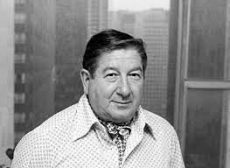
While the Baroness was in conversation with Teo Macero he was asked by her what three wishes he would make if given. He told her:
- “Peace of mind.”
- “To change the status of jazz. That is, to get rid of the stigma attached to jazz music. You know. A jazz musician is regarded as some kind of freak! This is something that has bugged me for a long, long time. Like, someone will come up to me and say, “Oh, so you’re a jazz musician?” And when I say< “Yes. A jazz musician and a composer,” they will look at me altogether differently. It would be marvelous if jazz musicians could be given a status equal to that or great figures of contemporary music.”
- “To have no problems with people recording. No problems in the studio.”
*Excerpt from Three Wishes: An Intimate Look at Jazz Greats ~ Compiled and Photographed by Pannonica de Koenigswarter

More Posts: baroness,composer,history,instrumental,jazz,music,pannonica,producer,saxophone,three,wishes

DEMETRIUS NABORS
Pianist, composer, producer and arranger Demetrius “Krayon” Nabors is well known and in demand in the Detroit area and on the national contemporary jazz scene. He is a two-time Detroit Music Award Winner in the Outstanding Gospel/Christian Musician category.
His considerable talents caught the attention of numerous high-profile national artists, including R&B singer KEM, flutist Althea Rene, guitarist Tim Bowman and trumpeter Willie Bradley.Demetrius’ productions for these artists have garnered Billboard chart successes: #1 for KEM’s single “Nobody” (2014), #2 for Willie Bradley’s “It’s On Now” (2020) and #5 for Althea Rene’s “Barbara Mae” (2019). In addition, “Nobody” was nominated for the Best Traditional R&B Performance at the 57th Grammy Awards in 2014. Demetrius’ discography includes four critically acclaimed releases, “The Journey Within Part I” (2011), “Christmas with Krayon” (2012), “The Journey Within Part II” (2014) and “Perseverance” (2021). His latest, “Evolution” is set to be released in September of 2022 and was inspired by his graduate studies at the University of Michigan.
More Posts: adventure,arranger,club,composer,festival,genius,jazz,music,piano,preserving,producer,travel
Daily Dose Of Jazz…
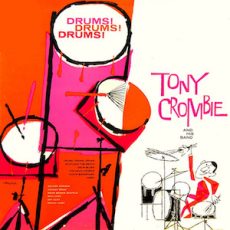
Tony Crombie was born Anthony John Kronenberg on August 27, 1925 in London, England’s East End Jewish community. A self-taught musician, he began playing the drums at the age of fourteen. He was one of a group of young men from the East End of London who ultimately formed the co-operative Club Eleven bringing modern jazz to Britain. He went to New York with his friend Ronnie Scott in 1947, witnessing the playing of Charlie Parker and Dizzy Gillespie, he and like-minded musicians such as Johnny Dankworth, and Scott and Denis Rose, brought be-bop to the UK. This group of musicians were the ones called upon if and when modern jazz gigs were available.
In 1948, Crombie toured Britain and Europe with Duke Ellington, who had been unable to bring his own musicians with him, except for Ray Nance and Kay Davis. Picking up a rhythm section in London, he chose Crombie on the recommendation of Lena Horne, with whom Crombie had worked when she appeared at the Palladium.
By 1956 Tony temporarily left jazz to set up a rock and roll band he called The Rockets, modeling themselves after Bill Haley’s Comets and Freddie Bell & the Bellboys. They released several singles for Decca and Columbia. He is credited with introducing rock and roll music to Iceland, performing there in 1957.
The next year the Rockets had become a jazz group with Scott and Tubby Hayes. During the following year, Crombie started Jazz Inc. with pianist Stan Tracey. During the Sixties he scored for television and film and established a residency at a hotel in Monte Carlo. He toured the UK with Conway Twitty, Freddy Cannon, Johnny Preston, and Wee Willie Harris.
In the early 1960s, Crombie’s friend, Victor Feldman, passed one of his compositions to Miles Davis, who recorded the piece on his album Seven Steps to Heaven. The song, “So Near, So Far”, has been recorded by players including Joe Henderson, who named a tribute album to Miles Davis using the title.
Over the next thirty years, Crombie worked with many American jazz musicians, including Ben Webster, Coleman Hawkins, Illinois Jacquet, Joe Pass, Mark Murphy and Eddie “Lockjaw” Davis.
After breaking his arm in a fall in the mid-1990s he stopped playing the drums, but continued composing until his death. Drummer, pianist, vibraphonist, bandleader and composer Tony Crombie, was regarded as one of the finest English jazz drummers and bandleaders, transitioned on October 18, 1999, aged 74.
More Posts: composer,drums,history,instrumental,jazz,music,piano,vibraphone

Daily Dose Of Jazz…
Peter John King was born on August 11, 1940 in Kingston upon Thames, Surrey, England. He took up the clarinet and saxophone as a teenager, entirely self-taught. His first public appearances were in 1957, playing alto in a trad jazz group at the Swan Public House in a group organized by trumpeter Alan Rosewell. After the performance he chose to be a professional musician. He came under the strong musical influence of Charlie Parker developing a bebop style inspired by Parker.
In 1959, at the age of 19, he was booked by Ronnie Scott to perform at the opening of Scott’s club in Gerrard Street, London, England. In the same year, he received the Melody Maker New Star award. He worked with Johnny Dankworth’s orchestra from 1960 to 1961, and went on to work with the big bands of Maynard Ferguson, Tubby Hayes, Harry South, and Stan Tracey, the Brussels Big Band, and the Ray Charles band on a European tour.
He played in small groups with musicians such as Philly Joe Jones, Zoot Sims, Al Cohn, Red Rodney, Hampton Hawes, Nat Adderley, Al Haig, John Burch, Bill Watrous, and Dick Morrissey, Tony Kinsey, Bill Le Sage, Jimmy Witherspoon, Joe Williams, Jon Hendricks, and Anita O’Day. His musical curiosity led him to associate with freer idioms in John Stevens’ ‘Freebop’ group in the 1980s. He appeared on the soundtrack of the 1969 film The Italian Job. He was a member of the Charlie Watts Tentet.
From the early 1990s, his style matured and flourished as an improviser and a composer. He found ways to combine jazz and classical techniques without diluting either and he recorded the results on his albums Tamburello, Lush Life and Janus with the Lyric String Quartet.
He won the BBC ‘Musician of the Year’ award, appeared in the documentary film, No One But Me, discussing jazz vocalist Annie Ross and appeared in the movies Blue Ice and The Talented Mr. Ripley. His autobiography Flying High was widely praised for its candour and honesty about his musical career and personal life, his international associations in the jazz world, and the many years in which he battled addiction. Saxophonist, clarinetist and composer Peter King transitioned on August 23, 2020 in Putney, South London, England at 80.

Daily Dose Of Jazz…
Thomas Robert Talbert was born on August 4, 1924 in Crystal Bay, Minnesota and grew up listening to big band music on the radio. He learned to play piano before he became a composer. He got started as a band leader when he was drafted in the Army in 1943, becoming composer for a military band at Fort Ord, California, performing for War Bond drives throughout California.
In the late 1940s he led his own big band on the West Coast, much of his work foreshadowing what became known as West Coast jazz. During the decade in Los Angeles he worked with Johnny Richards, Lucky Thompson, Dodo Marmarosa, Hal McKusick, Al Killian, Art Pepper, Steve White and Claude Williamson…….
Moving to New York in the early 1950s after being denied a recording contract in Los Angeles, California he worked with Marian McPartland, Kai Winding, Don Elliott, Johnny Smith, Oscar Pettiford, Herb Geller, Joe Wilder, Eddie Bert, Barry Galbraith, Aaron Sachs and Claude Thornhill. In 1956, Talbert recorded two records that would become his best known works, Wednesday’s Child and Bix Duke Fats, which gained him fleeting fame.
When rock and roll eclipsed jazz in popularity, in 1960 he moved to his parents’ home in Minnesota. He tried his hand at cattle ranching in Wisconsin but eventually moved back to Los Angeles and a musical career in 1975. As a sideman he recorded with the Boyd Raeburn Orchestra, Johnny Richards, and Patty McGovern.
In addition to composing for TV and movie studios, he became involved in music education, and set up a foundation to help talented young musicians, with one of the first recipients in 1996 was Maria Schneider.
Pianist, composer and band leader Thomas Talbert, who recorded eighteen albums as a leader, transitioned on July 2, 2005 in Los Angeles.
More Posts: bandleader,composer,history,instrumental,jazz,music,piano