

Daily Dose Of Jazz…
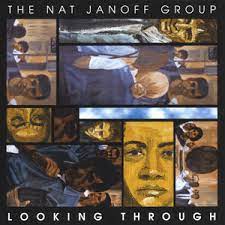
Nat Janoff was born on July 13, 1970 in New Jersey and began his musical education on the piano before switching to bass. After hearing Eddie Van Halen he settled on the guitar. Growing up in the 80’s his musical interests were all things rock and metal and soon earned a reputation for being one of the best shred guitarist in the area. However, seeking a platform to improvise longer than a standard rock riff led him to jazz and hearing the Mahavishnu Orchestra’s Birds of Fire for the first time.
He pursued jazz earning his Bachelor of Music degree in Jazz Performance from William Paterson University in 1996 and set to work forging his own musical path.
Recording his debut album, Looking Through, he enlisted the talents of electric bassist, Matthew Garrison and drummer Gene Lake, that showcased him as a player and a composer. Two more albums as a leader followed, a live acoustic date and a studio session, then contributing to the ESC tribute album Mahavishnu Redefined II.
In addition to playing with his own groups, Janoff has performed with Joe, David “Pic” Conley, Norman Simmons and drummer Victor Jones’ group Culturversy, Debelah Morgan, and Roland Clark.
Guitarist, composer and educator Nat Janoff teaches guitar privately, has been a guest instructor at the annual William Paterson University summer jazz camp, and continues to perform and record.

More Posts: bandleader,composer,educator,guitar,history,instrumental,jazz,music
Daily Dose Of Jazz…
Kenneth John Moule was born on June 26, 1925 in Barking, Essex, England and was the only child of Frederick and Ethal Moule. Surviving an early childhood illness, left him with a cadaverous look which went well with his ridiculous sense of humor.
In the Forties Moule played piano with the Johnny Dankworth Quartet before leaving to join Oscar Rabin in 1945. He would go on to perform with Remo Cavalotti for a summer season and Joe Daniels before working on the Queen Mary in Bobby Kevin’s Band, with Ronnie Scott and Johnny Dankworth. He closed out the decade working with several bands including Jiver Hutchinson, Bert Ambrose, Frank Weir and Ken Mackintosh.
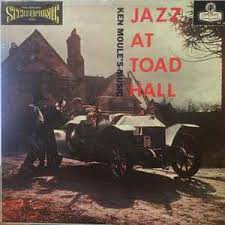
During the early 1950s Ken worked with Raymonde’s Orchestra, again with Ambrose and then with Frank Weir on several occasions. 1954 saw him form under his own name a septet, which was comprised of two-tenor, baritone, trumpet and three rhythm group. He resigned from the septet in 1955 and from 1956–1959 he arranged for Ted Heath’s orchestra. During this time he composed the suite Jazz at Toad Hall, and was released on Decca Records in 1958. He worked in Sweden and toured Europe with Kurt Weill’s Band until 1960.
The 1960s saw his return to England and worked freelance as an arranger, especially with Lionel Bart. He was the musical director for the shows Fings Ain’t Wot They Used T’Be and Twang!!. From 1962 he broadcast regularly with his 15 piece orchestra, and later broadcasted and recorded with a larger band called The Full Score. His Adam’s Rib Suite was recorded by the London Jazz Chamber Group in 1970 with Kenny Wheeler on the recording issued on Ember Records.
He scored Cole Porter songs for the musical Cole! performed at the Mermaid Theatre in 1974, and worked with Dankworth again around that time with his London Symphony Orchestra collaborations. He worked out of Germany for part of the 1970s before ill health caused him to move to the warmer climate of Spain.
Pianist, composer and arranger Ken Moule transitioned in Marbella in January 27, 1986, aged 60.

More Posts: arranger,bandleader,composer,history,instrumental,jazz,music,piano

Daily Dose Of Jazz…
Guy Eugène Hilarion Pedersen was born on June 10, 1930 in Grand-Fort-Philippe, France. Coming from a family of popular musicians, their story begins in 1855 with all members of his maternal family being fiddlers from father to son. His uncles and his grandfather played all the balls of the region and his great-grandfather composed Tiger Rag, a jazz standard.
He began studying music theory around 1943 at the age of 13, taking free lessons at the Roubaix conservatory until 1952. Already passionate about jazz, he listened to Hugues Panassié ‘s radio broadcasts and bought his first American records by Charlie Parker, Thelonious Monk, and Lee Konitz. In 1950 he won the prize for best double bass player at the Brussels, Belgium competition, then Jazz Hot in Paris, France and decided to become a musician.
Beginning in Paris with singer Fats Edward, he went on to play with pianist Henri Renaud and drummer Jean-Louis Viale at Tabou, and at Ringside founded by Sugar Ray Robinson. Guy followed this working with Jacques Hélian and Claude Bolling to learn the trade of a large orchestra. From 1955 to 1966, he was a member with drummer Daniel Humair of one of Martial Solal trios, recording the historic Jazz à Gaveau in 1962.
Pedersen and Humair then joined the Swingle Singers to record the group’s second album. They traveled around the world with them, even passing through the White House in 1966. By 1973 he was touring with Baden Powell, recording over a dozen records with him. Between 1973 and 1980, he recorded seven albums and toured frequently with Jean-Christian Michel .
Leading an active career as a studio musician during this period he also appeared on television variety shows accompanying the group Les Troubadours. The late Sixties saw him composing, writing a lot of music for short films. Some of his recordings on Tele Music and Montparnasse 2000 are now cult, especially among disc jockeys.
A serious heart attack in 1977 sidelined the bassist from music and retiring permanently, he became a professional antique dealer. Double bassist, composer and antique dealer Guy Pedersen transitioned on January 4, 2005 in Rueil-Malmaison, Hauts-de-Seine, France at the age of 74 years old.
More Posts: bandleader,bass,composer,history,instrumental,jazz,music
Daily Dose Of Jazz…
Mick Hutton was born on June 5, 1956 in Chester, United Kingdom. Making a name for himself in the British jazz scene, he worked with a number of musicians and groups including but not limited to Harry Beckett, Julian Argüelles, Iain Ballamy, Django Bates and Ken Stubbs of First House, the Chris Biscoe Sextet and Bill Bruford’s Band Earthworks.
A hand injury forced Mick to abandon the upright bass and he started working as bass guitarist, percussionist, and synthesizer player and as a composer. He works with his own band of saxophonist Andy Panayi, pianist Barry Green, and drummer Paul Robinson. With his quartet, including saxophonist Iain Ballamy, pianist Ross Stanley and drummer Paul Robinson, he frequently visits venues around the world.
Throughout his career Hutton has performed with Alan Barnes, Peter Erskine, Tina May, Jim Mullen, John Scofield, Alan Skidmore, Tommy Smith, John Taylor, Stan Tracey, and Kenny Wheeler. In 2002 he recorded on Robin Williamsons album Skirting the River Road, and the same year he played in a trio with Martin Speake and Paul Motian, recording Change of Heart.
Bassist, guitarist, percussionist and composer Mick Hutton, who also plays synthesizer, continues to perform and record.
More Posts: bass,composer,guitar,history,instrumental,jazz,music,percussion,synthesizer
Daily Dose Of Jazz…
Harry Alexander White was born on June 1, 1898 in Bethlehem, Pennsylvania. As a teenager, he played drums, then switched to trombone after moving to Washington, D.C. around 1919. In the early Twenties he played with Duke Ellington, Elmer Snowden, and Claude Hopkins. Then in 1925 he formed the family band called the White Brothers Orchestra, which played the mid-Atlantic states for several years with regular gigs in New York City and Philadelphia, Pennsylvania.
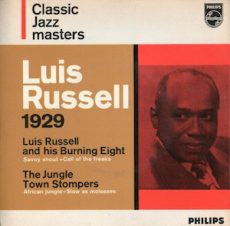
Late in the 1920s, he played with Luis Russell, then joined the Mills Blue Rhythm Band in 1931. The following year he joined Cab Calloway’s orchestra, working as an arranger and composer in addition to his duties on trombone. One of Calloway’s trumpeters, Edwin Swayze, overheard Harry use the term “jitterbug”, and wrote a tune called The Jitterbug. Calloway’s 1934 recording of the song brought the term into widespread currency.
Returning to play with Russell in 1935 when the band was backing Louis Armstrong, he eventually quit playing for part of the Thirties decade. He would later perform with Manzie Johnson, Hot Lips Page, Edgar Hayes, and Bud Freeman.
Trombonist, pianist, saxophonist, arranger and composer Harry White, who was affectionately known as Father White, transitioned on August 14, 1962 in New York City.
More Posts: arranger,bandleader,composer,history,instrumental,jazz,music,piano,saxophone,trombone