


Daily Dose Of Jazz…
Fred Van Hove was born on February 19, 1937 in Antwerp, Belgium. He studied musical theory, harmony, and piano, beginning his association with saxophonist Peter Brötzmann in 1966, playing on his early quartet and sextet recordings including 1968’s Machine Gun album. He then was a part of a trio with Brötzmann and drummer Han Bennink.
A pioneer of European free jazz he is a pianist, accordionist, church organist, and carillonist, an improviser and a composer. He has performed in a variety of duos and as a solo artist, notably with saxophonists Steve Lacy and Lol Coxhill and with trombonists Albert Mangelsdorff and Vinko Globokar.
He has composed for film and theatre and taught local musicians in Berlin, Germany, as well as holding workshops in Germany, France, England, Belgium, and the Netherlands. Fred has held studios at the University of Lille III, has collaborated with a number of his fellow Belgian musicians and in 1996 was given the title of Cultural Ambassador of Flanders by the Belgian government. Pianist, improviser, and composer Fred Van Hove, who also played the accordion, organ, and carillon, passed away on January 13, 2022.
More Posts: carillon,composer,history,improviser,instrumental,jazz,music,organ,piano accordion
Daily Dose Of Jazz…
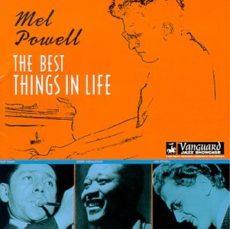
Mel Powell was born Melvin Epstein on February 12, 1923 in The Bronx, New York City to Russian Jewish parents. He began playing piano at age four, taking lessons from, among others, Nadia Reisenberg. His passion for baseball was shattered with a hand injury that turned him to music. His dream of being a concert pianist was also shattered when his older brother took him to see jazz pianist Teddy Wilson play and later to a concert featuring Benny Goodman. By 14, he was performing jazz professionally around New York City.
As early as 1939, he was working with Bobby Hackett, George Brunies, and Zutty Singleton, as well as writing arrangements for Earl Hines. In 1941 he changed his last name from Epstein to Powell, shortly before joining the Benny Goodman band. His style was rooted in the stride style that was the direct precursor to swing piano. His composition The Earl, dedicated to Earl Fatha Hines, one of hi’s piano heroes, was recorded sans drums. Two years with Goodman, led to a brief stint with the CBS radio band before Uncle Sam came calling in 1943 for World War II where he played with Glenn Miller’s Army Air Force Band to the end.
In Paris, France he played with Django Reinhardt, returned briefly to Goodman, then moved to Hollywood and ventured into providing music for movies and cartoons, played himself in the movie A Song Is Born, appearing along with many other famous jazz players, including Louis Armstrong. After developing muscular dystrophy his traveling musician career ended, so he devoted himself to composing.
During the Fifties, he enrolled at the Yale School of Music, recorded the jazz album Thigamigig, became an educator, and was a founding dean of the California Institute of the Arts in Valencia, California. After serving as Provost of the Institute from 1972 to 1976, he was appointed the Roy O. Disney Professor of Music and taught at the institute until shortly before his death. The Pulitzer Prize-winning American composer, pianist, and educator Mel Powell passed away on April 24, 1998 in Sherman Oaks, California.
More Posts: composer,educator,history,instrumental,jazz,music,piano
Daily Dose Of Jazz…
Irving A. Aaronson was born in New York on February 7, 1895 and learned to play the piano from Alfred Sendry at the David Mannes School for music. By age 11 he played accompaniment in silent movie theaters called nickelodeons. In 1921 he co-wrote a hit song, Boo-Hoo-Hoo.
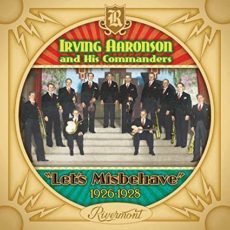
When his band was signed with the Victor label, the band name was changed to Irving Aaronson and his Commanders. From 1926 to 1929, the band recorded for the label and had a notable success with Let’s Misbehave in 1927. The band appeared in Cole Porter’s Broadway musical Paris, in 1928 and broadcasted on KFWB in Hollywood, California in 1929.
In 1935, he starred in the Irving Aaronson Orchestra radio program on NBC. The band toured movie theatres and ballrooms across the US before calling it quits in the mid-1930s, But his band had included at various times musicians such as Phil Saxe, Joe Gillespie, Artie Shaw, Gene Krupa, Tony Pastor, and western movie actor Fuzzy Knight was the band’s drummer in the late Twenties.
By the time he turned 45, Irving was working as a musical director for MGM studios. He remained there in that capacity, voicing for television Mr. Nobody in the MGM’s animation Betty Boop for President and as an assistant to producer Joe Pasternak, until his death from a heart attack. Pianist, bandleader and composer Irving Aaronson passed away in Hollywood, California on March 10, 1963 at the age of 68. His most popular song, The Loveliest Night of the Year, was not recorded with his band but was adapted by Aaronson in 1950 for the Mario Lanza film The Great Caruso.
More Posts: bandleader,composer,history,instrumental,jazz,music,piano

Daily Dose Of Jazz…
Floyd George Smith was born on January 25, 1917 in St. Louis, Missouri and learned to play the ukulele as a child before taking up guitar. As a teenager he studied music theory and spent his early career in territory bands, playing in groups such as Eddie Johnson’s Crackerjacks, the Jeter-Pillars Orchestra, the Sunset Royal Orchestra, the Brown Skin Models, and Andy Kirk’s 12 Clouds Of Joy. His composition Floyd’s Guitar Blues, recorded with Andy Kirk’s orchestra in 1939, has been claimed as the first hit record to feature a blues solo on electric guitar.
Enlisting during World War II, Floyd was stationed in Britain as a sergeant and he had the fortune to meet and play with Django Reinhardt in Paris. Following the war, he rejoined Andy Kirk’s band before forming his own small ensembles. He went on to play with Wild Bill Davis in the 1950s, recorded occasionally with drummer Chris Columbo’s bands during the late 1950s and early 1960s. He would later settle in Indianapolis, Indiana and formed his own jazz trio.
The 1970s, had Smith moving into writing songs and record production, working with Dakar/Brunswick Records in Chicago, for which he recorded a few singles. He produced two albums with R&B star, Loleatta Holloway for Aware Records of Atlanta, as well as two unreleased with John Edwards, who later became the lead singer of the Detroit Spinners. He produced two Top 10 R&B hits on Aware with Edwards and Holloway.
In the late 1970s, he produced tracks on several albums with Loleatta Holloway for Gold Mine/Salsoul Records, managed and later married her. Guitarist Floyd Smith, sometimes credited as Floyd Guitar Smith passed away in Indianapolis, Indiana on March 29, 1982 at the age of 65.
More Posts: composer,guitar,history,instrumental,jazz,music,producer
Daily Dose Of Jazz…
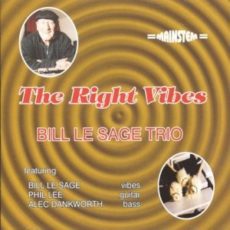
Bill Le Sage was born William A. Le Sage in London, England on January 20, 1927. His father and two uncles were musicians and he started playing the ukulele at the age of eight, drums at fifteen and taught himself to play the piano.
His career began in 1945 when he led his first sextet. He was then a member of army bands while serving with the Royal Signals. He played piano for the Johnny Dankworth Seven in 1950 but decided to switch to the vibraphone. Leaving in 1954 Bill joined the various small groups led by the drummer Tony Kinsey, until 1961 when he started playing with baritone saxophonist Ronnie Ross, with whom he co-led various line-ups until 1966. During this period, he also played with Kenny Baker’s Dozen and wrote music for television and films.
The 1960s gave Le Sage the opportunity to work with the Jack Parnell Orchestra, the Chris Barber Band, and led his group, Directions In Jazz. His composer credits included scores for the films The Tell-Tale Heart, Tarnished Heroes, The Silent Invasion, Strip Tease Murder and The Court Martial of Major Keller.
He accompanied numerous visiting American musicians, including guitarist Tal Farlow on an annual basis. In 1969, he formed the Bebop Preservation Society Quintet, which he continued for more than two decades and also worked with Barbara Thompson’s Jubiaba and others. Vibraphonist Bill Le Sage passed away in London on October 31, 2001.
More Posts: bandleader,composer,history,instrumental,jazz,music,piano,vibraphone