

Daily Dose Of Jazz…
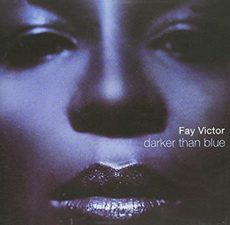
Fay Victor was born on July 26, 1965 in Brooklyn, New York City. After spending her early childhood years in New York, Zambia, and Trinidad & Tobago, her mother settled in Long Island, New York where she spent her teenage years. After her mother’s sudden death, she re-discovered music and singing, and after a three-month stint at a club in Fukui City, Japan with pianist Bertha Hope, she decided to start a career as a jazz singer.
In 1996, Fay settled in Amsterdam, The Netherlands and performed and toured through the country, as well as Spain, Germany, the UK, Sweden, Russia, and India. While living in the Netherlands, Victor branched out into blues, songwriting, and forms of improvising outside the standard jazz canon.
Returning to the States in 2003, Victor has made her home in New York City. She has worked with the likes of Randy Weston, Roswell Rudd, Anthony Braxton, Misha Mengelberg, Vijay Iyer, Tyshawn Sorey, Wadada Leo Smith, Nicole Mitchell, Marc Ribot, Martine Syms, Daniel Carter, William Parker, Darius Jones, Wolter Wierbos, Ab Baars, Joe Morris, Sam Newsome, and Reggie Nicholson.
Victor has coined the term “freesong” to describe her vocal approach. In her jazz repertoire, he has specialized in the work of Thelonious Monk, Ornette Coleman, and Herbie Nichols.
Vocalist, composer, lyricist, and educator Fay Victor, who originally sang in the traditional jazz field, has expanded her repertoire to include blues, opera, free improvising, avant-garde, modern classical music, and occasional acting, continues to perform and record.

More Posts: bandleader,composer,educator,history,instrumental,jazz,lyricist,vocal
Daily Dose Of Jazz…
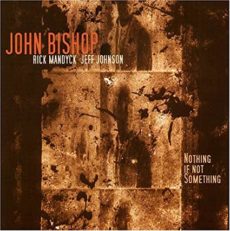
John Bishop was born in Seattle, Washington on April 5, 1956 and raised in Germany, Washington, DC, San Antonio, Texas and Eugene, Oregon. He started playing drums at 9 in Washington, DC with the Patriots drum corps and performed regularly throughout high school and college in Oregon, studying with Mel Brown and Charles Dowd. Attending the University of Oregon, he later transferred to the jazz program at North Texas State University.
Moving to Seattle in 1981 he had an extended engagement with the band Glider and never left. An unusually creative and fertile scene at the time, the city offered performances with top touring artists and the opportunity to create long and substantial musical relationships with inspired Northwest musicians. 1983, saw Bishop helping to form the fusion group Blue Sky, which released two national Top 10 albums and toured throughout the west coast and Canada over the next 9 years.
He was a twenty-year member of the piano trio New Stories with pianist Marc Seales and bassist Doug Miller, releasing 4 CDs of their own, 6 with the late be-bop saxophonist Don Lanphere, and Song for the Geese with Mark Murphy. They were a house trio for 17 years at Bud Shank’s Pt. Townsend Jazz Festival, headlined the 1993 JVC Jazz Festival in Vladivostok, Russia, appeared in concert with Tom Harrell, Julian Priester, Charles McPherson, Vincent Herring, Nick Brignola, Conte Condoli, Bobby Shew and Larry Coryell.
They regularly appeared around the country by themselves or touring with Mark Murphy, Ernie Watts or Don Lanphere. He has performed in concerts and clubs with Lee Konitz, Slide Hampton, Benny Golson, George Cables, Kenny Werner, Bobby Hutcherson, Dr. Lonnie Smith, Sonny Fortune, Herb Ellis, Buddy DeFranco, Bobby McFerrin, Joe Locke, Jerry Bergonzi, Carla Bley, Steve Swallow, Larry Coryell, and countless others.
John has taught drums privately for forty years, was on the faculty at the University of Washington from 2005-2009, regularly holds drum and jazz workshops throughout the country with the Hal Galper Trio, and co-founded The Reality Book, a web-based, HD Video Play-Along education system for jazz musicians of all levels.
Drummer, educator, record label owner, graphic designer, and festival presenter John Bishop continues to perform, record, tour and educate. has been one of the primary voices in Northwest Jazz for over 35 years. He’s appeared on more than 100 albums, was inducted into the Seattle Jazz Hall of Fame in 2008, and was named a “Jazz Hero” by the Jazz Journalists Association in 2019.

More Posts: bandleader,drums,educator,history,instrumental,jazz,music

Daily Dose Of Jazz…
David Burns was born on March 24, 1924 in Perth Amboy, New Jersey and began playing trumpet when he was nine years old. As a teenager, he heard bebop performances at Minton’s Playhouse, among others Dizzy Gillespie. His first ensemble was in Al Cooper’s Savoy Sultans, with whom he played from 1941 to 1943, prior to joining the Army Air Force. There he led a band from 1943 to 1945 that included James Moody as a sideman.
He joined Gillespie’s band in 1946 and appeared with Gillespie in Jivin’ in Bebop in 1947. After leaving Gillespie’s band in 1949, he worked with Duke Ellington from 1950 to 1952 and then with James Moody until 1957.
The late 1950s saw Dave playing shows in New York City and in the Sixties recorded for Vanguard Records. He worked with Billy Mitchell, Al Grey, Willie Bobo, Art Taylor, Dexter Gordon, Johnny Griffin, Leo Parker, and Milt Jackson. From the 1970s through the end of his career he increased his work as an educator. Trumpeter, flugelhornist, arranger, composer, and teacher Dave Burns passed away on April 5, 2009 in Freeport, New York.

More Posts: arranger,composer,educator,flugelhorn,history,instrumental,jazz,music,trumpet
Daily Dose Of Jazz…
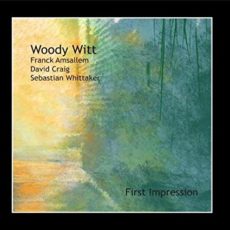
Woody Witt was born on March 16, 1969 in Omaha, Nebraska and started on the clarinet in fourth grade and switched his focus to saxophone the following year. A professional musician from the age of 16, he studied at the University of Houston, earned a Master’s degree in Jazz Studies from the University of North Texas, and a doctorate from the University of Houston’s Moores School of Music.
As a saxophonist, Witt has recorded ten albums as a leader and over twenty-five albums as a sideman. He has collaborated with major jazz artists such as Randy Brecker, Tim Hagans, Jim Rotondi, the late James Moody, David Liebman, and Tim Armacost, Conrad Herwig, Larry Ham, Joe LoCascio, Mark Levine, Louis Hayes, Adam Nussbaum, Billy Hart, and Nancy King. He has worked with the Houston Symphony and Houston Ballet and has been featured on major third-stream works that blend together jazz and classical music.
The winner of the 2010 Chamber Music America French American Cultural Exchange grant and the 2014 International Jazz Saxophone Competition in Taiwan, Woody is the booker and the artistic director at Houston’s top jazz club, Cezanne. He has taught at Houston Community College since 2000, is an Affiliate Artist at the University of Houston, and conducts a countless number of workshops and masterclasses throughout the United States, France, Romania, Germany, and Asia. Currently, saxophonist Woody Witt is involved in several different group projects.
More Posts: bandleader,educator,history,instrumental,jazz,music,saxophone
Daily Dose Of Jazz…
Donald Percy Rendell was born in Plymouth, England on March 4, 1926 and raised in London where his father, Percy, was the musical director of the D’Oyly Carte Opera Company; his mother Vera was also a musician. He attended the City of London School, to which he gained a choral half-scholarship and during school was evacuated during the Second World War to Marlborough College, where he heard jazz for the first time.
Rendell began playing the piano at the age of five but switched to saxophone in his teens. While working for Barclay’s Bank, he left to become a professional musician and began his career on alto saxophone but changed to tenor saxophone in 1943. During the rest of the 1940s, he was in the bands of George Evans and Oscar Rabin. Beginning in 1950, he spent three years in the Johnny Dankworth Septet and performed with Billie Holiday in Manchester, England, before playing in the bands of Tony Crombie and Ted Heath.
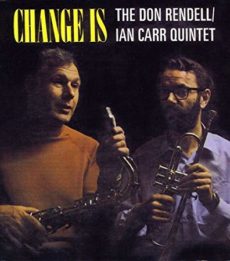
After touring in Europe with Stan Kenton, he played in Cyprus with Tony Kinsey, then Don was a member of Woody Herman’s Anglo American Herd in 1959. During the late 1950s and early Sixties, he led bands, including one with Ian Carr that lasted until 1969, one with Barbara Thompson in the 1970s, and as the sole leader in the 1980s and 1990s. In particular, the Rendell-Carr Quintet gained an international reputation, performing in France at the Antibes Festival and was the Band of the Year for three years in succession in the Melody Maker poll. He performed in festivals in England and France as well as working with Michael Garrick and Brian Priestley.
He taught at the Royal Academy of Music for three years in the early 1970s, at the Guildhall School of Music and Drama beginning in 1984 and wrote instruction books on flute and saxophone. Don Rendell, who played soprano saxophone, flute, clarinet and was also an arranger, passed away after a short illness at the age of 89 on October 20, 2015.
More Posts: arranger,author,bandleader,clarinet,educator,flute,history,instrumental,jazz,music,saxophone