

Daily Dose Of Jazz…
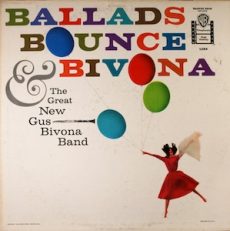
Gus Bivona was born on November 25, 1915 in New London, Connecticut. He got his musical start under the close eye of his musician parents, his mother was a pianist, and his father was a guitarist. His first instrument was violin, but he switched to a combination of alto saxophone and clarinet at the age of 16.
He began his professional debut in the Spider Johnson Band, followed by performing around New England in Leo Scalzi’s Brunswick Orchestra. 1935 saw Gus begin a lengthy stint with the Jimmy Monaco Orchestra and worked with the Hudson-DeLange Orchestra, He went on to spend several months with Bunny Berigan in 1938. Through the end of the decade he worked with bandleaders Will Hudson and Teddy Powell.
In 1940 he put his name on his first band but work as a sideman in more established bands appeared to be what he was after. He spent a period with Benny Goodman in 1940 through the spring of 1941 alongside Charlie Christian. Prior to joining the Naval Air Force Band, Bivona gigged with Jan Savitt and Les Brown & His Band of Renown. He went on to have a series of gigs with Tommy Dorsey and Bob Crosby post World War II.
Signing on with MGM In 1947 he performed numerous studio sessions and on freelance recordings into the 1950s. He connected with Steve Allen, the two would occasionally hit the concert trail, including a lengthy club residency at the Roundtable in New York City. Their collaboration rendered Music for Swingers: Gus Bivona Plays the Music of Steve Allen in 1958 followed by many other West Coast jazz recordings. They were in the company of top studio players and arrangers, such as Skip Martin, Henry Mancini and Pete Rugolo.
Clarinetist Gus Bivona, who also palys saxophone and flute, died on January 5, 1996 in Los Angeles, California.

More Posts: bandleader,clarinet,flute,history,instrumental,jazz,music,saxophone
Requisites
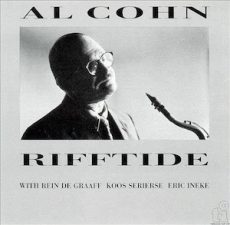
Rifftide ~ Al Cohn | By Eddie Carter
Submitted for your approval this morning is an excellent album by Al Cohn. Rifftide (Timeless Records SJP 259) was recorded during the tenor saxophonist’s 1986 European tour. He’s joined on this date by three Danish musicians: Rein De Graaff on piano, Koos Serierse on bass, and Eric Ineke on drums. My copy is the 1987 Netherlands Stereo release. Side One opens with a popular song by Kurt Weill and Ogden Nash, Speak Low. The trio takes off with a lively introduction leading to the quartet’s theme. Al gets everybody in the mood with a spirited opening statement. Rein swings into action next with an energetic reading. Eric has a vigorous conversation with the saxophonist ahead of the theme’s restatement and fadeout.
Blue Monk by Thelonious Monk is a slow blues that was the pianist’s favorite and one of his most recorded songs, a testament to its enduring appeal. The foursome begins the melody gently, leading to Cohn’s gorgeous interpretation. De Graaff is equally graceful on the following solo, and then Serierse shows his tender side in a pretty presentation preceding the reprise and finale. The tempo for the quartet’s quick melody moves upward to begin the 1945 jazz standard, Hot House by Tadd Dameron. Al takes the lead and crafts an exciting solo. Rein meets the challenge with a fiery passion in the following interpretation. Al reappears for the closing chorus and leads the group to the finish line.
The Thing by Al Cooper starts the second side with the foursome’s medium melody. Cohn cruises comfortably into the opening interpretation. De Graaff follows with a silky smooth statement, and then Serierse provides the exclamation point until the closing chorus. We’ll Be Together Again by Carl T. Fischer, and Frankie Laine is a beautiful ballad from the forties, and the group begins with a gentle melody. The saxophonist opens his first of two solos with an intimate story. Rein caresses each note of the following solo with tranquil tenderness. Al returns for his second reading, complemented by the rhythm section’s hauntingly beautiful support before the song’s summation.
The album ends with the title tune Rifftide by Coleman Hawkins. It’s a pretty tune that the quartet opens at a slow tempo for the melody. Cohn’s opening solo is particularly stirring; De Graaff has the next spot and draws the listener into the second statement. Serierse has a short reflective moment closer, leading to the theme restatement and climax. Al’s career, which lasted nearly five decades, was marked by numerous achievements. He recorded thirty-five albums as a leader, including fourteen years co-leading a quintet with Zoot Sims. He was also a successful arranger for several big bands and worked on Broadway. Al Cohn passed away from liver cancer on February 15, 1988, at age sixty-two.
Wim Wigt produced Rifftide, and Max Bollerman, who owns and still operates Studio 44, was the man behind the dials of the recording. The album’s sound quality is stunning, with a stellar soundstage transporting the quartet to your listening room with crystal-clear fidelity. If you’re a fan of cool jazz and post-bop, I invite you to check out Rifftide by Al Cohn the next time you’re on a record-shopping trip. It’s a terrific album that’s sure to please even the most discriminating jazz fan, and I highly recommend it for a spot in your library!
~ Blue Monk, Speak Low, We’ll Be Together Again – Source: JazzStandards.com
~ Al Cohn – Source: Wikipedia.org
~ © 2024 by Edward Thomas Carter
More Posts: choice,classic,collectible,collector,history,instrumental,jazz,music,saxophone

Daily Dose Of Jazz…
Les Fish was born on November 24, 1955 in Boston, Massachusetts. As a teenager in the 1970s he was into rock and played guitar in various bands throughout the greater Boston area. He performed jazz-rock influenced original compositions in shows from the North Shore to Cape Cod.
Enrolling at Berklee College of Music, Fish studied and formed his own jazz fusion group, and made money splitting his time between teaching guitar, nightclub gigs and recording jingles for local television stations. After Berklee and studying with jazz guitar greats Mick Goodrick and Barry Galbraith, he met his future wife Lori Starr and formed the band Amante.
Touring full time for eighteen years with Amante, they worked at top hotels around the world and still performs throughout New England. The inspiration for the recording, Les Fish and The Latin Jazz Cats came three years ago, when he was touring in Cuba.
Returning from Cuba, Les returned home to seek out the best musicians to transfer his vision into reality.. At Berklee he recruited two-time Latin Grammy winning bassist Oscar Stagnaro, saxophonist George Garzone, pianist Osmany Paredes, his son Lee on drums and percussionist and bandleader Eguie Castrillo.
He has performed with many artists including Tito Puente, Arturo Sandoval, Steve Winwood, Danilo Perez, Warren Wolf, Gary Burton, Julian Lage, John Ellis, David Gilmore and Ryan Scott, among others. Guitarist Les Fish continues to perform and record.
More Posts: bandleader,guitar,history,instrumental,jazz,music
Daily Dose Of Jazz…
Guy Edgar Kelly was born in Scotlandville, Louisiana on November 22, 1906. In his early career he performed in Baton Rouge, Louisiana with a band led by Toots Johnson before going to New Orleans, Louisiana to play in Papa Celestin’s band in 1927-1928. While residing there he would regularly perform in trumpet duels with Red Allen.
In 1929 he went on tour as a member of Kid Howard’s band, and then joined Boyd Atkins’s band in the summer of 1930. By 1931 Kelly had moved to Chicago, Illinois where he was working with Cassino Simpson and Erskine Tate.
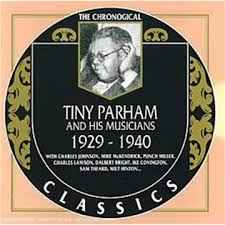
In the 1930s he worked with banjoist Ed Carry, pianists Dave Peyton, Tiny Parham, Albert Ammons, violinist Carroll Dickerson, and clarinetist Jimmie Noone,. Guy appears on the Noone classic composition The Blues Jumped A Rabbit, recorded Chicago on January 15, 1936.
Trumpeter and singer Guy Kelly died February 24, 1940.

Daily Dose Of Jazz…
Francesca Tanksley was born November 21, 1957 in Vincenza, Italy but grew up in Munich, Germany where she studied music from the age of seven. Moving to Boston, Massachusetts at 16, she studied piano and composition at Berklee College Of Music.
Two years later she returned to Munich. In 1980 she moved to New York City where she worked with Melba Liston until 1983, then she joined Billy Harper’s quintet with whom she toured extensively.
She has worked with Clifford Jordan, Cecil Payne, Bill Hardman and Erica Lindsay. She leads her own quintet and co-leads the Erica Lindsay/ Howard Johnson Quintet. As an educator she has been on the faculty of the New School, Berklee College. She has facilitated workshops and masterclasses at University of Southern California at Santa Cruz, Hampton University, Rensselaer Polytechnical Institute, Arizona State University, and Bard College.
Pianist Francesca Tanksley, who is a composer and educator, continues to perform and compose.
More Posts: composer,educator,history,instrumental,jazz,music,piano