

Daily Dose Of Jazz…
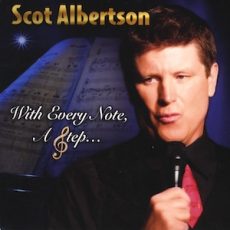
Scot Albertson was born on November 20, 1957 and raised in Norwalk, Connecticut. Early childhood saw him as a choir member of the Little Singers of Norwalk and would travel, sing and compete internationally with the choir for six years. After graduating college he served for six years as a police officer segueing for a year in Arizona on border patrol. Returning to Connecticut he started a very successful small business which sustained his lifestyle for nineteen years.
In 2000 he began taking vocal lessons with Richard Lissemore in New York City. Four and one half years later after intensive study, Scot released his debut album titled Got A Date With Fate with bassist Mark Egan, drummer Danny Gottlieb and producer, composer and pianist Jon Werking. Showcasing the music in 2005 at Danny’s Skylight Cabaret Room in New York City began his life as a career performer.
Since his debut performance, vocalist Scot Albertson has gone on to continue to perform around the city and metropolitan area.

More Posts: bandleader,history,instrumental,jazz,music,vocal
Jazz Poems
FOR SIDNEY BECHET
That note you hold, narrowing and rising, shakes
Like New Orleans reflected on the water,
And in all ears appropriate falsehood wakes,
Building for some a legendary Quarter
Of balconies, flower-baskets and quadrilles,
Everyone making love and going shares–
Oh, play that thing! Mute glorious Storyvilles
Others may license, grouping round their chairs
Sporting-house girls like circus tigers (priced
Far above rubies) to pretend their fads,
While scholars manqués nod around unnoticed
Wrapped up in personnels like old plaids.
On me your voice falls as they say love should,
Like an enormous yes. My Crescent City
Is where your speech alone is understood,
And greeted as the natural noise of good,
Scattering long-haired grief and scored pity.
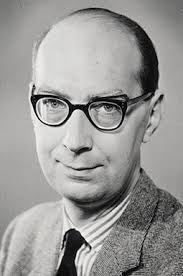
PHILIP LARKIN
from Jazz Poems ~ Selected and Edited by Kevin Young

More Posts: book,classic,collectible,history,jazz,library,poet

Daily Dose Of Jazz…
Mornington Edward Lockett was born in Stepney, London, United Kingdom on November 19, 1961. He began playing clarinet at the age of 14 while he was a student at Cowes High School, then switched to tenor saxophone. He studied at Dartington College of Arts, graduating in 1981, then undertook further study at the Guildhall School of Music and Drama in 1984–85, under the tutelage of Lionel Grigson.
In the Eighties and ‘90s Lockett played in the bands of Jim Mullen, Ronnie Scott, Arturo Sandoval, Ian Shaw, and Andrea Vicari. During the mid ‘90s into the new century he performed with Martin Drew, Stan Tracey, Don Weller, Sarah Jane Morris, and Jimmy Smith, to name a few.
In February 1996, Mornington’s album Late Night Sax: After Dark reached No. 18 in the UK Albums Chart. From 2000 until 2004 he was involved in a group co-led by Martin Drew called Celebrating The Jazz Couriers. They played the music of Ronnie Scott and Tubby Hayes and won the British Jazz Award for Best Small Group in 2002. The band was reformed in 2004 as The New Jazz Couriers.
In 2008 in conjunction with fellow tenor saxophonists Art Themen and Don Weller, Lockett released the album The 3 Tenors at the Appleby Jazz Festival.
As an educator he now works at St. Paul’s Girls’ School, and the Royal College of Music in London, teaching jazz saxophone and improvisation. He has taught at Trinity College of Music, Leeds College of Music and has been a visiting tutor at the Dordogne Jazz Summer School.
He led a monthly residency at the 606 Club in Chelsea with saxophonist Peter King until a year before King’s death. Tenor saxophonist Mornington Lokett has since run an annual tribute, the Peter King Memorial Sax Summit. Invited guests have been saxophonists Graeme Blevins, Simon Allen and Alex Clarke, among others.
More Posts: bandleader,history,instrumental,jazz,music,saxophone

Daily Dose Of Jazz…
Justin Wood was born on November 18, 1975 in rural Northern Maine and began playing saxophone in fifth grade growing up. During high school, he co-led a jazz trio with trombonist Philip Yaeger and brother Tyler on piano, and played gigs ranging from local restaurants to agricultural conventions.
After attending Harvard University, Justin moved to New York City in 1999 and worked as a union organizer and explored the city’s music scene. He began performing in the city in 2001, and has performed with diverse musical groups in venues including Birdland, the Brooklyn Academy of Music, NJ Performing Arts Center, the Knitting Factory, and the Garage.
Rather than pursuing a conservatory education, he has learned from and been inspired by his peers. Through private lessons with top creative musicians such as Bill McHenry and Michel Gentile he has developed his own voice.
Currently, alto saxophonist and flautist Justin Wood continues to participate in diverse musical projects. He co-leads Spoke, an eclectic quartet with trombonist Andy Hunter, bassist Dan Loomis, and drummer Danny Fischer.
More Posts: bandleader,flute,history,instrumental,jazz,music,saxophone
Requisites
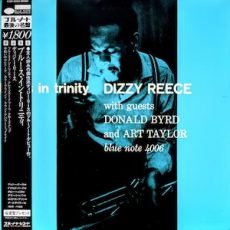
Blues In Trinity ~ Dizzy Reece | By Eddie Carter
Last night, I listened to one of my mom’s favorites, Blues In Trinity (Blue Note BLP 4006/BST 84006) by Dizzy Reece, which inspired this discussion. It was his second album as a leader and first for Alfred Lion’s label. Reece was born in Kingston, Jamaica, and began playing the baritone sax at eleven. He took up the trumpet at fourteen and later got the nickname Dizzy. At sixteen, he started playing professionally and worked with some of the best musicians in England, France, and the United States. Donald Byrd (tracks: A3, B1) and Dizzy Reece (A1 to B2) on trumpet, Tubby Hayes (A1, A3, B1 to B3) on tenor sax, Terry Shannon on piano, Lloyd Thompson on bass, and Art Taylor on drums are the musicians. My copy is the 1983 King Record Company Japanese Mono reissue (Blue Note BLP 4006 – K18P 9245).
The title tune and first of four originals by Dizzy Reece, Blues In Trinity, gets the first side off to a good start with the quintet’s medium theme. Dizzy jumps out front with a bright lead solo, then Tubby blows a set of wailing choruses. Terry takes charge next with a stunning short performance until the trumpeter and tenor saxophonist exchange riffs preceding the theme’s return. I Had The Craziest Dream by Harry Warren and Mack Gordon is a beautiful song from the 1942 film Springtime In The Rockies. Reece and the rhythm section reveal the song’s sensual beauty in an elegantly tender presentation. He also delivers a heartfelt solo as the only soloist.
Close-Up opens with a relaxing ensemble melody. Dizzy takes the lead, making each note look effortless. Tubby takes an exciting turn next, then Donald sinks his teeth into an aggressive statement. Terry follows with a solo of absolute joy. The front line takes the final flight in an exchange, leading to the sextet’s reprise and finale. Shepherd’s Serenade starts Side Two at a burning beat with the sextet’s rollicking theme. Reece launches into the opening statement with pure fire. Hayes continues with a shower of fiery notes from his tenor sax. Donald follows, blowing fierce heat in his second and final presentation, and then Art converses with the front line before the theme’s reprise and close.
Color Blind eases the throttle back to medium for the quintet’s finger-popping opening chorus. Dizzy goes right to work on the opening solo with plenty of feeling. Tubby takes the baton and builds the following interpretation effectively. Teddy maintains the mellow mood in the third performance, and the front line shares the finale in a short exchange before the theme’s restatement and climax. ‘Round About Midnight by Thelonious Monk, Cootie Williams and Bernie Hanighen ends the album as a feature for Tubby Hayes and the rhythm section. The saxophonist combines the elements of elegance, restraint, and tenderness in a gorgeous performance that culminates softly.
Tony Hall produced the initial session of Blues In Trinity, and Rudy Van Gelder is credited as the recording engineer. However, he only re-recorded the initial session. The sound quality of this King reissue is sensational, with a superb soundstage that emerges from your speakers as if the musicians are playing right in front of your listening chair. This album holds a special place in my heart, as it was a staple during our Sunday jazz dinners with my mom and sister when I was younger. If you’re a hard bop fan, I offer Blues In Trinity by Dizzy Reece for consideration on your next record-shopping trip. It’s an underrated, excellent album by one of the best musicians most may not know, and I highly recommend it for a spot in your library!
~ ‘Round About Midnight – Source: JazzStandards.com
~ I Had The Craziest Dream – Source: Wikipedia.org
© 2024 by Edward Thomas Carter
More Posts: choice,classic,collectible,collector,history,instrumental,jazz,music,trumpet