

Daily Dose Of Jazz…
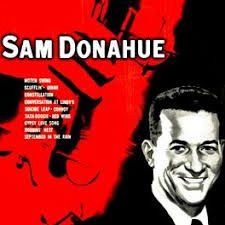
Samuel Koontz Donahue was born on March 18, 1918 in Detroit, Michigan and put together his first band when he was only 15 years old. He played in the bands of Gene Krupa, Harry James, and Benny Goodman. During World War II, he took over the US Navy band of Artie Shaw. After the war, he assembled and led a group that recorded extensively for Capitol Records.
He went on to create a new band enlisting trumpeters Harry Gozzard, Doc Severinsen, Wayne Herdell, arranger Leo Reisman, vocalists Frances Wayne, Jo Stafford and where Frank Sinatra Jr. spent time learning how to sing before it was dissolved in 1951. Then he re-enlisted in the Navy to serve in the Korean War.
His compositions included Quiet and Roll ‘Em with Gene Krupa, Convoy, LST Party, Scuttlin’, Love Scene, Please Get Us Out, Root Toot, Constellation, Conversation at Lindy’s, Saxa-Boogie, and Saxophone Sam. He went on to record with RCA Victor, Acrobat, Arista record labels.
Saxophonist Sam Donahue died from pancreatic cancer on March 22, 1974.

More Posts: bandleader,composer,history,instrumental,jazz,music,saxophone
Requisites
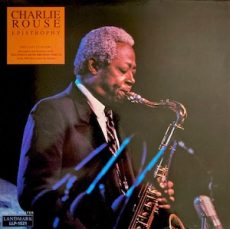
Epistrophy: The Last Concert ~ Charlie Rouse | By Eddie Carter
Charlie Rouse was one of jazz’s great musicians, but he is best known as the tenor saxophonist in The Thelonious Monk Quartet for eleven years. He enters this morning’s spotlight with Epistrophy–The Last Concert (Landmark Records LLP-1521). The album honors the pianist and was recorded live at The Thelonious Monk Birthday Tribute during the Jazz in The City Festival. His bandmates for this exceptional performance are Don Cherry (tracks: B1, B2) on trumpet, Buddy Montgomery (B1, B2) on vibes, George Cables (A2, A3, B1, B2), and Jessica Williams (A4) on piano, Jeff Chambers on bass, and Ralph Penland on drums. Orrin Keepnews is the host. My copy is the 1989 U.S. Stereo release.
Orrin opens with a few words about Charlie Rouse before introducing him; then, the two men share Some Words About Monk that are just as entertaining as the music that follows. Nutty is taken at a medium tempo, and Charlie swings easily on the theme and the first solo. George picks up the groove and gets into something interesting; then Ralph shares the finale with Rouse and Cables preceding the ending. Ruby, My Dear is named after Monk’s first love, Rubie Richardson and is one of his most beautiful tunes. Charlie and the trio tenderly begin the melody. Rouse continues delivering the opening solo with sultry notes from his tenor sax. George compliments him with elegant execution in a short statement. Charlie adds a few final gentle touches before the closing chorus and the delight of the crowd.
Blue Monk was Monk’s personal favorite of all his compositions. Jessica takes over on piano and opens with a quirky introduction to the foursome’s bluesy melody. Charlie takes the lead solo with a relaxing informality that flows naturally. Jessica takes a comfortable ride in the second reading, and Jeff has an enjoyable moment in the closer, preceding the theme’s restatement and close. ‘Round Midnight by Thelonious Monk, Cootie Williams and Bernie Hanighen is Monk’s best-known and most recorded creation. George starts with a lengthy introduction, segueing into the trio’s gorgeous melody and the pianist’s opening solo. Buddy comes in next for a touching interpretation, and then Don expresses his thoughts in a haunting, muted performance. Charlie provides the pretty exclamation point ahead of the climax.
Epistrophy by Thelonious Monk and Kenny Clarke was the pianist’s closing number at each live set. George sets everything in motion for the ensemble’s lively melody. Don opens with a few twists and turns; then Charlie wails with ease next. Buddy answers with a spirited performance. George adds to the excitement, and Don, Charlie, and Buddy swap notes with Ralph ahead of the reprise and close, which receives abundant applause from the audience. Orrin Keepnews produced the album, and Ron Davis was the recording engineer. David Luke was the digital engineer, and the mastering was by George Horn. The album’s sound quality is stunning with an excellent soundstage that takes the listener to the club to enjoy the musicians as they are performing.
Epistrophy-The Last Concert is dedicated to Charlie Rouse’s memory and is the last album he recorded before his death from lung cancer seven weeks later on November 30, 1988. He was only sixty-four but leaves behind a legacy of thirteen albums as a leader. He also co-founded and recorded six albums with the group Sphere (Thelonious’ middle name). He also made quite a few titles as a sideman, including twenty-four with Thelonious Monk during his lifetime. Palo Alto was recorded in 1968 but not released until 2020. If you’re a fan of Monk’s music or Post Bop, I offer for your consideration, Epistrophy–The Last Concert by Charlie Rouse the next time you visit your favorite record shop. It’s one of the most enjoyable albums I’ve heard and is a title I’m sure you won’t regret adding to your library!
~ Palo Alto (Impulse B0032181-01) – Source: Discogs.com ~ Blue Monk, ‘Round Midnight – Source:JazzStandards.com ~ Epistrophy, Ruby, My Dear – Source: Wikipedia.org © 2024 by Edward Thomas Carter***In Like Bud which is included in the YouTube version of the album, is only available on compact disc and not on the original wax recording.

More Posts: choice,classic,collectible,collector,history,instrumental,jazz,music,saxophone
Daily Dose Of Jazz…
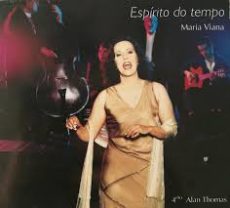
Maria Viana was born on March 17, 1958, Lisbon, Portugal and was the daughter of famous actor and painter, José Viana; and Brazilian singer and actress Jujú Baptista. A meeting with jazz critic and missionary José Carlos Monteiro Costa introduced her Ella Fitzgerald, Billie Holiday, Sarah Vaughan and Anita O’Day. He also introduced her to the producers of Cascais Jazz Festival, Luis Villas-Boas and Duarte Mendonça who took an immediate interest in her, arranging for rehearsals and jam sessions.
It was not until 1983 that she vigorsly pursued her professional ambitions in Jazz, because previously she had been an actress and a famous popsinger. She became the host-singer at the jazz bar, Drogaria Ideal, where dozens of soloists, amateurs and professionals performed. Within months Maria’s career progressed and revealed unquestionable talent and abilities.
She would go on to do television, festivals, record, and work with Al Grey, Bernardo Sasseti, and David Gausden. She created the Maria Viana Quintet, and toured the country for the National Secretary of Culture. 1995 Produces / features in concert, Around the World, Around the Forties, for the celebration of fifty years since the Second World War ending; an initiative of C.M. de Cascais. Tours Portugal with her quintet, and tours with Bill Goodwin quintet.
Maria’s work is rewarded with a Declaration of Manifest Cultural Value, has guested on several recordings and concerts, and became the Artistic Director for Hotels with Jazz. She produced Jazz na Casa da Guia, and Blues for Cascais, benefiting an ecological organization in Cascais.
Through the years vocalist Maria Viana has been featured on over sixty national television shows and concerts and continues to perform and tour.
More Posts: bandleader,history,instrumental,jazz,music,vocal
Daily Dose Of Jazz…
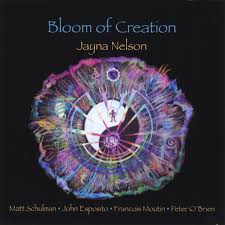
Jayna Nelson was born in Lincoln, Nebraska on March 16, 1958. She began to study piano as soon as she could reach the keyboard. At age 9 she began to study the flute as well and by age 17 had won both the Baldwin Junior Keyboard award and the l Music Teachers’ National Association Competition.
Graduated from the University of Toronto in Flute Performance, for the next two years, she served on the faculty at University of Toronto teaching chamber music. There she also premiered a work by Mario Davidovsky, and was principal flutist with the Union College Orchestra, the Wesleyan College Orchestra, Opera Omaha Orchestra and Symphony Canada. In 1983 she attended the Banff Centre Jazz program headed by Dave Holland and studied and performed with Anthony Braxton, Don Thompson, Dave Liebman and John Abercrombie.
A move to New York City in 1989 saw her continuing to work in the classical and jazz genres as a performer, producer, composer, arranger and educator. She designed and implemented integrated arts curriculum for New York area schools and summer camps. She has lectured and given seminars, maintained a private teaching studio for over 20 years and has been a flute technician and consultant for Anthony Braxton, Dave Liebman, Joe Giardullo, Jeanne Baxtresser, Joannie Maddon, Carlos Malta, Hermeto Pascoal, and James Moody.
Nelson has recorded and performed with a host of musicians including Karl Berger, Hilliard Green, Howard Johnson, Silvana Malta, Francois Moutin, Hermeto Pascoal, Sirius String Quartet, Petula Clark, Ingrid Jensen, Marty Morrell, Dave Valentine, and numerous others.
Flutist Jayna Nelson continues to perform, tour, compose, record and educate.
More Posts: arranger,bandleader,composer,educator,flute,history,instrumental,jazz,music,producer
Daily Dose Of Jazz…
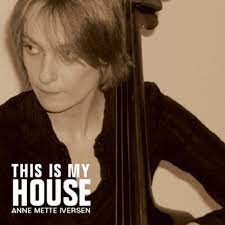
Anne Mette Iversen was born March 15, 1972 in Aarhus, Denmark. She studied classical piano at the Royal Academy of Music in her hometown and bass at the Rhythmic Conservatory of Music in Copenhagen, Denmark and The New School University in New York City.
Living in New York City from 1998 to 2012 Iversen co-founded the Brooklyn Jazz Underground in 2006 and is co-owner of the related record label Brooklyn Jazz Underground Records, which was formed in 2008. She works as a sideperson in various settings and as a freelance composer.
Currently based in Berlin, Germany. Iversen was Composer in Residence for Sweden’s Norrbotten Big Band in 2016. Anne’s composing is recognized for her ability to integrate classical music with jazz ensembles. She is influenced by major classical composers as well as jazz and Brazilian artists and composers.
Bassist Anne Mette Iversen has recorded ten albums between 1998 and 2020 and continues to perform, record and compose.
More Posts: bandleader,bass,composer,history,instrumental,jazz,music