

Daily Dose Of Jazz…
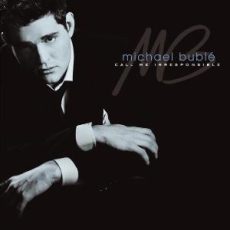
Michael Steven Bublé was born September 9, 1975 in Burnaby, British Columbia to a fisherman and homemaker. Their surname was originally spelled Bubli. Dreaming of becoming a famous singer since he was two, his interest in jazz began at around age five when his family played Bing Crosby’s White Christmas album. The first time his family noticed his singing talent was during the Christmas holidays, when Bublé was 13 years old, and they heard him powerfully sing the phrase “May your days be merry and bright” when singing on a car ride.
His first singing engagements were in nightclubs at age 16 and were facilitated by his plumber grandfather who offered his plumbing services in exchange for stage time for his grandson and paid for his singing lessons. As a children’s entertainer he used the name Mickey Bubbles.
Bublé grew up listening to his grandfather’s collection of jazz records and credits his grandfather in encouraging his love for jazz music. At 18 he entered a local talent contest and won, but was disqualified for being underage. He went on to enter other contests and perform in clubs, conventions, cruise ships, hotel lounges, and shopping malls.
By 1996 Michael appeared in different roles on television in Death Game, The X-Files, Big Band Boom!, and on the CTV network. He received two Genie Award nominations for Best Original Song in 2000 for I’ve Never Been in Love Before and Dumb ol’ Heart, two songs he wrote for the film Here’s to Life!.
He recorded three independent albums First Dance, Babalu, and Dream before his self-titled debut album in 2003 featuring a range of standards from various eras and genres. He has followed with seven more through 2022 along with tours, a residency, four Grammy awards, 8 Juno awards and numerous nominations. He received the Order of Canada and the Order of British Columbia.
Vocalist Michael Bublé, who is often credited for helping to renew public interest and appreciation for traditional pop standards and the Great American Songbook, due to his musical influences Frank Sinatra, Dean Martin, Tony Bennett, Elvis Presley, Bobby Darin and Sam Cooke. He continues to perform and tour.

More Posts: bandleader,history,instrumental,jazz,music,vocal
Daily Dose Of Jazz…
William Henry Graham was born on September 8, 1918 in Kansas City, Missouri and grew up in Denver, Colorado. During his years in Denver he led his own ensemble which included Paul Quinichette among its members. He went on to study at Tuskegee University and then Lincoln University of Missouri after a stint in the Army during World War II.
He worked with Count Basie, Lucky Millinder, Herbie Fields, and Erskine Hawkins early in his career. From 1946 to 1953, he worked with Dizzy Gillespie as a baritone saxophonist. As a composer under Gillespie, he penned the tune Oh-Sho-Be-Do-Be.
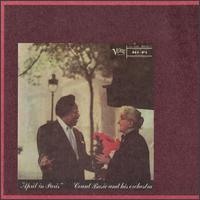
Following his Gillespie years he led his own band in New York City, in addition to touring Europe with Sarah Vaughan in 1953. From 1955 to 1957, Bill was back with Basie, including on the 1956 release April in Paris and the Newport Jazz Festival. In 1956-57 he teamed again with Quinichette, then in 1958 he found work with Duke Ellington and Mercer Ellington from 1958–59.
Outside of jazz, Graham also played on numerous R&B recordings, including those of Wynonie Harris, Joe Williams, and Little Willie John. In the 1960s he quit active touring and became a teacher in the New York City Public Schools system.
Saxophonist Bill Graham transitioned on December 29, 1975 in New York at the age of 57.
More Posts: history,instrumental,jazz,music,saxophone
Daily Dose Of Jazz…
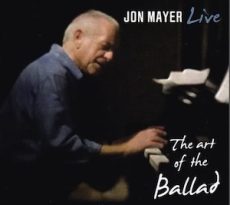
Jon Mayer was born September 7, 1938 in New York City and grew up in the fertile modern jazz evolution. Learning piano in childhood he confidently expresses strong emotions in his playing.
He also spent time in the Thad Jones-Mel Lewis Band as well as on the road with Dionne Warwick, Sarah Vaughan, Anita O’Day and Manhattan Transfer. Mayer’s compositions have been recorded by Les McAnn, Barry White’s Love Unlimited Orchestra, Nancy Wilson, Gladys Knight, Ernie Watts and Jackie Ryan.
He has recorded eleven albums as a leader and two as a sideman, Strange Blues with Jackie McLean and Like Sonny with John Coltrane.
Pianist and composer Jon Mayer continues a career as a performer.
More Posts: bandleader,composer,history,instrumental,jazz,music,piano
Daily Dose Of Jazz…
David W. Bargeron was born September 6, 1942 in Atho, Massachusetts. He became the lead trombonist with Clark Terry’s Big Band and played bass trombone and tuba with Doc Severinsen’s Band between 1968 and 1970.
In 1970 he joined Blood, Sweat, and Tears after Jerry Hyman departed and first appeared on the album B, S & T; 4. While with this group, he recorded the jazz-rock solo on the tuba in And When I Die/One Room Country Shack on the album Live and Improvised. His recording credits with BS&T include eleven albums. A break in their schedule allowed him to join the Gil Evans Orchestra in 1972.
After leaving Blood, Sweat, and Tears he became a freelance musician recording with Billy Joel, Paul Simon, Mick Jagger, James Taylor, Eric Clapton, David Sanborn, Carla Bley, and Pat Metheny.
He has performed with the George Gruntz Concert Jazz Band from Switzerland, the George Russell Living Time Orchestra, and was a long-time member of Jaco Pastorius’s Word of Mouth Band. He has recorded and toured with Tuba Tuba, a jazz tuba band which includes Michel Godard, Luciano Biondini, and Kenwood Dennard.
He is a member of Howard Johnson’s Gravity, a six-tuba group that has been together since 1968. Trombone and tubist David Bargeron, who has released several albums as a soloist and collaborator, at 80 still performs.
Three Wishes
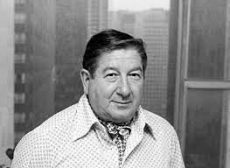
While the Baroness was in conversation with Teo Macero he was asked by her what three wishes he would make if given. He told her:
- “Peace of mind.”
- “To change the status of jazz. That is, to get rid of the stigma attached to jazz music. You know. A jazz musician is regarded as some kind of freak! This is something that has bugged me for a long, long time. Like, someone will come up to me and say, “Oh, so you’re a jazz musician?” And when I say< “Yes. A jazz musician and a composer,” they will look at me altogether differently. It would be marvelous if jazz musicians could be given a status equal to that or great figures of contemporary music.”
- “To have no problems with people recording. No problems in the studio.”
*Excerpt from Three Wishes: An Intimate Look at Jazz Greats ~ Compiled and Photographed by Pannonica de Koenigswarter

More Posts: baroness,composer,history,instrumental,jazz,music,pannonica,producer,saxophone,three,wishes