

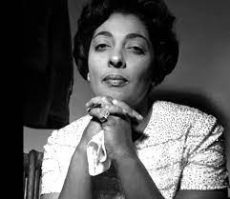
Three Wishes
Girl talk always ensued when Pannonica and Carmen McRae were together and when she wanted to know what her friend would say asked her what her three wishes would be and she told her:
- “I wish that we had more people that appreciated good American music.”
- “I wish my father were alive – it’s in the wrong order! That should come first.”
- “And the other one… I hope that I’ll know when I’ve had it.”
*Excerpt from Three Wishes: An Intimate Look at Jazz Greats ~ Compiled and Photographed by Pannonica de Koenigswarter

More Posts: baroness,history,instrumental,jazz,music,pannonica,three,vocal,wishes
Daily Dose Of Jazz…
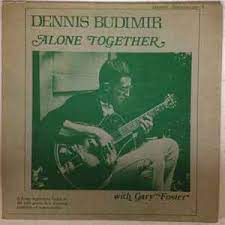
Dennis Matthew Budimir was born on June 20, 1938 in Los Angeles, California. He learned to play piano and guitar in his youth and first played professionally when he was fourteen years old. In mid Fifties Los Angeles he played in a quartet with La Monte Young, Billy Higgins, and Don Cherry and by the late 1950s he was working in the bands of Ken Hanna, Keith Williams, Harry James, and Chico Hamilton.
From 1960–1961 he worked with Bud Shank and accompanied Peggy Lee prior to entering military service. After his discharge in 1963 he toured Japan with Bobby Troup and returned to the Los Angeles area, where he came off the road and became a studio musician for the next several decades. He recorded in this capacity with Lalo Schifrin, Marty Paich, Don Ellis, Gil Melle, Ella Fitzgerald, Milt Jackson, Stan Getz, Julie London, Jimmy Smith, Ray Brown, Johnny Mandel and the Capp-Pierce Juggernaut.
This opportunity also led him to record with Joni Mitchell, The Carpenters, Brian Wilson, Barbra Streisand, Ravi Shankar, Frank Zappa, Linda Ronstadt, Dusty Springfield, Dave Grusin, Quincy Jones, David Axelrod, Tom Waits, Harry Nilsson, George Harrison, Ringo Starr, Johnny Mathis, Cher, and Doris Day. He recorded more than 900 movie soundtracks from the early 1960s until the 2000s.
Guitarist Dennis Budimir, considered to be a member of The Wrecking Crew, transitioned on January 10, 2023 at the age of 84.

More Posts: guitar,history,instrumental,jazz,music
Daily Dose Of Jazz…
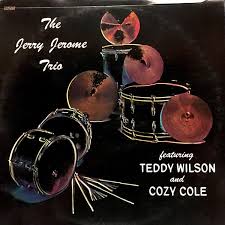
Jerry “Buck” Jerome was born on June 19, 1912 in Brooklyn, New York and he didn’t begin playing the saxophone until he was in high school in Plainfield, New Jersey.
Jerome became part of a national tour in 1936 with bandleader Harry Reser and his Clicquot Club Eskimos. He joined Glenn Miller’s original orchestra in 1937 and was a member until it broke up in 1938. He played and soloed on the Glenn Miller recording Doin’ the Jive. He then joined the Red Norvo band which was followed by his joining the Benny Goodman orchestra in 1938.
When Goodman broke up his band in 1940, he joined the Artie Shaw Orchestra. While with Shaw he appeared the same year he joind the band in the film Second Chorus, starring Fred Astaire and Burgess Meredith. By the end of the 1940s, Jerry became involved in broadcasting, working various positions as a conductor, composer, arranger and musical director.
Tenor saxophonist Jerry Jerome, who composed the Winston tastes good like a cigarette should jingle for the tobacco company, transitioned on November 17, 2001 at the age of 89.
More Posts: history,instrumental,jazz,music,saxophone
Requisites
Mirage ~ Art Farmer Quintet | By Eddie Carter
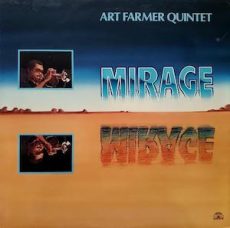
The word mirage, defined in the Merriam-Webster Dictionary, is “something that is believed to be true or real but is actually false or unreal.” This morning’s record from the library by The Art Farmer Quintet is an excellent Hard-Bop release that’s certainly not a Mirage (Soul Note SN 1046). This album marked a reunion for the leader and Clifford Jordan. They’d known each other for a long time but only recorded occasionally. The group is Art Farmer on flugelhorn, Clifford Jordan on tenor sax, Fred Hersch on piano, Ray Drummond on double bass, and Akira Tana on drums. My copy is the 1982 Italian Stereo release with a cover variation.
Side One starts with Barbados by Charlie Parker. Akira and Ray bring the song to life with two concise comments that segue into the quintet’s inviting theme. Art opens things up with an easygoing solo. Clifford follows with a few leisurely flowing lines, then Fred concludes with a carefree statement into the closing chorus and fades out. Passos by Fritz Pauer has a Bossa-Nova beat in its structure. The song’s title means “steps” in Portuguese, and the group moves unhurriedly through the melody. Farmer sets the mood with a relaxing solo, followed by Jordan’s laid-back reading. Hersch ends with a delightful interpretation as refreshing as a gentle breeze leading to the ensemble’s exit.
My Kinda Love by Louis Alter and Jo Trent is an old song that the group freshens up with a soothing theme. Jordan’s opening solo is as relaxing as a cup of chamomile tea; then Farmer moves into the next reading with cat-like ease. Hersch follows with a soulful charm next, and Drummond goes for a leisurely walk toward the reprise and close. The title tune, Mirage, is a thoughtfully tender ballad by Fred Hersch that begins Side Two with the quintet’s polite opening chorus. Farmer opens with a deeply lyrical statement that hits the sweet spot. Jordan infuses the second solo with an expressive beauty, and Hersch carries things to a gorgeous climax in an intimate finale.
Cherokee Sketches by Fritz Pauer starts with a melody reminiscent of Thelonious Monk. Art speeds out of the gate like a rocket, then Clifford flies down the road like the Road Runner. Fred shifts into high gear on the following solo. Akira shares the first part of his statement with the front line before embarking on an explosive run ahead of the reprise and exit. Smiling Billy is Jimmy Heath’s tribute to drummer Billy Higgins. It gets underway with the quintet’s lightly swinging melody. Drummond opens with a relaxed statement, and Farmer makes his mark in a gorgeous solo. Jordan succeeds him with a tasty reading; afterward, Hersch has the last word ahead of the theme’s return.
Art Farmer produced Mirage, and Giovanni Bonandrini was the executive producer. Dave Baker was behind the dials of the recording session. The sound quality is excellent, with a superb soundstage that brings the musicians to your listening room in stunning detail. Both front and rear covers also have a nice gloss. If you’re an Art Farmer fan and are in the mood for a Hard-Bop album, I’m pleased to recommend and invite you to consider Mirage by The Art Farmer Quintet on your next vinyl shopping trip. It’s a gorgeous release with an outstanding lineup that will take your breath away each time you listen!
Postscript: A second album cover of Mirage was released in 1982 with two mirror image photos of Art Farmer.
~ Passos – Source: Album liner notes by Ira Gitler ~ Barbados, My Kinda Love – Source: Wikipedia.org © 2023 by Edward Thomas Carter For the serious collector of jazz… #Jazz #Classic #Collectible #Music #Notorious
More Posts: choice,classic,collectible,collector,history,instrumental,jazz,music,trumpet
Daily Dose Of Jazz…
Ray Bauduc was born June 18, 1906 in New Orleans, Louisiana and was the son of cornetist Jules Bauduc, his older brother was a banjoist and bandleader, and his sister was a pianist. His youthful work in New Orleans included performing in the band of Johnny Bayersdorffer, and on radio broadcasts. His New Orleans origin instilled in him a love for two-beat drumming, which he retained when he played with Bob Crosby’s swing-era big band.
Moving to New York City in 1926 he joined Joe Venuti’s band. During the 1920s he recorded with the Original Memphis Five and the Scranton Sirens, which included Tommy and Jimmy Dorsey. His time with the Bob Crosby Orchestra brought him national fame and Bauduc and bassist Bob Haggart composed two hits for the orchestra, South Rampart Street Parade and Big Noise from Winnetka, which has become a jazz standard.
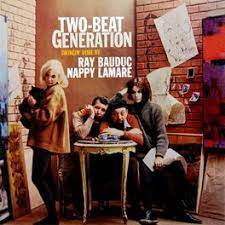
After his discharge from the Army in 1944, he and former Crosby group leader Gil Rodin formed a short-lived big band. He toured with a septet in 1946 and also worked in Tommy Dorsey’s orchestra for a couple of months that year. By 1947, he joined Bob Crosby’s new group, then left to play with Jimmy Dorsey where he stayed for the next two years. He freelanced on the West Coast for a couple of years before joining Jack Teagarden in 1952. In 1955, he formed a band with Nappy Lamare which found considerable success, touring nationally and recording several albums.
From 1960 Ray went into semi-retirement and relocatred to Bellaire, Texas but visited New Orleans in 1983. He appeared occasionally at Crosby Orchestra reunions, worked with Pud Brown on several recordings, and played with the Market Square Jazz Band headed by James Weiler in the early 1980s in Houston.
A trend setter in traditional jazz circles, his precise, disciplined, yet fiery patterns and syncopated fills, helped New Orleans drummers make the transition into swing from the rigid, clipped progressions that had defined the previous era. His use of woodblocks, cowbells, China cymbals, and tom-toms distinguished him from most drummers of the swing era, and made him one of the few white drummers to be influenced by Warren ‘Baby’ Dodds. Drummer Ray Bauduc, who authored two books on drumming, transitioned in Houston, Texas, on January 8, 1988.
More Posts: bandleader,drums,history,instrumental,jazz,music