

Daily Dose Of Jazz…
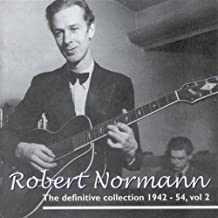
Robert Uno Normann was born on June 27, 1916 in Borge, Østfold, Norway. An autodidact performer on the banjo, accordion and tenor saxophone, he would eventually make the guitar as his main instrument. He was one of the swing era’s most sought after guitar soloists in Norway and was also a pioneer of the electric guitar.
He began his musical career as a wandering street and backyard musician at age 12 and became a professional musician in 1937. As a part of the Oslo jazz scene, he performed in several swing jazz groups, Freddy Valier, String Swing, and Gunnar Due. He simultaneously led his own quartet. During this period he played tenor saxophone with the Pete Brown Big Band from 1945 and various random jazz groups such as Frank Ottersen, and Willy Andresen. He got several career offers from international artists, including from Benny Goodman and Barney Kessel, that he turned down.
He never listened to recordings by Django Reinhardt but got his inspiration from listening to Teddy Wilson and Leon Chu Berry, and various accordionists. From 1955, he was less active in the jazz context because of significant alcohol problems. As a studio musician, Robert participated in close to 1300 productions, composed music to multiple folk texts, film, theater, and small pieces of music inspired by jazz and traditional Norwegian folk music.
Normann retired as an active musician in 1982 and devoted his time to small scale farming and inventions. Guitarist and jazz guitar pioneer Robert Normann, who made his first electric guitar in 1939 by constructing a pickup of copper wire, magnets and pitch stolen from public phones, passed away at the age of 81 on May 20, 1998 in Kvastebyen, Sarpsborg, Østfold, Norway.

More Posts: accordion,bandleader,banjo,guitar,history,instrumental,jazz,music,tenor saxophone
Daily Dose Of Jazz…
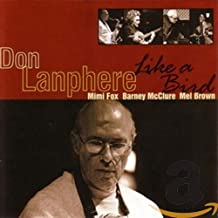
Donald Gale Lanphere was born on June 26, 1928 in Wenatchee, Washington and briefly studied music at Northwestern University in the 1940s, but moved to New York City as a member of Johnny Bothwell’s group and became part of the bebop jazz scene. While in New York, he was in a relationship with Chan Richardson, who later married Charlie Parker and then Phil Woods.
1951 saw Don arrested and charged with heroin possession in New York City. After his release from jail, he worked in his family’s music store in Wenatchee, where he met Midge Hess, whom he married in 1953. By the late 1950s and early 1960s he performed with Herb Pomeroy and with Woody Herman.
Throughout most of the 1960s Lanphere was mostly inactive musically but began performing around the Seattle, Washington area after becoming a born again Christian in 1969, at which time he also stopped using drugs and alcohol. It wasn’t until the 1980s that he would begin recording again and started releasing albums. He toured in New York City and Kansas City in 1983 and a Europe in 1985.
His later years, had Don as a jazz educator in the Pacific Northwest, giving lessons out of his home in Kirkland, Washington. He instructed clinics and small groups, as well as performing at the Bud Shank Jazz Workshop, an annual, week-long summer camp in Port Townsend, Washington for jazz students of all ages. The workshop coincided with the annual Port Townsend Jazz Festival.
He led thirteen recording sessions as well as Fats Nava Jazz Orchestrarro and the Seattle Repertory Jazz Orchestra. Tenor and soprano saxophonist, bandleader, and educator Don Lanphere passed away on October 9, 2003.
More Posts: bandleader,history,instrumental,jazz,music,saxophone
Daily Dose Of Jazz…
Robert Naughton was born on June 25, 1944 in Boston, Massachusetts. He studied piano from the age of seven through his teens, playing in rock bands and lounge bands.
After serving in the U.S. Army, Naughton started playing organ with a blues band. Following this period he studied painting in art school, then in the 1960s vibraphone became his instrument in the 1960s he was accompanying Sheila Jordan and Perry Robinson.
In 1969 Bobby recorded for the first time, releasing music on his label, Otic, and five more through 2002 as a leader. He composed the score for the silent film Everyday by German artist Hans Richter. In 1972 he played in the Jazz Composers Orchestra. Beginning a year later working with Wadada Leo Smith he recorded several albums through the 1980s. From 1978 to 1982 he toured and recorded with Anthony Braxton, Roscoe Mitchell, the Creative Music Orchestra, and the Creative Improvisers Orchestra.
Vibraphonist Bobby Naughton, who plays fluently with four sticks, exploits the instrument’s overtones and sometimes controls manually the instrument’s vanes continues to perform and record.
More Posts: bandleader,history,instrumental,jazz,music,organ,piano,vibraphone
Daily Dose Of Jazz…
Jacques Pelzer was born in Liège, Belgium on June 24, 1924, and got his inspiration from Benny Carter, then Charlie Parker and Lee Koni. His first exposure to jazz was after World War II when he joined the Bob Shots, a legendary Belgian bop band that included at various time pioneers such as Bobby Jaspar, René Thomas, and Sadi. He also played with other historical figures of Belgian jazz such as pianist/arranger Francy Boland, guitar and harmonica player Toots Thielemans, bassist Benoît Quersin. His work with René Thomas continued for several years, leading to several recordings.
Pelzer’s evolution in the Sixties and Seventies included free jazz and fusion, recorded the soundtrack of the film “Le Départ” with Don Chery, Philip Catherine, and Gato Barbieri. He had three tours of the United States with Chet Baker, resulting in a lasting friendship and musical partnership and ultimately met Dexter Gordon, Archie Shepp, Stan Getz, Lee Konitz, Philly Joe Jones and Bill Evans.
The next two decades saw Jacques returning to straight-ahead jazz, acoustic jazz, and bebop standards, modern compositions with an accent on lyricism and expression. Moving back to the studios in 1990 to record his CD Never Let Me Go with his band the Open Sky Unit along with Barney Wilen, Michel Graillier, Eric Legnini as guests. This recording received the Sax Prize for best jazz album of the year 1991.
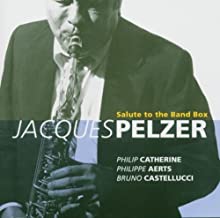
Three magnificent Belgian jazz musicians, guitarist Philip Catherine, bassist Philippe Aerts, and drummer Bruno Castellucci joined for his final album Salute To The Bandbox. Alto and soprano saxophonist and flutist Jacques Pelzer passed away on August 6, 1994 in his hometown.
More Posts: bandleader,history,instrumental,jazz,music
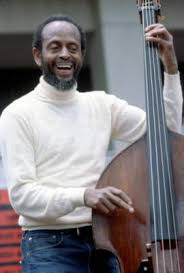
Three Wishes
On the day that Percy Heath was questioned by Pannonica as to what his three wishes would be he said:
-
-
“I would like to be able to travel to another planet.”
-
“To find something to do when I get there.”
-
“To know how to get back again.”
-
*Excerpt from Three Wishes: An Intimate Look at Jazz Greats ~ Compiled and Photographed by Pannonica de Koenigswarter

More Posts: baroness,bass,history,instrumental,jazz,music,pannonica,three,wishes