

Daily Dose Of Jazz…
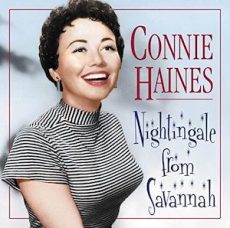
Connie Haines was born Yvonne Marie Antoinette Jasme on January 20, 1921 in Savannah, Georgia. She began performing at age four as a singer in Pick Malone’s Saucy Baby Show in her hometown and by age 9 had a regular radio show performing as Baby Yvonne Marie, the Little Princess of the Air. Her professional debut in New York City came at the Roxy Theatre when she was 14.
After gaining regional successes and winning the Major Bowes contest, she was hired by Harry James, who asked her to change her name. She did and went on to become the lead singer on The Abbott and Costello Show from 1942 to 1946. She later joined Tommy Dorsey, and Haines credited him with further developing her style.
In the early 1950s, Haines had a program, Connie Haines Entertains, did a television show with Frankie Laine, and had her own TV program, the Connie Haines Show. During this period she joined Jane Russell, Beryl Davis and Della Russell to do an impromptu performance of the spiritual Do Lord which led to a recording contract, gospel recordings and appearances of The Colgate Comedy Hour and the Arthur Murray program on television
She became part of Motown Records in 1965 becoming one of the first white singers to record for the label. She recorded 14 songs written by Smokey Robinson, including her 1965 release What’s Easy For Two Is Hard For One previously recorded by Mary Wells, and the first version of For Once in My Life, which wasn’t released until 2015.
In 1969, Haines became hostess of the Prize Movie weekday broadcast on Channel 7 in San Francisco, California. In 1980, she performed on “G.I. Jive,” a television musical special produced by PBS for its fundraising drive. Vocalist Connie Haines, who performed in a number of films, transitioned of myasthenia gravis on September 22, 2008 at age 87.

More Posts: bandleader,history,instrumental,jazz,music,vocal
Daily Dose Of Jazz…
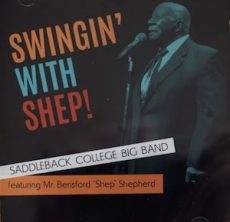
Shep Shepherd was born Berisford Shepherd on January 19, 1917 in Honduras while his mother was enroute from the West Indies to Philadelphia, Pennsylvania. Arriving in the city she first settled and raised him in a Jewish neighborhood before moving to a Black neighborhood.
An early fascination with marching bands he drummed on tables and chairs until his mother bought him a toy drum to save wear and tear on the furniture. He attended the Jules E. Mastbaum Area Conservatory and Vocational School where he trained as a percussionist on timpani, vibraphone, xylophone, snare and bass drums. Students were required to have a secondary instrument, and he chose the trombone.
Initially hoping for a career in the Philadelphia Orchestra, he shifted his interest to jazz. He formed a friendship with drummer Jimmy Crawford, who was able to help his career in New York City. During the Thirties performed with Jimmy Gorham’s band in Philadelphia. In 1941, Benny Carter contacted Shep and he moved to New York City, where he also worked with Artie Shaw the same year. He became heavily in demand and the phrase “Get Shep!” became a phrase among area musicians.
Four years in the Army saw him serving in the entertainment corps, and working there he played trombone and improved his skills as a composer and arranger. He met Billy Butlet and in 1952 after his discharge he began working with Butler as part of Bill Doggett’s group. In 1956, Shepherd helped write Doggett’s signature song, Honky Tonk. He left Doggett’s group in 1959 and returned to New York City where he worked in pit orchestras for Broadway shows, and as a music copyist and arranger.
When the nationwide tour of the Broadway show Here’s Love ended, Shepherd found himself in San Francisco, California and he became a freelance musician there. He continued to play drums through the Sixties and Seventies working with Patti Page, Lionel Hampton, Lena Horne, The Ward Singers, Earl Bostic, Buck Clayton, Odetta, Cab Calloway, Sy Oliver, Big Maybelle, and Erskine Hawkins. At 80 years old, he switched his primary focus from drums to trombone, and with organist Art Harris and drummer Robert Labbe formed the group Blues Fuse.
Drummer, trombonist, vocalist and composer Shep Shepherd, who is listed in The Biographical Encyclopedia of Jazz and Who’s Who Among Black Americans, transitioned on November 25, 2018 at the age of 101.
More Posts: bandleader,drums,history,instrumental,jazz,music,trombone,vocal
Daily Dose Of Jazz…
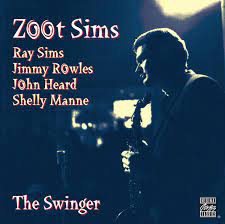
Ray C. Sims was born on January 18, 1921 in Wichita, Kansas. He played in territory bands during the early 1940s, then shortly after the end of World War II he recorded with Anita O’Day and Benny Goodman.
From 1947 to 1957 he worked with Les Brown and with Dave Pell from 1953-1957. Sims would go on to work with Harry James from the late Fifties to 1969, and also worked as a sideman with Charlie Barnet, Bill Holman, and Red Norvo.
The 1970s saw Ray playing with James again and with Corky Corcoran. Near the end of the decade he recorded with his younger brother Zoot. Trombonist Ray Sims transitioned on March 14, 2000.
More Posts: history,instrumental,jazz,music,trombone

Three Wishes
While hanging out with Larry Gales one evening Nica asked him what he would wish for if given three he said:
- “Eternal life.”
- “More knowledge of the instrument.”
- “Safe journey.”

More Posts: baroness,bass,history,instrumental,jazz,music,pannonica,three,wishes
Daily Dose Of Jazz…
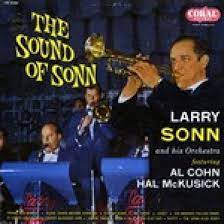
Larry Sonn was born in Woodmere on Long Island, New York on January 17, 1919. GraduatING from the Juilliard School of Music in New York City, he began his career with the Southern Symphony Orchestra in Columbia, South Carolina, as first trumpet, but later turned to the popular idioms of jazz and the big band sound.
He soon was playing trumpet and arranging for the top orchestras in the United States which included Glenn Miller, Teddy Powell, Bobby Byrne, Charlie Barnett, Hal McIntyre and Vincent Lopez.
A series of engagements in the early 1940’s took him to Philadelphia, Pennsylvania and San Antonio, Texas. An executive from the new Hotel Reforma in Mexico City heard him play and, impressed by his virtuosity, offered Larry an appearance at the hotel’s Ciro’s Night Club. The short-term contract lasted nine years and falling in love with Mexico, the country reciprocated.
Sonn returned to the States in the late-50’s and put together a new orchestra to play jazz and dance music. He gained national exposure on NBC’s Monitor with Al Jazzbo Collins commentating. When Mexico called again he went back and formed one of the foremost big bands in the country. He toured, did radio shows for XEW, Mexico’s largest station, and recorded for RCA Victor, CBS, Cisne, Peerless, Sonart and other labels.
Retiring from music in 1972 he relocated 40 miles south of Mexico City and opened a popular book store specializing in US editions for English-speaking residents and tourists. After several years he retired completely.
Trumpeter, arranger, composer, and bandleader Larry Sonn transitioned in 2015 at 95 in Cuernavaca, Morelos, Mexico.
More Posts: arranger,bandleader,composer,history,instrumental,jazz,music,trumpet