

Daily Dose Of Jazz…
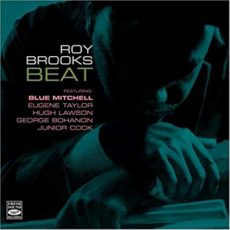
Roy Brooks was born on March 9, 1938 in Detroit, Michigan and drummed since childhood, his earliest experiences of music coming through his mother, who sang in church. He was an outstanding varsity basketball player as a teenager and was offered a scholarship to the Detroit Institute of Technology; he attended the school for three semesters and then dropped out to tour with Yusef Lateef.
After time with Lateef and Barry Harris, he played with Beans Bowles and with the Four Tops in Las Vegas. He played with Horace Silver from 1959 to 1964, including on the album Song for My Father; in 1963 he released his first album as a leader. Following this he freelanced in New York City through the 1960s and early 1970s, playing three years with Lateef again in 1967, Sonny Stitt, Lee Morgan, Dexter Gordon, Chet Baker, Junior Cook, Blue Mitchell, Charles McPherson, Pharoah Sanders in 1970, Wes Montgomery, Dollar Brand, Jackie McLean, James Moody from 1970 to 1972, Charles Mingus in 1972 and ‘73, and Milt Jackson.
His 1970 album The Free Slave featured Cecil McBee and Woody Shaw. Later in 1970, he joined Max Roach’s ensemble M’Boom, and in 1972 put together the ensemble The Artistic Truth. Brooks’s performances often included unusual instruments such as the musical saw and drums with vacuum tubes set up so as to regulate the pitch.
Suffering mental disorders he began to acquire a reputation for bizarre behavior on and off stage, and by 1975 he left New York City for Detroit where he took lithium to help regulate his behavior. By the 1980s he returned to The Artistic Truth and gigged regularly in Detroit with Kenny Cox, Harold McKinney, and Wendell Harrison. With those three he co-founded M.U.S.I.C. (Musicians United to Save Indigenous Culture) and later founded the Aboriginal Percussion Choir, an ensemble devoted to the use of non-Western percussion instruments. He used his basement as a practice and learning space, working with children as well as accomplished musicians.
The 1990s saw Detroit’s jazz scene wane and Roy stopped taking his medication, began breaking down at gigs, and in 1994 was institutionalized for three weeks. A couple of violently threatening incidents with neighbors landed him in Marquette Prison from 1997 to 2004, followed by placement in a nursing home. Drummer Roy Brooks passed away on November 15, 2005.
He recorded nearly four-dozen albums as a sideman and seven albums as a leader, his last being Roy Brooks & the Improvisational Sphere, recorded by Charles Jazzrenegade Wood on September 3, 1999, Live at Lelli’s, a well known Italian restaurant in Detroit. This is the solely available recording of the three-day performance released posthumously in 2011 by Italian label Sagittarius A-Star. The Improvisational Sphere was Roy Brooks: Drums, Marimba, Steel Drum, Keyboard; Amina Claudine Myers: Hammond B-3 Organ and Vocals; Ray Mantilla: Congas, Bells, Percussion; Jerry LeDuff: Tabla, Cuica, Shekere, Berimbau, Percussion; and Rodney Rich: Guitar.

More Posts: bandleader,drums,history,instrumental,jazz,music
Requisites
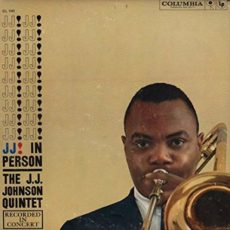
JJ! In Person is a 1958 studio recording by J. J. Johnson on the Columbia Records label. Tracks | 44:15
- Tune Up (Miles Davis) – 5:40
- Laura (David Raksin, Johnny Mercer) – 4:57
- Walkin’ (Richard Carpenter) – 6:51
- What Is This Thing Called Love? (Cole Porter) – 6:30
- Misterioso (Thelonious Monk) – 6:57
- My Old Flame (Sam Coslow, Arthur Johnston) – 3:45
- Now’s The Time (Charlie Parker) – 8:11
- J. J. Johnson – trombone
- Nat Adderley – cornet (tracks 1-5 & 7)
- Tommy Flanagan – piano
- Wilbur Little – bass
- Albert Heath – drums
JJ! In Person ~ The J.J. Johnson Quintet | By Eddie Carter
The word “deception” as described in the Merriam-Webster Online Dictionary is “the act of causing someone to accept as true or valid what is false or invalid”. I mention this definition because it’s significant to begin this week’s review with a live album that isn’t. JJ! In Person (CL 1161) by the J.J. Johnson Quintet is actually a studio recording masquerading as a live album with over-dubbed applause and fake bandstand announcements. That said, it’s not a bad album at all, quite the contrary actually. The choice of classic and contemporary tunes is exemplary, and the musicians assembled for this date are four of the best in the business; Nathaniel “Nat” Adderley on cornet, Tommy Flanagan on piano, Wilbur “Doc” Little on double bass and Albert “Tootie” Heath on drums. My copy used in this report is the original Mono Deep Groove LP and trombonist J.J. Johnson gives the introductions for all seven tunes.
The album begins with a fast-paced rendition of Miles Davis’ 1953 jazz standard Tune-Up opening with a brief introduction by Tommy before the quintet comes together to run through the melody. J.J. takes off first with a high-spirited opening statement, then Nat swings just as hard on the second reading. Tommy’s fingers fly swiftly over the keys next, then Heath wraps everything up in a heated exchange with Johnson and Adderley into the reprise, ending and introductions of the band and next tune. Laura by David Raskin is the title tune of the 1944 film with Johnny Mercer adding the lyrics after the film made the song a huge hit. A favorite of musicians and vocalists since its creation, Laura has been recorded more than four hundred times. This is a quartet feature for Johnson who takes the rhythm section through the midtempo melody completely carefree. J.J. leads off, applying a refreshing airiness to several swinging verses fueled by the trio’s supplement. Tommy follows with a gorgeous account of rhythmic vitality on a brief chorus preceding the trombone’s return for the closing coda.
The quintet returns to full voice on Richard Carpenter’s jazz classic, Walkin’ with everyone collectively cooking on the vivacious opening melody. J.J. states his thoughts economically but effectively on the lead solo. Nat offers up some brassy fire on a strikingly insightful performance next. Tommy handles the finale with a breathtaking flourish ahead of the ensemble’s climax. The first side ends vigorously on Cole Porter’s 1929 classic, What Is This Thing Called Love? An exhilarating opening solo by Flanagan segues into an effervescent theme treatment by the quintet featuring some brief comments by “Tootie”. Adderley takes over for lively, vivacious reading, then Johnson gives a joyously unrestrained performance. Little and Heath share a brief closing statement preceding the firm beat the song ends on.
The music of Thelonious Monk opens Side Two with Misterioso; the song was written in 1958, serving as a title tune of the Riverside album Monk released that year, and again as the title song for a 1965 Columbia LP he recorded while on tour. Its definition means mysterious in Italian and is given a bluesy midtempo treatment after the opening chorus. Nat and J.J. are the featured soloists and the cornetist establishes a nice momentum in a relaxed mood. The leader does a happy romp with an exceptionally agile interpretation, complementing the group’s smooth sound throughout this Monk original.
My Old Flame was written in 1934 by Arthur Johnston and Sam Coslow and featured in the film that year, Belle of The Nineties. This old evergreen is the second quartet tune featuring J.J. as the song’s only soloist. The trombonist starts the slow-tempo standard in excellent voice with a rich, warm tone producing an intimately tender statement of subtlety that’s absolutely beautiful. The album concludes with the 1945 blues by Charlie Parker, Now’s The Time, beginning with a collective medium beat on the melody that’s an irresistible toe-tapper. J.J. cruises at a moderate speed, taking the lead solo for a leisurely saunter. Nat preaches passionate phrases that are pitch-perfect on the second performance. Tommy follows with an expertly crafted interpretation of delightful pleasure. Wilbert and “Tootie” exchange one short verse each with the front line, ending the album on an upbeat note. The sound quality on this Mono LP is stupendous because of the amazing acoustics within the Columbia 30th Street Studio. Many of the label’s top jazz musicians and vocalists, Dave Brubeck, Buck Clayton, Miles Davis, Duke Ellington, Benny Goodman, Billie Holiday, Charles Mingus, Sarah Vaughan, and others used the space to create some of the greatest albums ever recorded.
This album was produced by George Avakian who in addition to his work on Columbia LPs, also produced albums on Decca Records, RCA Records, Warner Bros. Records, and World Pacific Records. The original recording engineer was Frank Laico who worked at both the Columbia 30th Street Studio and CBS Studios in New York City and was also the man behind the dials on albums for Atlantic, Cadence, Colpix, Dot Records, Epic, Reprise, United Artists Records and Verve Records to name of few. For the life of me, I can’t think of any reason why Columbia felt they needed to label this record a live album when it clearly wasn’t. Anyway, that’s a mystery for another day. As I stated at the beginning of this report, J.J. In Person is actually a very good and enjoyable album. It’s also a title I recommend that’s worthy of an audition for a spot in any jazz library, especially if you’re a fan of J.J. Johnson. There was only the one issue of this album in Mono, the Stereo release (CS 8009) hit the stores a year later in 1959. To hear the album as it was originally recorded, it can be found on the 1996 Mosaic Records eleven LP box set, The Complete Columbia J.J. Johnson Small Group Sessions!
George Avakian, Frank Laico, Misterioso (Riverside RLP 12-279/RLP 1133), (Columbia CL 2416/CS 9216); The Complete Columbia J.J. Johnson Small Group Sessions (Mosaic Records MQ11-169) – Source: Discogs.com
Laura, My Old Flame – Source: JazzStandards.comMisterioso, Now’s The Time, Tune-Up, Walkin’, What Is This Thing Called Love? – Source: Wikipedia.org

More Posts: choice,classic,collectible,collector,history,instrumental,jazz,music,trombone
Daily Dose Of Jazz…
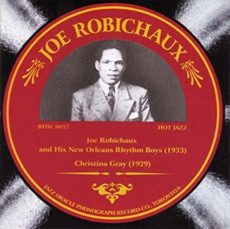
Joseph Robichaux, born March 8, 1900 in New Orleans, Louisiana and played piano from a young age and went on to study at New Orleans University. After working in the O.J. Beatty Carnival, he played with Tig Chambers briefly in 1918 before returning to New Orleans and played with Oscar Celestin, Earl Humphrey, Lee Collins, and The Black Eagles in 1922 and 1923.
He arranged music for and recorded with the Jones-Collins Astoria Hot Eight in 1929 and accompanied Christina Gray on a recording session that same year. In 1931 he formed his own ensemble, featuring Eugene Ware on trumpet, Alfred Guichard on clarinet and alto saxophone, Gene Porter on tenor sax, and Ward Crosby on drums.
They journeyed to New York City to record for Vocalion in August 1933, laying down 22 mostly stomping, uptempo sides and two alternate takes in a marathon 5-day recording schedule. Vocalion issued 10 records over the next year and 2 tracks with vocalist Chick Bullock were issued under his name on Banner, Domino, Oriole, Perfect, and Romeo record labels.
Unfortunately for the musicians and potential audiences problems with the musicians’ union in New York prevented them from being able to play live there, so they returned to New Orleans not long after recording. Robichaux expanded the size of his ensemble over the course of the 1930s and Earl Bostic was among those who joined its ranks.
The band toured Cuba in the mid-1930s and recorded for Decca Records in 1936, recording 4 sides in New Orleans, however, they were all rejected. By 1939 Robichaux’s ensemble disbanded, and he found work performing solo, mostly in New Orleans. He recorded as an accompanist on R&B recordings in the Fifties and played with Lizzie Miles.
Late in his life, he played with George Lewis from 1957 to 1964, Peter Bocage in 1962, and performed at Preservation Hall. Bandleader and pianist Joe Robichaux passed away from a heart attack at the age of 64 in 1965 in his hometown of New Orleans.
More Posts: bandleader,history,instrumental,jazz,music,piano
Daily Dose Of Jazz…
Herb Bushler was born March 7, 1939 in New York City and played piano and tuba in his youth before picking up double bass. Classically trained in bass he has performed with symphony orchestras in this capacity. In 1966 he began a longtime association with ballet and film composer Coleridge-Taylor Perkinson.
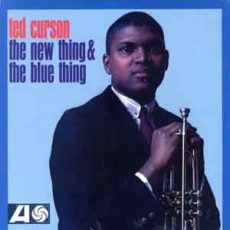
He worked extensively in jazz idioms in the 1960s and 1970s, including David Amram, Ted Curson, Blossom Dearie, Tony Williams, and Paul Winter. He first played with Gil Evans in 1967, an association that would continue on and off until 1981.
Other work during the 1970s included sessions with Enrico Rava, Joe Farrell, Ryo Kawasaki, David Sanborn, and Harold Vick. He played with The Fifth Dimension in the 1960s and has also worked with Dee Dee Bridgewater, Billy Harper, Les McCann, Joe Chambers, and Howard Johnson. Bassist Herb Bushler, never recording as a leader, continues to perform and record utilizing both double bass and electric bass.
More Posts: bandleader,bass,history,instrumental,jazz,music,tuba
Daily Dose Of Jazz…
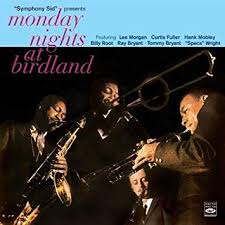
William “Billy” Root was born March 6, 1934 in Philadelphia, Pennsylvania and was raised in a musical family, his father played drums in Philadelphia ensembles.
Root began playing professionally in the early 1950s, with Roy Eldridge, Hal McIntyre, Red Rodney, Bennie Green, and Buddy Rich. Later in the decade he worked extensively with Stan Kenton and with Rodney, as well as with Clifford Brown, Dizzy Gillespie, Hank Mobley, Lee Morgan, and Curtis Fuller.
He led his own ensembles from the late 1950s. In the 1960s he performed with Al Grey and Dakota Staton, and in 1968 settled in Las Vegas, Nevada. Saxophonist Billy Root played the casinos for the next two decades before retiring.
More Posts: bandleader,history,instrumental,jazz,music,saxophone