

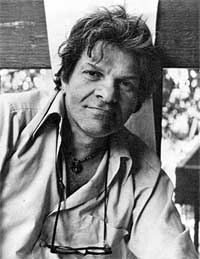
Jazz Poems
FOR MILES
Your sound is faultless
pure & round
holy
almost profound
Your sound is your sound
true & from within
a confession
soulful & lovely
Poet whose sound is played
lost or recorded
but heard
can you recall that 54 night at the Open Door
when you & bird
wailed five in the morning some wondrous
yet unimaginable score?
GREG CORSO
from Jazz Poems ~ Selected and Edited by Kevin Young

More Posts: book,classic,collectible,history,jazz,library,poet
Daily Dose Of Jazz…
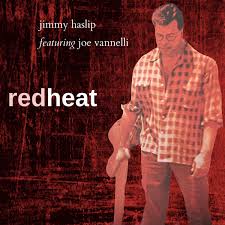
James Robert Haslip was born December 31, 1951 in the Bronx, New York City to Puerto Rican immigrants. Spanish was his first language but he learned to speak English in kindergarten. Moving to Huntington, New York when he was four years old, by age seven he was playing drums then trumpet and tuba until landing on the bass at 15.
Surrounded in the home with music that included classic and orchestra jazz, Latin, and pop vocals, he and his peers also visited nightclubs and concert venues. Jimmy took music lessons and attended a private music school, but considers himself self-taught. He went to a local music shop with his father, purchased a right-handed bass though he is left-handed, and learned to play it upside down without restringing.
During his high school years Haslip formed his first band called Soul Mine with his classmates, playing soul music at school dances and parties. The early 1970s saw him playing with New York glam band Street Punk, then moved to Los Angeles, California in 1976, where he played with guitarists Tommy Bolin and Harvey Mande.
A founding member of the jazz fusion group Yellowjackets in 1977, a relationship that lasted until 2012, he has also worked with Jeff Lorber, Eric Marienthal, Bruce Hornsby, Rita Coolidge, Gino Vannelli, Kiss, Tommy Bolin, Allan Holdsworth, Marilyn Scott, Chaka Khan, Al Jarreau, Donald Fagen, and Anita Baker.
Bassist Jimmy Haslip is currently taking a break from performance to concentrate on family and producing independent projects.

More Posts: bandleader,bass,history,instrumental,jazz,music
Daily Dose Of Jazz…
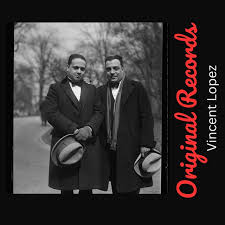
Vincent Lopez was born of Portuguese immigrant parents in Brooklyn, New York City on December 30, 1895. By 1916 he was leading his own dance band in New York City. Five years later his band began broadcasting on the new medium of entertainment radio, giving listeners a weekly 90-minute show on Newark, New Jersey station WJZ. The broadcast was instrumental in making him one of North America’s most popular bandleaders through the 1940s.
In the 1930s and ‘40s Vincent worked occasionally in feature films, notably The Big Broadcast and I Don’t Want to Make History and was one of the first bandleaders to work in Soundies movie musicals. His flamboyant style of piano playing influenced Eddy Duchin and Liberace.
Noted musicians who played in his band included Artie Shaw, Xavier Cugat, Jimmy Dorsey, Tommy Dorsey, Bob Effros, Mike Mosiello, Fred Lowery, Joe Tarto and Glenn Miller. He featured singers Keller Sisters and Lynch, Betty Hutton, and Marion Hutton. Lopez’s longtime drummer was Mike Riley, who popularized the novelty hit The Music Goes Round and Round.
In 1941, Lopez’s Orchestra began a residency at Manhattan’s Taft Hotel that lasted 25 years. In the early 1950s, he along with Gloria Parker hosted a radio program broadcast from the Taft Hotel called Shake the Maracas in which audience members competed for small prizes by playing maracas with the orchestra.
Bandleader, pianist and actor Vincent Lopez, who published his autobiography Lopez Speaking in 1960, died at the Villa Maria nursing home in North Miami, Florida on September 20, 1975.
More Posts: bandleader,history,instrumental,jazz,music,piano

ABELITA MATEUS TRIO
Singer, pianist and São Paulo native Abelita Mateus is in the vanguard of the next wave of soulful and hypnotic 21st Century Brazilian music.
A New Yorker since 2012, her 2017 debut album Vivenda made the jazz chart’s Top 25 and Downbeat wrote that her 2018 follow-up record Mixed Feelings “shows off an impressive ability to synthesize the sounds of her Brazilian home with jazz, the music that inspired her move to the States.”
Tickets: $25.00 +Fee
More Posts: adventure,bandleader,club,genius,instrumental,jazz,music,piano,preserving,travel,vocal

CHRISTIAN SANDS QUARTET
The New Haven prodigy began lessons as a toddler, started gigging at seven, studied with Dr. Billy Taylor and Dave Brubeck, joined Christian McBride’s group while still in school and has appeared on over 30 recordings, six as a leader. Though fluent in every jazz style, the trio format is his favorite.
Tickets: $30.00 ~$35.00 +Fee
More Posts: adventure,bandleader,club,genius,instrumental,jazz,music,piano,preserving,travel