

Daily Dose Of Jazz…
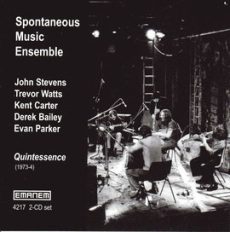
John William Stevens was born on June 10, 1940 in Brentford, Middlesex, England, the son of a tap dancer. He listened to jazz as a child but was more interested in drawing and painting, through which he expressed himself throughout his life. He studied at the Ealing Art College and then started work in a design studio, but left at 19 to join the Royal Air Force. It was here that he studied the drums at its School of Music in Uxbridge, England and where he met Trevor Watts and Paul Rutherford, two musicians who became close collaborators.
In the mid-1960s, Stevens began to play in London jazz groups with Tubby Hayes and Ronnie Scott, and in 1965 he led a quartet. He moved away from mainstream jazz when he heard free jazz from the U.S. by musicians like Ornette Coleman and Albert Ayler. By 1966, he formed the Spontaneous Music Ensemble (SME) with Watts and Rutherford. The band moved into the Little Theatre Club at Garrick Yard, St Martin’s Lane, London, England. In 1967, they released their debut album, Challenge, however, his interest turned to quiet music, non-Western music and improvisation.
Stevens would go on to play with free improvisors Derek Bailey, Peter Kowald, Julie Tippetts and Robert Calvert, until the mid-1970s when the SME settled down to regulars Stevens, Nigel Coombes on violin, and Roger Smith on guitar. During the same period he consistently played with guitarist and songwriter John Martyn as part of a trio that included bassist Danny Thompson, recording Martyn’s 1976 Live at Leeds.
The Eighties saw John becoming an educator involved with Community Music, an organisation through which he took his form of music making to youth clubs, mental health institutions, the Lewisham Academy of Music, and other unusual places. Notes taken during these sessions were later turned into a book for the Open University called Search and Reflect.
Drummer John Stevens died at the age of 54 from a heart attack on September 13, 1994.

More Posts: bandleader,drums,educator,history,instrumental,jazz,music
Requisites
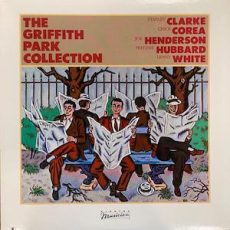
The Griffith Park Collection ~ Stanley Clarke, Chick Corea, Joe Henderson, Freddie Hubbard, Lenny White | By Eddie Carter
This morning’s record from the library unveils a unique jazz collaboration. The Griffith Park Collection (Elektra Musician E1-60025) is the second of two studio albums recorded over four days with an all-star ensemble: Freddie Hubbard on flugelhorn (tracks: A3, B3) and trumpet (A1, A2, B1), Joe Henderson on tenor sax (A1 to A3, B1, B3), Chick Corea on piano, Stanley Clarke on upright bass, and Lenny White on drums. Their first record was Echoes of An Era, an album of jazz standards with Chaka Khan. This was a rare reunion for Corea, Clarke, and White, who had not played together since they were members of Return to Forever. My copy is the 1982 U.S. Stereo release.
The opener is L’s Bop by Lenny White. The quintet’s lively theme takes off at a brisk pace, leading to Joe’s swinging opening solo. Freddie maintains the vigorous intensity in the second reading; then Chick skillfully navigates the third statement into a short exchange with Lenny until the theme’s reprise and fade out. The pace slows down slightly for Why Wait by Stanley Clarke, a medium-tempo blues that opens with the ensemble’s theme. Joe gets this grooving affair going in the first solo. Freddie answers him with an exceptional performance; then Chick provides the exclamation point preceding the group’s return for the closing chorus and exit.
October Ballade by Chick Corea begins with the pianist’s soothing introduction ahead of Freddie’s tender melody. Joe has the first solo and builds each chorus gently with deep emotion until Chick takes over for a brief, lovely interpretation. The quintet wraps up things with a poignantly touching reprise and finale. Side Two gets underway with Happy Times by Freddie Hubbard, a cheerful tune that the group takes to heart in the theme. Joe greets the opening statement joyfully, and then Freddie comes in for a bright and bubbly solo. Chick adds to the festive atmosphere in the second interpretation. Lenny delivers a finale that is quite enjoyable before the close.
Remember, by Steve Swallow is a beautiful waltz that opens with the trio’s thoughtfully polite introduction and theme. Chick carefully cultivates the lead solo with delicate notes. Stanley’s reply is an affectionately warm interpretation as Lenny’s drums softly compliment him until the ensemble’s theme restatement. Guernica by Lenny White is a musical portrait of Pablo Picasso’s Spanish Civil War painting. It is a haunting song and the album’s most adventurous tune with a melancholy theme. Joe begins the opening solo with an airy, nostalgic tone. Freddie emerges next with a breathtaking reading; then Chick delivers an enthusiastic statement preceding the group’s return for the climax.
Lenny White produced The Griffith Park Collection and Bernie Kirsh was the recording engineer. The album’s sound quality is good, with a softer soundstage in the highs, midrange, and bass. At just under forty minutes, it is a hidden gem that flows with a beat and does not disappoint. If you are in the mood for an excellent album with remarkable chemistry and exceptional performances. In that case, I invite you to check out The Griffith Park Collection by Stanley Clarke, Chick Corea, Joe Henderson, Freddie Hubbard, and Lenny White on your next record shopping trip. It is a wonderful album that I highly recommend for your library, and I am sure it will reward your purchase for years to come!
~ Echoes of An Era (Elektra E1-60021) – Source: Discogs.com © 2024 by Edward Thomas Carter
More Posts: bass,choice,classic,collectible,collector,drums,history,instrumental,jazz,music,piano,saxophone,trumpet
OMAR SOSA & QUARTETO AMERICANOS
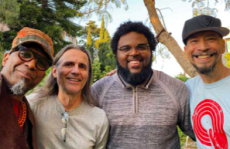
Cuban piano maestro Omar Sosa, a longtime Healdsburg favorite, returns to town with his Quarteto Americanos featuring Cuban bassist Ernesto Mazar Kindelán, Berkeley drummer Josh Jones, and Oakland multi-reed player Sheldon Brown, who’s spent much of the past two years touring with the Grateful Dead’s Bob Weir. Though long based in Barcelona, Sosa gained fame while living in Oakland, and his musical journey from Camagüey and Havana to Ecuador and eventually the East Bay is detailed in the new documentary Omar Sosa’s 88 Well-Tuned Drums, which screens as part of this program. An omnivorously creative figure whose music encompasses Afro-Cuban folkloric chants and European Romanticism, post-bop and hip hop, West African grooves and ambient moods, he’s released more than three dozen albums documenting collaborations with an international cast of fellow sound explorers.
5:00 PM | Documentary Screening
7:30 PM | Concert
More Posts: album,CALIFORNIA JAZZ FOUNDATION | VOYAGER | CALENDAR | MARCH | SEPTEMBER adventure,concert,genius,jazz,music,piano,preserving,travel
GREGORY PORTER & NAJEE
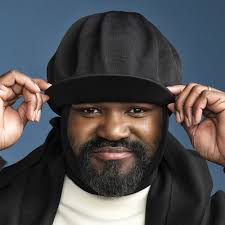
Gregory Porter is a singer, songwriter and musician. He moved to the Bedford-Stuyvesant section of Brooklyn, New York in 2004, along with his brother Lloyd and worked as a chef at Lloyd’s restaurant Bread-Stuy (now defunct), where he also performed. Porter performed at other neighborhood venues including Sista’s Place and Solomon’s Porch, and moved on to Harlem club St. Nick’s Pub, where he maintained a weekly residency. Out of this residency evolved what would become Porter’s touring band.He has twice won the Grammy Award for Best Jazz Vocal Album: first in 2014 for Liquid Spirit and then again in 2017 for Take Me to the Alley.
Najee, is a smooth jazz saxophonist and flautist. After his studies at the New England Conservatory, Najee returned to New York City in the early 1980s. In 1983, he and his brother Fareed toured with Chaka Khan for the Ain’t Nobody Tour. His albums okyo Blue and Day by Day led to Najee winning two Soul Train Awards for Best Jazz Artist in 1991 and 1993.
More Posts: adventure,concert,genius,jazz,music,preserving,travel,vocal
Daily Dose Of Jazz…
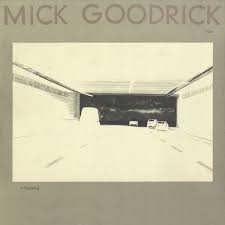
Mick Goodrick was born on June 9, 1945 in Sharon, Pennsylvania and began studying guitar in his pre-teens and was performing professionally a few years later. At sixteen he became interested in jazz at a Stan Kenton Band Camp. He moved to Boston, Massachusetts and attended the Berklee School of Music from 1963 to 1967, eventually teaching at Berklee,
After spending a few years touring with Gary Burton, he returned to Boston, he settled into a career largely as an educator. Goodrick’s notable students include Bill Frisell, Julian Lage, John Scofield, Lage Lund, Mike Stern, Avner Strauss, and Rale Micic.
During the 1980s to the late 1990s,Mick worked with Charlie Haden’s Liberation Music Orchestra, Jack DeJohnette and with Steve Swallow. He performed in a duo with Pat Metheny at the Montreal Jazz Festival in 2005 and with Wolfgang Muthspiel at the Jazz Standard in 2008.
Guitarist Mick Goodrick died November 16, 2022 from the long-term effects of Parkinson’s disease at the age of 77.
More Posts: bandleader,educator,guitar,history,instrumental,jazz,music