

Daily Dose Of Jazz…
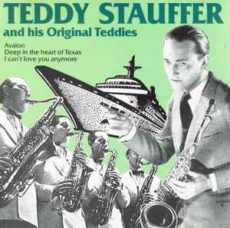
Ernst Heinrich “Teddy” Stauffer was born May 2, 1909 In Murten, Fribourg, Switzerland He was dubbed Germany’s “Swing-King” of the 1930s. He formed the band known as the Teddies, which is also billed as the Original Teddies or the International Teddies, which continued after he left in 1941.
Annual trips to the Swiss cities of St. Moritz, Arosa and also a guest appearance in London, England were responsible for the international fame of the Teddies band. Until 1939, he appeared with his Original Teddies-Band especially in Berlin and Hamburg, Germany. He enjoyed his popularity at the 1936 Olympics, had hits with Goody~Goody, and turned Horst Wessel Lied, the National Socialist’s anthem, into a jazz number in 1938. With his jazzy swing music, however, Stauffer increasingly got in trouble with the Reichsmusikkammer, a Nazi institution that promoted “good German music” which was composed by Aryans and seen as consistent with Nazi ideals.
Returning to Switzerland in 1939, he eventually emigrated to the United States and then to Mexico. His reputation as a playboy and a well~known womanizer who was married to Hedy Lamar, did not sway him from also having affairs with Rita Hayworth and Barbara Hutton.
Violinist, saxophonist and bandleader Teddy Stauffer who was also an actor, nightclub owner, and restaurateur transitioned on August 27, 1991 in Acapulco, Mexico at the age of 82.

More Posts: bandleader,club owner,history,hotelier,instrumental,jazz,music,saxophone,violin
Requisites
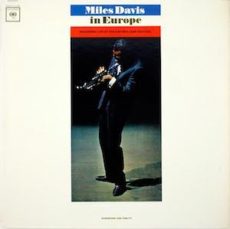
Miles Davis In Europe ~ Miles Davis | By Eddie Carter
This morning’s choice from the library is a 1964 live album by Miles Davis that’s an overlooked gem, in my opinion, Miles Davis In Europe (Columbia CL 2183/CS 8983). It documents the trumpeter in concert at the 1963 Antibes International Jazz Festival during a successful European tour that was also broadcast over RTF (Radiodiffusion-Télévision Française). He’s joined on stage by George Coleman on tenor sax, Herbie Hancock on piano, Ron Carter on bass, and Tony Williams on drums who also appeared on Seven Steps To Heaven recorded a few months earlier. My copy used in this report is the original US Mono album and Side One opens with the introduction of the quintet by Master of Ceremonies, André Francis.
Autumn Leaves by Joseph Kosma, Johnny Mercer, and Jacques Prévert opens with Miles’ muted introduction and excellent support by the rhythm section. They begin with a deceptively easy melody; he then picks up the pace on the opening chorus with a carefree swing. George steps up next with a buoyant statement that cooks, then Herbie takes flight for a scintillating interpretation. Ron walks with assurance briefly on the closer ahead of the group’s ending theme. The leader’s Milestones is off to the races on the quintet’s speedy melody. Davis soars into the stratosphere on the lead solo. Coleman shows he’s equally adept for speed on the second statement, and Hancock closes with a highly energetic performance leading to the group’s vigorous ending.
The quintet turns up the temperature a little more on Joshua by Victor Feldman with a torrid opening chorus. Miles takes off like a speedy gazelle on the first statement. George comes in next, dispensing a fierce intensity on the second reading, then Herbie goes on a high-spirited flight in the closer preceding the ensemble’s lively summation. Side Two gets underway with Miles returning to the mute for Cole Porter’s All of You. It first appeared in the Broadway musical, Silk Stockings (1955). He and the trio begin the song with an attractive melody. Davis starts the solos with a charmingly articulate interpretation. Coleman offers some cheerful notes in the second performance. Hancock takes the final solo swinging easily into the trumpeter’s closing chorus and soft climax.
Walkin’ by Richard Carpenter opens with a quick melody and a furious opening statement by Miles. Tony takes the stage next and sparkles on an energetic interpretation. George swings with a fiery flavor in the third reading and Herbie closes the solos with a thoroughly entertaining performance leading to the theme’s reprise and finish. Miles Davis In Europe was produced by Teo Macero and RTF was behind the dials for the broadcast recording. The sound quality is superb, placing the listener in the festival audience to enjoy the quintet’s set. Everyone is in top form throughout, this album captures the quintet’s fire during their performance, and the music cooks from start to finish. If you’re in the mood for some swinging live jazz, I offer for your consideration, Miles Davis In Europe. It’s worthy of wider recognition and makes a perfect complement to the group’s other live albums, My Funny Valentine and ‘Four’ & More!
~ ‘Four’ & More (Columbia CL 2453/CS 9253), My Funny Valentine (Columbia CL 2306/CS 9106), Seven Steps To Heaven (Columbia CL 2051/CS 8851) – Source: Discogs.com ~ Autumn Leaves – Source: JazzStandards.com ~ All of You – Source: Wikipedia.org © 2022 by Edward Thomas Carter

More Posts: choice,classic,collectible,collector,history,instrumental,jazz,music,trumpet
Daily Dose Of Jazz…
Henderson Chambers was born on May 1, 1908 in Alexandria, Louisiana and studied at Leland College and Morehouse College before joining the Neil Montgomery band in 1931. He played in Nashville with Doc Banks in 1932, then with Jack Jackson’s Pullman Porters, Speed Webb, Zack Whyte, and Al Sears in Kentucky.
After two years with Tiny Bradshaw in the middle of the Thirties, Chambers moved to New York City where he played with Chris Columbus at the Savoy Ballroom in 1939-40. Following this he played for the next three years with Louis Armstrong.
Later in the 1940s, he worked with Don Redman, Sy Oliver, Lucky Millinder, and Count Basie. By the 1950s he would spend time with Cab Calloway, Doc Cheatham, Duke Ellington, and Mercer Ellington. For a period he worked as a studio musician, however, after joining Ray Charles’s band from 1961 to 1963, Henderson played with Basie again until 1966.
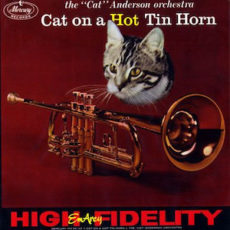
He recorded seven albums with Count Basie, five with Buck Clayton and ten with Gene Ammons, Cat Anderson, Sammy Davis Jr., Ella Fitzgerald, Edmond Hall, Arthur Prysock & Count Basie, Jimmy Rushing, Frank Sinatra & Count Basie, and Ernie Wilkins.
Trombonist Henderson Chambers’ final performances were with Edgar Battle, shortly before his transition from a heart attack on October 19, 1967 in New York City.
More Posts: history,instrumental,jazz,music,trombone

Daily Dose Of Jazz…
Michel Delville was born on April 30, 1969 in Liège, Belgium. He has been performing and composing alternative music since the mid-1980s. His bands include The Wrong Object, douBt, Machine Mass feat. Dave Liebman, Alex Maguire’s Electric 6tet, the New Texture Pan Tonal Fellowship, the Ed Mann Project, and the Moving Tones.
He has worked with Elton Dean, Annie Whitehead, Harry Beckett, Richard Sinclair, Ed Mann, Dagmar Krause, Benoît Moerlen, Karen Mantler, Geoff Leigh, Markus Stauss, Guy Segers, Klaus Blasquiz, Gilad Atzmon, and Dirk Wachtelear.
In 2009 Delville created the trio douBt with Alex Maguire and Tony Bianco and released their debut album, Never Pet a Burning Dog. The following year he was invited to join and coordinate Comicoperando, a tribute to the music of Robert Wyatt. The band toured Europe and Canada as a sextet in 2011, then went on to collaborate with the international collective 48 Cameras and Robin Rimbaud. In 2018 he was voted one of the three best electric guitarists of the year by Arnaldo DeSouteiro’s Annual Jazz Station Poll.
He has authored, edited or co-edited numerous books about comparative poetics and interdisciplinary studies and has been awarded several times for his writings. The rank of Officer of the Order of Leopold I was bestowed upon him in 2009, and he received the 2009 Prix Wernaers for research and dissemination of knowledge. He has recorded more than three dozen albums across the groups he has founded or been a part of.
Guitarist, writer and critic Michel Delville, who composes and performs in the jazz fusion and progressive rock genres, teaches literature at the University of Liège, and continues to compose and perform.
More Posts: bandleader,guitar,history,instrumental,jazz,music
The Quarantined Jazz Voyager
The Jazz Voyager is still practicing social distancing and masking at unknown vac gatherings because the airlines have extended my eCredit another year. The news is talking about another variant and this voyager is vigilant in remaining safe.
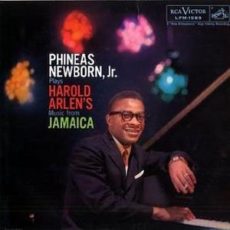
This week I am pulling from the library Phineas Newborn Jr. Plays Harold Arlen’s Music from Jamaica. It is an album by the pianist, produced by A. K. Salim, and recorded on September 7, 8 & 9, 1957 in New York City and released on the RCA Victor label. The album features his interpretations of compositions from the Broadway musical Jamaica.
Track List | 38:00 All compositions by Harold Arlen and Yip Harburg
- Savannah ~ 4:10
- Little Biscuit ~ 3:03
- Cocoanut Sweet ~ 4:23
- Push De Button ~ 4:23
- Napoleon ~ 4:20
- Hooray For De Yankee Dollar ~ 3:31
- For Every Fish ~ 3:47
- Take It Slow, Joe ~ 4:20
- Pity the Sunset ~ 4:07
- Pretty to Walk With ~ 2:52
- Phineas Newborn Jr. ~ piano
- Ernie Royal (tracks 2, 4 & 6-9), Nick Ferrante (tracks 1, 3, 5 & 10) ~ trumpet
- Jimmy Cleveland ~ trombone
- Jerome Richardson ~ tenor saxophone, flute
- Sahib Shihab ~ baritone saxophone, alto saxophone, clarinet, bass clarinet
- Les Spann ~ guitar
- George Duvivier ~ bass
- Osie Johnson ~ drums
- Francisco Pozo, Willie Rodriguez ~ congas, bongos, timbale

More Posts: adventure,album,club,genius,jazz,museum,music,piano,preserving,restaurant,travel