

Requisites
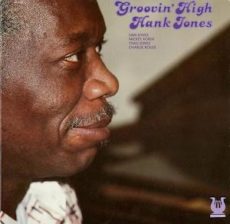
Groovin’ High ~ Hank Jones | By Eddie Carter
This morning’s discussion begins with a 1979 album by Hank Jones recalling the music of Bebop, Groovin’ High (Muse Records MR 5169). Hank was born in 1918 and was one of seven children. His mom sang, and his two older sisters also played piano. His two younger brothers, Thad and Elvin would also become successful jazz musicians. A pianist of great versatility, Hank recorded over sixty albums as a leader and appeared on numerous others as a sideman. The musicians he worked with over his extensive career reads like an Encyclopedia Britannica of Jazz. Hank’s backed by brother Thad Jones (tracks: A2, A3, B1 to B3) on cornet, Charlie Rouse (tracks: A2, A3, B2, B3) on tenor sax, Sam Jones on bass, and Mickey Roker on drums. My copy used in this report is the original US Stereo album.
Side One opens with a tune by Dizzy Gillespie titled Algo Bueno. If you don’t recognize the name, it’s better known as the jazz standard, Woody‘n You. The trio is firing on all cylinders from the start of the brightly swinging melody. Hank is up first and delivers evident enjoyment on the keys. Sam walks the bass next in a cheerful and lively performance before the threesome regroups for the ending. Anthropology by Dizzy Gillespie and Charlie Parker takes the tempo upward on the quintet’s melody. Charlie and Thad share solo duties on the lead solo, then each gives an individual statement. Hank responds with some vivacious notes next, followed by Sam and Mickey who contribute two concise comments ahead of the closing chorus.
Sippin’ at Bells by Miles Davis is up next and receives a samba treatment beginning with the quintet’s danceable theme after a brief trio introduction. Charlie takes the lead and displays incredible warmth in the opening statement. Sam steps up next for an attractive performance, followed by Thad who offers a superb example of choice notes in the third solo. Hank has the final word and closes with an especially lovely interpretation into the group’s exit. Blue Monk is the first of three tunes by Thelonious Monk in this set. The first side finale opens with the ensemble paying homage to a tune Monk recorded the most. Hank begins with an alluring reading, then Sam’s closing statement adds some gentle lines leading to the climax.
Dizzy Gillespie’s jazz standard, Groovin’ High begins Side Two as a quartet performance with Thad establishing a nice momentum on the theme using a mute. He continues with an endearing opening performance that winks to Dizzy as it unfolds. Hank breezes into the second reading making a profound impression, and Mickey exchanges a brief conversation with Thad and Hank before the close. Monk’s second contribution, I Mean You is a lively little jam affording everyone a solo opportunity and gets underway with the ensemble’s spirited theme. Rouse gets into a vivacious groove on the first reading. Thad swings sprightly on the second solo, then Hank comes next with an impressive interpretation. Sam follows with some solid bass lines and Mickey fuels the finale with some brisk brushwork.
Monk’s Jackie-ing starts deceptively at a relaxed tempo with the quintet playing a march, then Thad delivers some exciting fireworks on the first solo. Charlie cooks for a few scintillating choruses next. Hank shifts into high gear on the third reading and Mickey takes us home with a fiery finale culminating with the group’s reprise and slow fade. Groovin’ High was produced by Fred Seibert and Rudy Van Gelder was the man behind the dials. The sound quality of this album is first-rate. The instruments come alive with an impressive soundstage for an album that’s over four decades old. If you enjoy jazz piano, are a Bebop fan, or are just discovering this talented musician, I invite you to audition Groovin’ High by Hank Jones for a spot in your library. It’s a thoroughly entertaining album that’s a pleasure to hear any time of the day or evening!
~ Blue Monk, Groovin’ High, Woody’n You – Source: JazzStandards.com ~ Anthropology – Source: Wikipedia.org © 2022 by Edward Thomas Carter

More Posts: choice,classic,collectible,collector,history,instrumental,jazz,music,piano
Daily Dose Of Jazz…
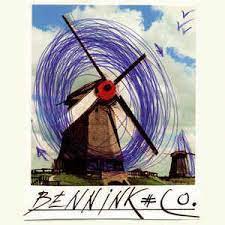
Han Bennink was born April 17, 1942 in Zaandam, Netherlands, the son of a classical percussionist. He began playing the drums and the clarinet during his teens. He also went on to learn to play the violin, banjo and piano, which feature him on some of his recordings.
Through the 1960s, while in his t,wenties he was the drummer with a number of American musicians visiting the Netherlands, including Dexter Gordon, Wes Montgomery, Sonny Rollins and Eric Dolphy.
He subsequently became a central figure in the emerging European free improvisation scene. In 1963 he formed a quartet with pianist Misha Mengelberg and saxophonist Piet Noordijk which performed at the 1966 Newport Jazz Festival. The following year Han co-founded the Instant Composers Pool with Mengelberg and Willem Breuker, which sponsored Dutch avant garde performances. Late in the decade he played in a trio with saxophonist Peter Brötzmann and Belgian pianist Fred Van Hove, which became a duo after Van Hove’s departure in 1976.
From the late 1980s through the early 2000s, Bennik collaborated closely with Dutch post-punk band The Ex, simultaneously playing through the 1990s in Clusone 3, a trio with saxophonist/clarinetist Michael Moore and cellist Ernst Reijseger.
He has recorded twenty albums as a solo or leader and recorded over a eight dozen albums as a sideman with the likes of Derek Bailey, Conny Bauer, Don Cherry and Alexander von Schlippenbach, Steve Lacy, Lee Konitz, Ray anderson, Gary Bartz, Jckie McLean, Paul Bley, Annette Peacock, Anthony Braxton, Marion Brown, Uri Caine, Myra Melford, and Sonny Rollins. (partial list)
His style is wide-ranging, running from conventional jazz drumming to highly unconventional free improvisation. Drummer Han Bennink is best known as one of the pivotal figures in early European free jazz and free improvisation, and he continues to push forward the envelope of his music at 80.
More Posts: bandleader,banjo,clarinet,drums,history,instrumental,jazz,music,piano,violin
Daily Dose Of Jazz…
Boyce Brown was born on April 16, 1910 in Chicago, Illinois. He worked with Wingy Manone, Paul Mares, and Danny Alvin. Best known of his recordings is a 1935 session with Paul Mares and his Friars Society Orchestra, that was first issued on LP in 1955 as part of Columbia’s Chicago Style Jazz album and a 1939 session with Jimmy McPartland & his Jazz Band, which was first released as part of Decca’s Chicago Jazz album. Both of these sessions had Brown demonstrating a driving, harmonically advanced style.
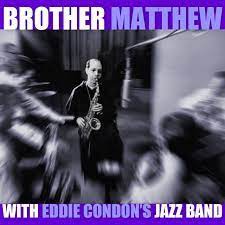
In 1953, Boyce entered a monastery of the Roman Catholic Servite Order, however, he returned in 1956 to release his one and only album as Brother Matthew, backed by a band organized by Eddie Condon.
Alto saxophonist Boyce Brown, who played in the dixieland genre, transitioned from a heart attack on January 30, 1959 at the age of 48.
More Posts: bandleader,history,instrumental,jazz,music,saxophone
Daily Dose Of Jazz…
Charlie Smith was born April 15, 1927 in New York City and played locally in the city during the late 1940s before taking a position accompanying Ella Fitzgerald. Working briefly with the Duke Ellington’s Orchestra in 1951 before being replaced by Louie Bellson, he also played with Joe Bushkin, Erroll Garner, Slim Gaillard, Benny Goodman, Hot Lips Page, Oscar Peterson, Artie Shaw, and Slam Stewart.
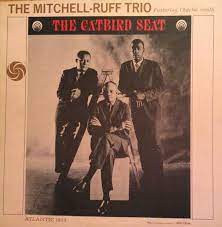
He performed on television with Dizzy Gillespie and Charlie Parker in 1952, and later in the decade worked with Billy Taylor, Aaron Bell, and Wild Bill Davison. Relocating to New Haven around 1960, Smith played with Willie Ruff and Dwike Mitchell in a trio setting.
Drummer Charlie Smith, who was an educator late in his life, transitioned on January 15, 1966 in New Haven, Connecticut.
More Posts: drums,history,instrumental,jazz,music
The Jazz Voyager
Two years ago the Jazz Voyager commenced lockdown against a very serious pandemic that was taking lives without discretion. Though I am beginning to get out and experience life outside with talks, films and music in open air spaces, the airlines has sent another important message by extending my eCredit another year until December 2023. Still aware that the pandemic is not over, I remain vigilant with mask wearing and social distancing in enclosed spaces such as markets, doctor’s offices. It is our duty to keep others safe as well by doing our individual part.
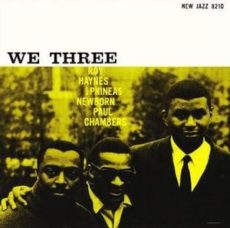
This week we are traveling musically back and taking down off the shelves to listen to We Three, the 1958 recording led by Roy Haynes by a trio of players who made their mark on the genre. Though the group was short-lived, the trio made the best of the time they spent together and delivered this album.
The album was recorded on November 14, 1958 at the Van Gelder Studio in Hackensack, New Jersey, produced by Esmond Edwards, and was released in May the following year on the New Jazz record label.
Track List | 39:29- Reflection (Ray Bryant) ~ 4:24
- Sugar Ray (Phineas Newborn, Jr.) ~ 6:25
- Solitaire (King Guion, Carl Nutter, Renee Borek) ~ 8:54
- After Hours (Avery Parrish) ~ 11:21
- Sneakin’ Around (Bryant) ~ 4:24
- Our Delight (Tadd Dameron) ~ 4:01
- Roy Haynes – drums
- Phineas Newborn Jr. ~ piano
- Paul Chambers ~ bass

More Posts: adventure,album,bass,club,drums,genius,jazz,museum,music,piano,preserving,restaurant,travel