

Daily Dose Of Jazz…
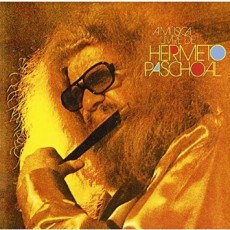
Hermeto Pascoal was born an albino on June 22, 1936 in Lagoa da Canoa, Alagoas, Brazil at a time when there was no electricity. He learned the accordion from his father and practiced for hours as his condition of birth did not allow him to work the fields.
Hermeto’s career began in 1964 with appearances on several Brazilian recordings alongside relatively unknown groups that included Edu Lobo, Elis Regina and Cesar Camargo Mariano, establishing widely influential new directions in post-bossa Brazilian jazz.
By 1966 he was playing in the Sambrasa Trio with Airto Moriera and Humberto Clayber releasing one album Em Som Maior. Then he and Airto joined Trio Novo and in 1967 renamed the group Quarteto Novo and released an album that launched the careers of Pascoal and Moreira. Pascoal would then go on to join the multi-faceted group Brazilian Octopus.
Pascoal initially caught the international public’s attention with an appearance on Miles Davis’s 1971 album Live-Evil, which featured him on three pieces he composed. Later collaborations involved fellow Brazilian musicians Airto and Flora Purim. From the late 1970s onward he has mostly led his own groups, that have included bassist Itibere Zwarg, pianist Jvino Santos-Neto and percussionists Nene, Pernambuco and Zabele.
Known as o Bruxo (the Sorcerer), Hermeto often makes music with unconventional objects such as teapots, children’s toys, and animals, as well as keyboards, button accordion, melodica, saxophone, guitar, flute, voice, various brass and folkloric instruments. Folk music from rural Brazil is another important influence in his work.
Between 1996 and 1997, Pascoal worked on a book project called the Calendário do Som, that contains a song for every day of the year, including 29 February, so that everyone would have a song for his or her birthday. He continues to perform, record and tour.

Jazz Is Global – Share
More Posts: accordion,flute,guitar,keyboard,melodica,saxophone,vocal
Daily Dose Of Jazz…
Billy Cobham was born William Emanuel Cobham on May 16, 1944 in Panama but moved to New York City with his family during his early childhood. A drummer from his youth, he attended New York’s High School of Music and Art. Graduating in 1962, he played in a U.S. Army Band from 1965 to 1968, followed by joining Horace Silver’s ensemble for a year. He went on to work with Stanley Turrentine, Shirley Scott and George Benson.
Branching out into jazz fusion Cobham blended elements of jazz, rock and funk to create a signature sound and recorded with the Brecker Brothers in their 1970 group Dream. From here he performed with John Abercrombie, then touring extensively with Miles Davis and recording on may albums including A Tribute To Jack Johnson.
By 1970s, Cobham was working with John McLaughlin, co-founding the Mahavisnu Orchestra, released his first solo debut titled Spectrum, and played with Carlos Santana, George Duke and Jan Hammer. It was during this period that he began recording a series of groundbreaking fusion records and experiencing astral projections during his concerts.
He would record extensively for the fusion-oriented CTI Records, while simultaneously becoming a member of the New York Jazz Quartet. By the Eighties he was working with Jack Bruce & Friends, joined up with the Grateful Dead for a performance at Radio City Music Hall, formed his Glass Menagerie, releasing two albums with Michael Urbaniak, Gil Goldstein, Tim Landers and Mike Stern. The Nineties saw Billy with an all-star cast Live At The Greek with Stanley Clarke, Larry Carlton, Najee and Deron Johnson.
In the millennium a number of solo albums have followed with drummer Billy Cobham releasing more than 30 recordings under his own name, and continuing to record, perform and teach.
Put A Dose In Your Pocket
More Posts: drums,keyboard,percussion
Daily Dose OF Jazz…
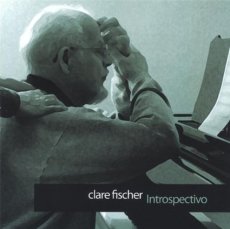
Clare Fischer was born October 22, 1928 in Durand, Michigan and started general music study in grade school with violin and piano as his first instruments. By age 7 he was picking out four-part harmony on the piano and by 12 was composing classical music and creating instrumental arrangements for dance bands.
In high school he added cello, clarinet and saxophone to his arsenal of instruments and studied music theory, harmony and orchestration privately. He started his own band at 15, writing all the arrangements, went on to college studying music composition and theory as a piano major. After graduation and a stint in the Army as the arranger for the U.S. Military Academy Band at West Point, N.Y., he returned to Michigan State and received his Masters in 1955.
He went on to arrange for the vocal quartet Hi-Lo’s that would later become a major influence on Herbie Hancock, would record under his own name in 1962 for Pacific Jazz, play with Bud Shank, Joe Pass and Cal Tjader among others, arrange for Sergio Mendes and Willy Ruff, began playing organ and composed his most famous compositions, Pensativa and Morning.
By the mid-‘70s Fischer was pioneering the electric keyboard, reconnected with Tjader started his group Salsa Picante, won a Grammy for his album 2+2 and Free Fall, forayed into R&B doing orchestral sweeteners, worked with Rufus with Chaka Khan, The Jacksons, Earl Klugh, The Debarges, Shot-gun and Atlantic Starr and pop artists such as Paul McCartney, Prince, Celine Dion and Robert Palmer, picking up numerous gold records.
From the Eighties on Clare has been commissioned to score symphonic work using Duke Ellington and Billy Strayhorn themes, working with Branford Marsalis, the Netherlands Metropole Orchestra, arranged for Spike Lee’s Girl 6, has conducted clinics and master classes at numerous universities, and continued to record in small group and orchestral settings until his death in Los Angeles, California on January 26, 2012 at age 82..
Take A Dose On The Road
More Posts: arranger,bandleader,composer,keyboard,piano,saxophone,synthesizer
Daily Dose OF Jazz…
Roy Ayers was born on September 10, 1940 in Los Angeles, California and grew up in the epicenter of southern California Black music scene known as South Park, now called South Central. He received his first set of mallets at age five from Lionel Hampton thus leading him to the vibraphone.
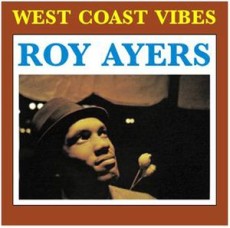
He studied music attending Central Avenue area schools Wadsworth elementary, Nevins Middle and Thomas Jefferson High that also graduated Dexter Gordon. He became part of the West Coast jazz scene in the early ‘60s, played withCurtis Amy as well as Herbie Mann for four years and recorded his first album West Coast Vibes in 1963 and several albums for Atlantic Records as a post-bopper. It was during this period that he became exposed to new styles of music outside bebop.
The 70s saw the advent of jazz funk and Roy was there to help pioneer its rise. With highly successful soundtracks like “Coffy” Ayers went on to record “Mystic Voyage”, “Everybody Loves The Sunshine”, “Running Away” and a string of hits throughout the decade. By 1980 he had teamed with Fela Kuti releasing Afrobeat “Music of Many Colors, went on to produce Sylvia Striplin’s “Give Me Your Love”, and released several albums on the Ichiban label. He collaborated on the Stolen Moments: Red, Hot+ Cool project, turned his attention to house music, founded two record labels – Uno Melodic and Gold Mink, and currently is the feature of the documentary called the Roy Ayers Project.
Roy Ayers, vibraphonist, vocalist, keyboardist, producer, jazz, funk and soul composer has recorded over 50 albums during his long and prolific career and he continues to perform, record and tour.
Give The Gift Of Knowledge
More Posts: keyboard,vibraphone,vocal
Daily Dose Of Jazz…
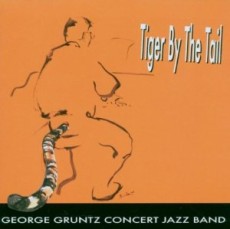
George Gruntz was born in Basel, Switzerland on June 24, 1932. The young pianist won prizes at Zurich Jazz Festivals and in 1958 was pianist with the International Youth Band at the Newport Jazz Festival. While there he accompanied, among others Louis Armstrong and in an instant became famous.
George went on to work with jazz musicians Phil Woods, Roland Kirk, Don Cherry, Chet Baker, Art Farmer, Dexter Gordon, Johnny Griffin and Mel Lewis to name a few. From 1972 to 1994 he served as artistic director for the JazzFest Berlin, composed his first opera, founded the Piano Conclave and the George Gruntz Concert Jazz Band and moderated the TV music series “All You Need Is Love”.
An accomplished arranger and composer, having been commissioned by many orchestra and symphonies, he is also an organist, harpsichordist and keyboardist with more that three dozen albums to his credit. He continued to compose, arrange, record and perform until his death on January 10, 2013.
Put A Dose In Your Pocket
More Posts: harpsichord,keyboard,organ,piano