

The Jazz Voyager
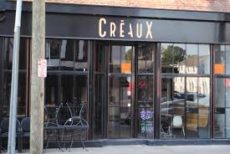
The Jazz Voyager is off to the Queen City to visit Creaux at 1901 Vine Street, Cincinnati, OH 45202. This stylish, New Orleans–inspired outpost features craft cocktails, Cajun-Creole dishes, and live music. Serving up feeling good and enjoying the moment atmosphere, the founders brought the fun, bold culture of Southern Louisiana.
Jazz, blues, and funk fill the air on Friday and Saturday nights depending on the week’s schedule. The venue is decorated with portraits of musicians such as Aretha Franklin, Tom Petty, Billie Holiday, B.B. King and Prince.
This Saturday from 8:30 to 11:30 this voyager is checking out the Ethos Jazz Quintet. The club is closed Sunday through Tuesday, 4:00 ~ Midnight on Wednesday and Thursday, and 2:30 am on Friday and Saturday. For more information 513-208-4466

More Posts: adventure,club,genius,jazz,museum,music,preserving,restaurant,travel,voyager
Daily Dose Of Jazz…
Bill Pemberton was born William McLane on March 5, 1918 in New York City and played violin as a child before switching to bass. From 1941 to 1945 he was a member of Frankie Newton’s orchestra and then went on to work with Herman “Ivory” Chittison, Mercer Ellington, Eddie Barefield, and Billy Kyle later in the 1940s.
During the Fifties, he worked with Art Tatum and Rex Stewart, and from 1966 to 1969 was Earl Hines’s bassist, including for international tours and at the 1967 Newport Jazz Festival and Monterey Jazz Festival.
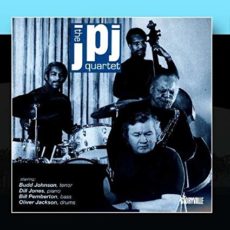
He also worked with Buck Clayton in 1967. In 1969 he joined the JPJ quartet alongside Budd Johnson, Oliver Jackson, and Dill Jones, and remained with the group until 1975. Simultaneously he played with Ruby Braff, Max Kaminsky, and Vic Dickenson. He rejoined Hines in 1977, playing in Europe with him and Benny Carter. Into the Eighties, he played with Panama Francis, Bill Coleman, and Doc Cheatham.
Double-bassist Bill Pemberton passed away on December 13, 1984 in New York City.
More Posts: bass,history,instrumental,jazz,music
Daily Dose Of Jazz…
Donald Percy Rendell was born in Plymouth, England on March 4, 1926 and raised in London where his father, Percy, was the musical director of the D’Oyly Carte Opera Company; his mother Vera was also a musician. He attended the City of London School, to which he gained a choral half-scholarship and during school was evacuated during the Second World War to Marlborough College, where he heard jazz for the first time.
Rendell began playing the piano at the age of five but switched to saxophone in his teens. While working for Barclay’s Bank, he left to become a professional musician and began his career on alto saxophone but changed to tenor saxophone in 1943. During the rest of the 1940s, he was in the bands of George Evans and Oscar Rabin. Beginning in 1950, he spent three years in the Johnny Dankworth Septet and performed with Billie Holiday in Manchester, England, before playing in the bands of Tony Crombie and Ted Heath.
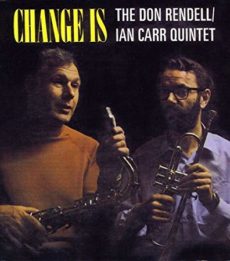
After touring in Europe with Stan Kenton, he played in Cyprus with Tony Kinsey, then Don was a member of Woody Herman’s Anglo American Herd in 1959. During the late 1950s and early Sixties, he led bands, including one with Ian Carr that lasted until 1969, one with Barbara Thompson in the 1970s, and as the sole leader in the 1980s and 1990s. In particular, the Rendell-Carr Quintet gained an international reputation, performing in France at the Antibes Festival and was the Band of the Year for three years in succession in the Melody Maker poll. He performed in festivals in England and France as well as working with Michael Garrick and Brian Priestley.
He taught at the Royal Academy of Music for three years in the early 1970s, at the Guildhall School of Music and Drama beginning in 1984 and wrote instruction books on flute and saxophone. Don Rendell, who played soprano saxophone, flute, clarinet and was also an arranger, passed away after a short illness at the age of 89 on October 20, 2015.

More Posts: arranger,author,bandleader,clarinet,educator,flute,history,instrumental,jazz,music,saxophone
Three Wishes
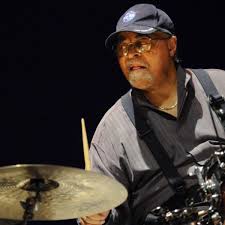
Jimmy Cobb is asked of his three wishes by Baroness Pannonica and he responded by saying:
- “That the musicians would get as much money as they’re supposed to get when they work.”
- “Good health for me, or some sh*t like that, forever. I wish to be an old man and play through all of it.”
- “Straighten the world out.”
*Excerpt from Three Wishes: An Intimate Look at Jazz Greats ~ Compiled and Photographed by Pannonica de Koenigswarter

More Posts: baroness,drums,history,instrumental,jazz,music,pannonica,three,wishes
Daily Dose Of Jazz…
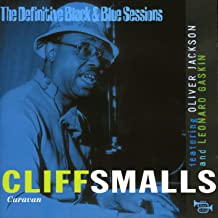
Cliff Smalls was born Clifton Arnold on March 3, 1918 and was raised in Charleston, South Carolina. His father, a carpenter, performed piano and organ for Charleston’s Central Baptist Church. He taught Smalls classical music at an early age. He left home with the Carolina Cotton Pickers and also recorded with them, for instance, Off and on Blues and “Deed I Do, which he arranged and featured Cat Anderson in 1937 when he was 19.
With his career coinciding with the early years of bebop, from 1942 to 1946 he was a trombonist, arranger and also backup piano-player for band-leader and pianist Earl Hines, alongside Dizzie Gillespie and Charlie Parker. While in the Hines band he performed often during broadcasts seven nights a week on open mikes coast-to-coast across America. Hines also used Teddy Wilson, Jess Stacy and Nat “King” Cole as backup piano-players but Smalls was his favorite. He also played in the Jimmie Lunceford and Erskine Hawkins bands.
After the inevitable post-World War II breakup of the Hines big-band, Cliff went on to play and record in smaller ensembles with his former Earl Hines band colleagues, singer and band-leader Billy Eckstine, trombonist Bennie Green, saxophonist Earl Bostic and singer Sarah Vaughan. In 1949 he recorded with JJ Johnson and Charlie Rouse. He was the pianist on Earl Bostic’s 1950 hit Flamingo along with John Coltrane but had a serious automobile accident, with Earl Bostic, in 1951 and laid in bed all of 1952, till March of 1953.
Recovering, Smalls shifted his musical career to serve as music director/arranger for singers Eartha Kitt, Ella Fitzgerald, Sammy Davis, Jr., Smokey Robinson and the Miracles, Clyde McPhatter, Roy Hamilton and Brook Benton. He recorded Bennie Green with Art Farmer in 1956 and was, for many years, a regular with Sy Oliver’s nine-piece Little Big-Band from 1974-1984, a regular stint in New York’s Rainbow Room.
In the 1970s he returned to jazz-recording, including four solo tracks for The Complete Master Jazz Piano Series in 1970, with Sy Oliver in 1973, Texas Twister with Buddy Tate in 1975, Swing and Things in 1976 and Caravan in France in 1978. In 1980 Smalls was featured playing piano in The Cotton Club, directed by Francis Ford Coppola. Trombonist, pianist, conductor and arranger Cliff Smalls, who worked in the jazz, soul and rhythm & blues genres, passed away in 2008.
More Posts: arranger,bandleader,conductor,history,instrumental,jazz,music,piano,trombone