

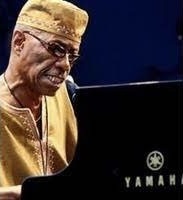
OJEDA PENN
Ojeda Penn is an accomplished Jazz artist from Montgomery, Alabama. Since moving to Atlanta, Georgia in 1967 he has become a well~known and respected figure in the city’s Jazz scene for over 40 years.
Joe’s Jazz Joint is a Joseph Jennings Production and held in the Paul Roberson Theater | Sundays through November 2022
More Posts: adventure,album,club,festival,genius,jazz,museum,music,piano,preserving,restaurant,travel
Daily Dose OF Jazz…
Mark Kramer was born November 3, 1945 in Philadelphia, Pennsylvania. His prelimonary tutelage came from members of the Philadelphia Orchestra who mentored him on violin from the age of five. His early jazz performances in his teens and twenties included Michael and Randy Brecker, Charles Fambrough, Stanley Clarke, and Eric Gravatt.
Over the next decades his trio went on to record a series of specialty productions including the largest known body of jazz renditions of complete Broadway shows, jazz versions of principal themes from the John Williams score of Harry Potter and the Sorcerer’s Stone, and a compilation of jazz renditions of the music of The Rolling Stones.
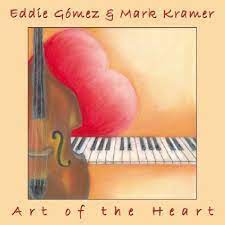
Kramer has mainly been an arranger and leader of his own trios throughout his career. His numerous recordings/productions are often listed under The Mark Kramer Trio. Many works from the late Eighties with bassist Eddie Gómez are listed under Eddie Gómez and Mark Kramer or simply Eddie Gómez.
A far-ranging catalog of duo and trio recordings included the Art of the Heart on Art of Life Records. Pianist, composer, arranger, and producer/engineer Mark Kramer continues to pursue his creativity in music.

More Posts: arranger,bandleader,composer,engineer,history,instrumental,jazz,music,piano,producer

ERIC JONES TRIO
Eric Jones Trio Featuring Laiken Williams, Marc Chesanow, Robert Saunders
Eric was born in Moultrie, Georgia, and started to play piano by ear at the age of five. At 11, Eric began studying trumpet. At 16 he started formal lessons on piano and within two years, he was awarded a piano scholarship to Andrew College. Eric went on to pursue his education at Armstrong Atlantic State University, studying under Dr. Kevin Hampton, graduating with a B.A. in Piano. In addition to teaching private lessons, composing and arranging, he completed his Masters in Composition from Georgia Southern University.
Laiken was born and raised in Nicholls, Ga. While attending CHS, Laiken was involved with many school activities. She held a state position as Secretary for the Georgia Association of Student Councils for 2.5 years.. Laiken’s other involvements included The National Honor Society, FBLA, Chorus, and Showchoir. After graduating from Coffee High in 2004, Laiken set off to Savannah, Ga to attend Armstrong Atlantic State University to major in Political Science. While at AASU, Laiken was involved with Armstrong’s University Chorale as well as holding an officer position with Student Government and Campus Union Board.
Marc holds a Master’s Degree from the University of Memphis in addition to a Bachelor’s Degree from the Eastman School of Music in Double Bass performance. He has studied with world-renowned soloist James VanDemark, John Chiego from the University of Memphis, Louis Kosma from the Metropolitan Opera Orchestra, James Clute from the Minnesota Orchestra as well as others. Currently residing in Savannah, Georgia, Marc can be seen regularly performing with the Savannah Philharmonic and The Hilton Head Symphony as well as regular performances at jazz venues such as the Good Times Jazz Bar and The Jazz Corner.
Robert is a Savannah native & a rising drummer on the southeast coast. He attended Savannah Chatham County Public schools graduating from Windsor Forest High School. After that, he attended Armstrong State University as a student of Dr. Stephen Primatic. He has performed with Wycliffe Gordon, Scotty Barnhart, Dred “Perky” Scott, Fred Wesley, Cynthia Utterbach, and with local jazz hero’s such as: Teddy Adams, Ben Tucker, Howard Paul, Huxie Scott, & Gina Renee. He is a member of The Eric Jones Trio, the Isaac Smith Band, Laiken Love, & is the house drummer at Good Times Jazz Bar and Restaurant.
More Posts: adventure,album,club,festival,genius,jazz,museum,music,piano,preserving,restaurant,travel
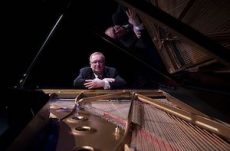
KEVIN COLE
KEVIN COLE: THE FAVORITE PIANIST OF SONGWRITERS MARVIN HAMLISCH AND IRVING BERLIN… AND HE HAS STORIES TO TELL!
“America’s Pianist,” Kevin Cole, has received accolades from some of the foremost critics in America: “A piano genius…he reveals an understanding of harmony, rhythmic complexity and pure show-biz virtuosity that would have had Horowitz Vladimir smiling with envy,” wrote arts critic Andrew Patner.
When Cole sits down at the piano, you would swear Gershwin himself was at work… Cole stands as the best Gershwin pianist in America today,” Howard Reich, Chicago Tribune.
Cole has performed with over 100 orchestras worldwide including: sold-out performances with the Los Angeles Philharmonic at the Hollywood Bowl; BBC Concert Orchestra at Royal Albert Hall; National Symphony at the Kennedy Center; Hong Kong Philharmonic; San Francisco Symphony, Chicago Symphony, Philadelphia Orchestra and many others.
He made his Carnegie Hall debut with the Albany Symphony in May 2013.
Kevin Cole is an award-winning musical director, arranger, composer, vocalist, archivist and producer who garnered the praises of Irving Berlin, Harold Arlen, E.Y. Harburg, Hugh Martin, BurtonLane, Marvin Hamlisch, Stephen Sondheim and members of the Jerome Kern and Gershwin families.
He was the only pianist Hamlisch used for his Gershwin concerts from 2004 to his untimely death in 2012 and Kevin was featured soloist for the PBS special, Gershwin at One Symphony Place with the Nashville Symphony.
More Posts: adventure,album,club,festival,genius,jazz,museum,music,piano,preserving,restaurant,travel
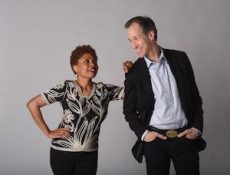
MARIA HOWELL & NOEL FRIEDLINE
Middle C Jazz 3rd Anniversary | Noel & Maria: The Very Best of Billy, Stevie, Elton and Ray with a twist of…
Noel & Maria: The Very Best of Billy, Stevie, Elton and Ray with a twist of Motown, Chicago, Sam Cooke, Luther Vandross, Donny Hathaway, Peter Cetera, Marvin Gaye, The Temptations, The Supremes, Martha Reeves & the Vandellas, The Four Tops, the Jackson 5, Gladys Knight, and more!
Friday ~ November 4 | 7:00pm & 9:15PM
Saturday ~ November 5 | 7:00pm & 9:15PM
More Posts: adventure,album,club,festival,genius,jazz,museum,music,piano,preserving,restaurant,travel,vocal