

Daily Dose Of Jazz…
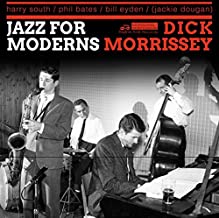
Richard Edwin Morrissey was born on May 9, 1940 in Horley, Surrey, England. Self-taught, he started playing clarinet in his school band, The Delta City Jazzmen, at the age of sixteen with fellow pupils. He then joined the Original Climax Jazz Band before going on to join trumpeter Gus Galbraith’s Septet, where alto saxophonist Peter King introduced him to Charlie Parker’s recordings, Shortly afterward he began specializing on tenor saxophone.
Making his name as a hard bop player, Morrissey appeared regularly at the Marquee Club in 1960, and recorded his first solo album It’s Morrissey, Man! in 1961 at the age of 21 for Fontana Records. Spending most of 1962 in Calcutta, India as part of the Ashley Kozak Quartet, they played three 2-hour sessions seven days a week. Upon returning to the UK he formed his quartet and recorded three LPs, Have You Heard?, Storm Warning!, and Here and Now & Sounding Good!.
He went on to play regular gigs in London and during this time Dick also played extensively in bands led by Ian Hamer and Harry South, including The Six Sounds. He also played briefly in Ted Heath’s Big Band, Johnny Dankworth and his Orchestra, the Harry South Big Band. and Eric Burdon and The Animals’ Big Band.
The mid-1960s, saw Dick played with Brother Jack McDuff, Jimmy Witherspoon, J. J. Jackson and Sonny Stitt together with guitarist Ernest Ranglin recorded with him during the Sixties and early Seventies.
In 1969, Morrissey by thenwas a many-time winner and runner-up of the Melody Maker Jazz Poll, and teaming up with another Melody Maker award-winner, guitarist Terry Smith, with whom he had worked in J. J. Jackson’s Band, to form an early jazz-rock group, If.
When If disbanded in 1975, he toured Germany and the United States, recording with the Average White Band, before meeting up with Glaswegian guitarist, Jim Mullen. With some of the members of AWB, together they formed Morrissey–Mullen, recording their first album, Up in 1976) in New York. On returning to Great Britain, Morrissey–Mullen formed another band which rapidly became Britain’s most highly acclaimed jazz-fusion band of the day. They ultimately recorded seven albums over the 16 years they were together, with Morrissey and Mullen collaborating on each other’s solo albums.
He went on to have numerous collaborations with Tubby Hayes, Bill Le Sage, Roy Budd, Ian Hamer, Ian Carr, Tony Lee, Tony Archer, Michael Garrick, Spike Robinson, Allan Ganley, Peter King, Ray Warleigh, and Hoagy Carmichael among others. Tenor and soprano saxophonist, flautist, and composer Dick Morrissey passed away on November 8, 2000.

More Posts: bandleader,flute,history,instrumental,jazz,music,saxophone
Daily Dose Of Jazz…
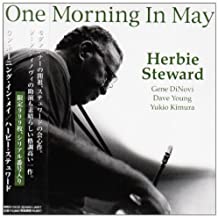
Herbert Bickford Steward was born May 7, 1926 in Los Angeles, California.
He recorded six albums as a leader and worked as a sideman with Serge Chaloff, Zoot SimsAl Cohn and Stan Kenton.
Saxophonist Herbie Steward, widely known for being one of the tenor saxophone players in Four Brothers, part of Woody Herman’s Second Herd, passed away on August 9, 2003 in Clearlake, California.
More Posts: bandleader,history,instrumental,jazz,music,saxophone
Daily Dose Of Jazz…
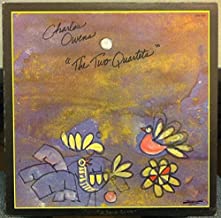
Charles Owens, was born Charles M. Brown on May 4, 1939 in Phoenix, Arizona and began playing music while attending the University of San Diego. Following a stint in the United States Armed Forces, he studied at Berklee College of Music.
Working in the bands of Buddy Rich and Mongo Santamaria as an alto saxophonist in the late 1960s. In the 1970s played mostly tenor and soprano saxophone. He played in that decade with Bobby Bryant, Paul Humphrey, Diana Ross, John Mayall, Frank Zappa, Lorez Alexandria, Henry Franklin, Patrice Rushen, Gerald Wilson, and James Newton among others.
He worked with Newton again in the mid-1980s, and also played during the same decade with John Carter, Horace Tapscott, and Mercer Ellington. Later he worked with Carmen Bradford, Jeannie Cheatham and Jimmy Cheatham, and Buddy Childers.
Saxophonist and flautist Charles Owens continues to pursue excellence with his music.
More Posts: bandleader,flute,history,instrumental,jazz,musc,saxophone
Daily Dose Of Jazz…
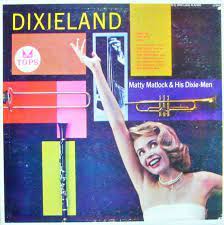
Julian Clifton Matlock was born on April 27, 1907 in Paducah, Kentucky and raised in Nashville from the age of ten. He began playing clarinet when he was 12.
From 1929 to 1934, Matlock replaced Benny Goodman in the Ben Pollack band doing arrangements and performing on clarinet. He was one of the main arrangers for Bob Crosby’s band and joined Crosby’s group in 1935 as clarinettist, playing with both the main Crosby band and the smaller Bobcats group. However, he was often seconded to write full-time for the orchestra and the Bobcats. He stayed with Crosby until the band broke up in 1942.
After the dissolution of Crosby’s group, Matty worked in Los Angeles, California playing for recordings made by a variety of Dixieland groups. In 1955, he appeared in the film Pete Kelly’s Blues, playing clarinet for a band that is seen in a scene in a Kansas City speakeasy in 1927. He would go on to play with Bing Crosby, Ella Fitzgerald, Ray Heindorf, Ben Pollack and Beverly Jenkins.
Dixieland clarinettist, saxophonist and arranger Matty Matlock, who recorded three albums as a leader, passed away on June 14, 1978 in Los Angeles, California.
More Posts: arranger,bandleader,clarinet,history,instrumental,jazz,music,saxophone
Daily Dose Of Jazz…
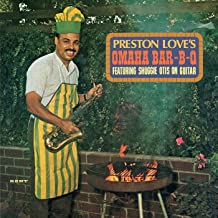
Preston Haynes Love was born on April 26, 1921 in Omaha, Nebraska, grew up in North Omaha and graduated from North High.
He became renowned as a professional sideman and saxophone balladeer in the big band heyday, being a member of the bands of Nat Towles, Lloyd Hunter, Snub Mosley, Lucky Millinder and Fats Waller before getting his big break with the Count Basie Orchestra at age 22. Love played and recorded with the Count Basie band from 1945–1947 and played on Basie’s only #1 hit record, Open The Door Richard.
He eventually became a bandleader himself, playing with Lena Horne, Billie Holiday, his friends Johnny Otis and Wynonie Harris, with whom he had several hits. In 1952, he launched the short-lived Spin Records, as a joint effort with songwriter Otis René (When It’s Sleepy Time Down South). The label released material by the Preston Love Orchestra, among others.
By the early 1960s he was working with Ray Charles in California and Aretha Franklin, eventually becoming Motown’s West Coast house bandleader. He played and toured with The Four Tops, The Temptations, Tammi Terrell, Marvin Gaye, Gladys Knight and others. Preston also recorded with Nichelle Nichols, Janis Joplin, Frank Zappa, Shuggie Otis, T-Bone Walker, Charles Brown, Ruth Brown, Smokey Robinson, Diana Ross and Stevie Wonder, among numerous others.
Love continued touring the U.S. and Europe into the 2000s, additionally lecturing and writing about the history he was part of. In his later years he returned to Omaha, wrote a book, led bands, the last of which featured his daughter vocalist Portia Love, drummer Gary E. Foster, pianist Orville Johnson, and bassist Nate Mickels. He also held down the position of advertising agent for the city’s local newspaper, Omaha Star, a local newspaper serving the city’s Black community. He appeared in the Clint Eastwood film Play Misty For Me with the Johnny Otis band.
Saxophonist, bandleader, and songwriter Preston Love, who was inducted into the Omaha Black Music Hall of Fame, passed away on February 12, 2004 after a battle with prostate cancer.
More Posts: bandleader,history,instrumental,jazz,music,saxophone,songwriter