

Daily Dose Of Jazz…
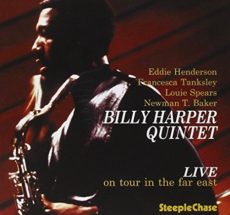
Billy Harper: The Tenor Titan Who Sang Before He Could Speak Jazz
Long before Billy Harper picked up a tenor saxophone, he was already making music with his voice. Born January 17, 1943, in Houston, Texas, he was singing choral and solo pieces at both secular and sacred events by age five. Music wasn’t something he discovered, it was something already flowing through him, as natural as breathing.
A Prodigy Finds His Instrument
By 14, while still attending Worthing High School, Harper had already formed his first Billy Harper Quintet, a remarkably ambitious move for a teenager. After graduating cum laude, he headed to North Texas State University to study saxophone and music theory, joining their powerhouse big band that was already legendary in jazz education circles. In 1965, the ensemble took first prize at the Kansas Jazz Festival, with Harper’s passionate tenor playing catching the attention of everyone in earshot.
The Move That Changes Everything
The following year, 1966, Harper made the pilgrimage every serious jazz musician eventually makes: New York City. His Coltrane-influenced sound—spiritually intense, harmonically sophisticated, and emotionally raw immediately caught ears. Soon he was playing with jazz royalty: two transformative years with drum master Art Blakey, followed by stints with Elvin Jones, the Thad Jones/Mel Lewis Orchestra, Max Roach, Randy Weston, and Gil Evans throughout the 1970s. These weren’t just gigs; they were nightly masterclasses with living legends who had helped define modern jazz.
Global Ambassador, Singular Vision
Harper toured the world with these groups—Africa, Europe, Japan, across the United States—absorbing influences and sharing his sound with audiences everywhere. But it was his work as a leader that truly showcased his unique vision and voice.
His 1973 album Capra Black became a seminal statement of Black consciousness, fusing avant-garde jazz exploration with gospel fervor and political urgency. Then came 1976’s Black Saint, which not only launched the influential Italian label of the same name but announced Harper as a major international force—a composer, bandleader, and conceptualist with something important to say.
A Prolific Career
With over twenty albums to his name and collaborations with flutist Bobbi Humphrey, trumpeter Lee Morgan, and pianist McCoy Tyner (among many others), Harper has spent recent decades recording primarily for the respected Steeplechase and Evidence labels, documenting his continuing evolution as an artist.
Giving Back
And he’s never stopped teaching—generously sharing his hard-won knowledge at Livingston College, Rutgers University, and The New School of Jazz and Contemporary Music, earning grants and awards along the way. For Harper, passing on the tradition is as important as extending it.
Still Blowing Strong
He continues touring the globe, still delivering that powerful, spiritually charged tenor sound that’s unmistakably his own. His playing carries the weight of gospel testifying, the intellectual rigor of advanced harmonic thinking, and the emotional honesty of someone who’s lived deeply and honestly through their music.
From Houston church choirs to the world’s greatest concert halls and jazz festivals—that’s a journey worth listening to. And Billy Harper is still writing new chapters.
More Posts: saxophone
Daily Dose Of Jazz…
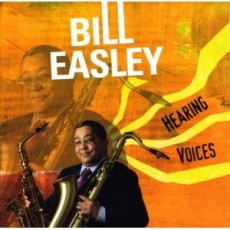
Bill Easley: A Life Lived Through Every Era of Modern Jazz
Some musicians pass through jazz history. Bill Easley has lived it—from Harlem jam sessions to Stax Records, from Arctic military bands to Broadway’s brightest lights.
A Prodigy from Upstate New York
Born January 13, 1946, in Orleans, New York, Easley was already a working professional by age thirteen, gigging with his parents and absorbing the craft from the inside. When he arrived in New York City in 1964, he dove straight into the deep end—studying part-time at the legendary Juilliard School while simultaneously earning his real education in Harlem’s uptown jazz clubs, learning directly from the masters who made the music breathe.
An Unexpected Arctic Interlude
Then came an unexpected detour: the draft. Suddenly, Easley found himself stationed in Fairbanks, Alaska, with the 9th Army Band. It wasn’t exactly 52nd Street, but as any true musician knows, you make music wherever you are—even when surrounded by snow instead of skyscrapers.
The Real Education Begins
Back in action by the late ’60s, Easley was playing the legendary rooms that defined the era—Minton’s Playhouse, the Plugged Nickel, The Jazz Workshop, The Hurricane—standing shoulder to shoulder with George Benson. These weren’t just gigs; they were nightly master classes in jazz history happening in real time, each set a conversation with the greats.
Memphis Soul and Stax Swagger
The ’70s brought a southern migration to Memphis, where Easley entered Isaac Hayes’ orbit, laying down tracks at the iconic Stax and Hi Records—the studios where soul music was being redefined. Even while pursuing his formal education at Memphis State University, he was out there every night with big bands and show bands, whatever was swinging.
Then came the gig that changes everything for any jazz musician: touring with the Duke Ellington Orchestra under Mercer Ellington in the mid-’70s. To play that book, to carry that legacy—it’s a responsibility and an honor few ever experience.
The Great White Way Calls
By 1980, Broadway beckoned, and Easley answered. His theater credits read like a greatest-hits compilation: Sophisticated Ladies, The Wiz, Black and Blue, Jelly’s Last Jam, Fosse—the shows that defined an era of musical theater and kept the jazz tradition alive on the world’s most famous stages.
Never Just a Pit Musician
But here’s the thing about Bill Easley: he never stopped being a jazz cat. Between curtain calls, he was in recording studios with pianists Sir Roland Hanna and Mulgrew Miller, organists Jimmy McGriff and Jimmy Smith, vocalist Ruth Brown, and drummers Grady Tate and Billy Higgins. He recorded for respected labels like Sunnyside and Milestone, keeping one foot firmly planted in the jazz tradition even as the other tapped out Broadway rhythms.
Master of Many Voices
Saxophone, flute, clarinet—Easley commands them all with the hard-won wisdom of someone who’s witnessed every chapter of modern jazz unfold firsthand. From bebop to soul jazz, from Broadway pits to intimate club dates, he’s been there, absorbed it, and made it part of his musical DNA.
Still Writing the Story
And the best part? Bill Easley is still out there, still playing, still adding new chapters to a story that now spans six decades and counting. In a world obsessed with the next new thing, there’s something deeply reassuring about a musician who has mastered the art of being present—in every era, in every room, in every note.
That’s not just a career. That’s a life lived in service to the music itself.
Daily Dose Of Jazz…
Haywood Henry: The Baritone Voice Behind a Thousand Hits
Born Frank Haywood Henry on January 10, 1913, in Birmingham, Alabama, this future jazz great started his musical journey on clarinet before discovering his true calling in the rich, resonant tones of the baritone saxophone. Though the baritone became his signature voice, Henry never abandoned the clarinet entirely, keeping both instruments close throughout his remarkable six-decade career.
From College Band to the Big Time
In 1930, Henry joined the Bama State Collegians, getting his first taste of professional music-making. When he returned to the group in 1934, now led by the dynamic Erskine Hawkins, it marked the beginning of a musical partnership that would last into the 1950s. Hawkins’ orchestra became Henry’s proving ground, where his big-toned baritone work became an essential part of the band’s sound.
A Journeyman’s Journey
After his years with Hawkins, Henry became one of those invaluable musicians who could fit into any setting. He worked with guitarist Tiny Grimes, saxophonist Julian Dash, and the Fletcher Henderson Reunion Band. Perhaps most notably, he occasionally substituted for the legendary Harry Carney in Duke Ellington’s Orchestra—a testament to his skill, given that Carney was widely considered the greatest baritone saxophonist in jazz history.
The 1960s found Henry in equally distinguished company: Wilbur DeParis, Max Kaminsky, Snub Mosley, Louis Metcalf, Earl Hines, Sy Oliver, and the New York Jazz Repertory Company all benefited from his steady presence and warm sound.
The Secret Session King
Here’s where Henry’s story takes a fascinating turn: during the 1950s and ’60s, he became one of the anonymous giants of the recording industry, playing on over 1,000 rock and roll records. While teenagers danced to the latest hits, few knew that a Birmingham-born jazz baritone saxophonist was helping create the sound they loved. In the 1970s, he brought that same professionalism to Broadway pit orchestras, proving once again his remarkable versatility.
Coming Full Circle
In 1971, Henry joyfully participated in an Erskine Hawkins reunion ensemble—a chance to reconnect with old friends and relive the glory days. He continued performing well into the 1980s, his passion for music undiminished by age.
A Leader at Last
Though Henry spent most of his career supporting others, he did step forward as a leader on three occasions: recording for Davis Records in 1957, Strand in the early 1960s, and finally Uptown in 1983. These albums offer rare glimpses of Henry unchained—his baritone taking center stage rather than anchoring the ensemble.
A Well-Earned Honor
In 1978, Alabama recognized one of its own when Haywood Henry was inducted into the Alabama Jazz Hall of Fame. When he passed away on September 15, 1994, the jazz world lost one of its most reliable, versatile, and underappreciated voices—a master musician who made everyone around him sound better, whether on a jazz bandstand, a rock and roll session, or in a Broadway pit.
Haywood Henry may not be a household name, but his baritone saxophone spoke to millions, often without them ever knowing it. That’s the mark of a true professional.
More Posts: clarinet,history,instrumental,jazz,music,saxophone
Daily Dose Of Jazz…
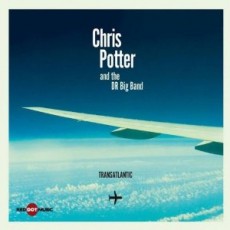
Chris Potter: A Jazz Journey from Chicago to the World Stage
Born on New Year’s Day 1971 in Chicago, Illinois, Chris Potter discovered his musical calling early in life. Though he spent his formative years in Columbia, South Carolina, his extraordinary talent knew no boundaries. A natural prodigy, young Chris explored multiple instruments—mastering both guitar and piano—before finding his true voice in the saxophone.
By age 13, Potter was already holding his own on professional jazz stages, captivating local audiences with his precocious gifts. His passion for the music led him to New York City, where he honed his craft at two prestigious institutions: the New School and the Manhattan School of Music.
A Distinguished Career
As a bandleader, Potter has released more than a dozen critically acclaimed albums, earning recognition from the most discerning voices in jazz. His work has landed in the top ten lists of Jazziz and Slate magazines, as well as The New York Times—a testament to his artistic vision and technical brilliance.
Equally impressive is his work as a collaborator. Potter has shared stages and recording studios with an extraordinary roster of jazz legends, including Patricia Barber, Kenny Werner, Marian McPartland, Red Rodney, Paul Motian, Adam Rogers, the Mingus Big Band, Ray Brown, Dave Holland, James Moody, and Joanne Brackeen—just to name a few.
Today, Chris Potter continues to enchant audiences worldwide as a saxophonist (both alto and tenor), multi-instrumentalist, and composer, constantly touring, performing, and recording new music that pushes the boundaries of contemporary jazz.
More Posts: bandleader,history,instrumental,jazz,music,saxophone
Daily Dose Of Jazz…
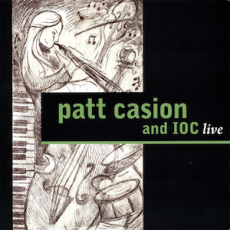
Patt Casion was born Patt Spears on December 31, 1963 in the Monterey Peninsula, California and grew up in Marina where she learned to play music while at church. It was there she started building her musical chops that led to her attending Berklee College of Music in Boston, Massachusetts, where one of her classmates was Lalah Hathaway, daughter of Donny Hathaway.
Opportunity gave way to her playing local gigs and recording two albums and took her to many places around the world, one was as a member of the Church of God Christ International Orchestra based in Memphis, Tennessee.
Soprano saxophonist Patt Casion, who after a two year battle with cancer, died on December 31, 2017 at Community Hospital of the Monterey Peninsula at the age of 55.

More Posts: bandleader,history,instrumental,jazz,music,saxophone