

Daily Dose Of Jazz…
Karen Street was born on December 13, 1959 in the United Kingdom (UK) and started playing the accordion at the age of 7. She went on to study at Bath University, RWMCD and in London, England with the late Ivor Beynon, a pioneer of the classical accordion. She studied music at Welsh College of Music and Drama and Guildhall School of Music. She became the British Virtuoso Champion in 1981/2 and competed in the Coupe Mondiale World Championship in Hamburg, Germany and Folkstone, UK.
Karen has created a niche for herself in the UK jazz scene and is a regular member of Mike Westbrook’s groups, works with Tim Garland as well as part of Lammas playing alongside Geoff Keezer, Joe Locke and Avishai Cohen.
As a saxophonist Street was a member of the all girl saxophone quartet The Fairer Sax and is now a member and co-leader of Saxtet with her husband Andy Tweed.
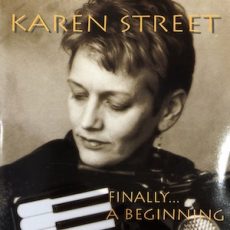
Karen’s composing is specialized by writing music for the saxophone, from solos to large ensembles. Her composition for solo accordion, In The Ballroom With The Rope, took first prize at the London Accordion Festival, Composition Competition in 2001. The same year she released her debut recording, Finally A Beginning.
Besides jazz, Karen has played across genres with the likes of Bryan Ferry, Grace Jones, Andrea Bocelli, Kate Westbrook, BBC Philharmonic, Icebreaker, and the Strictly Come Dancing Live Tour band for three seasons.
Accordionist, saxophonist and flutist Karen Street is currently a freelance musician playing across a wide variety of genres.

More Posts: accordion,flute,history,instrumental,jazz,music,saxophone

Daily Dose Of Jazz…
Juhani Aaltonen was born December 12, 1935 in Kouvola, Finland. He began playing professionally at the end of the Fifties. He played in a sextet led by Heikki Rosendahl during that time, and then studied flute performance at the Sibelius Academy and in the U.S. at the Berklee College of Music.
Moving back to Finland, he settled in Helsinki and began working both as a session musician and with fusion groups. Late in the 1960s he formed a duo with Edward Vesala, played in the group Eero Koivistoinen and with Tasavallan Presidentti. He recorded with Thad Jones and Mel Lewis and with Heikki Sarmanto late in the decade and early 1970s. His debut album as a soloist, Etiquette, was released in 1974.
The following year Juhani became a member of the New Music Orchestra, and worked with the Nordic All Stars, Arild Andersen, and Peter Brötzmann before the end of the decade. The Eighties saw him working with the UFO Big Band, Jan Garbarek, Charlie Mariano, and others. He led a touring quartet from 1990 to 1992.
In 2001 he released a duo recording, Rise, and his trio album Mother Tongue won a Jazz-Emma in Finland. Saxophonist and flautist Juhani Aaltonen continues to perform as well as teach at the annual Nilsiä Music Camp.
More Posts: bandleader,flute,history,instrumental,jazz,music,saxophone
Daily Dose Of Jazz…
Bob Smith was born on December 9, 1945 in Columbus, Ohio and was the first child of a young pair of Swing Kids. Growing up he listened to the radio and records playing big band instrumentals and vocals. He became familiar with Glenn Miller, Benny Goodman, Artie Shaw, Jimmy Dorsey, Count Basie, Duke Ellington and the Andrews Sisters in the family’s Ohio State University campus area apartment.
By the time he turned ten he had rented a metal clarinet from a local shop and started his entrance into the music industry. Two years later Bob began lessons on the clarinet with David Hite and at Columbus Linden-McKinley high school joined the dance band by learning to play baritone saxophone. This was followed by the purchase of a Selmer Mark VI alto and fell in love.
Attracting national attentionhe as a member of the dance band in 1961-62 the band was invited those two years to the Stan Kenton National Stage Band Camps as a featured guest band. They enjoyed the thrills of being rehearsed by Stan Kenton, Buddy DeFranco, Buddy Morrow, John LaPorta, Don Jacoby, Buddy Baker and others. Then Kenton and DeFranco took them to Chicago’s McCormick Place to perform for the Midwest Band and Orchestra Directors Convention.
At the Ohio State University School of Music he majored in Music Education and alto saxophone was his major instrument. Smith added bass clarinet, contrabass clarinet, tenor and bass saxes to his arsenal of instruments.
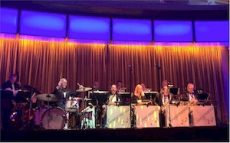
He taught instrumental music in southern and northwest Ohio and privately in Columbus and Toledo, Ohio. Along with being an educator Bob spent the majority of his working career in business sales, retiring in 2008. Over the decades alto saxophonist Bob Smith has played in numerous big bands in Ohio and currently performs in Toledo’s Swingmania All-Stars, a band that never recorded an album or a song.
More Posts: clarinet,history,instrumental,jazz,music,saxophone

Daily Dose Of Jazz…
George James was born in Boggs, Oklahoma on December 7, 1906. His career didn’t begin until the late 1920s joining the bands of Charlie Creath and Johnny Neal. He moved to Chicago, Illinois in 1928, where he played with Jimmie Noone, Sammy Stewart, Ida Marples, Jabbo Smith, and Bert Hall.
In 1931 through the first quarter of 1932 he toured with Louis Armstrong, and at the end of the tour he remained in New York City. There he joined the Savoy Bearcats and later played with Charlie Turner’s Arcadians. By the middle of the decade Fats Waller assumed leadership of the Arcadians, and James played under him until 1937.
Finishing the decade playing in the Blackbirds Revue, early in the 1940s he worked with James P. Johnson, Benny Carter, Teddy Wilson, and Lucky Millinder, and led his own bandhttps://notoriousjazz.com/jazz-type/swing/daily-dose-of-jazz-3977↗ in 1943-44. Later in the decade James played with Claude Hopkins and Noble Sissle.
He was active both as a leader and a sideman into the 1970s, playing with Clyde Bernhardt and the Harlem Blues and Jazz Band in that decade. Saxophonist, clarinetist, and flautist George James died on January 30, 1995 in Columbus, Ohio.
More Posts: bandleader,clarinet,flute,history,instrumental,jazz,music,saxophone
Daily Dose Of Jazz…
Theodor Christian Frølich Bergh, better known as Totti Bergh was born December 5, 1935 in Oslo, Norway. He began playing clarinet, and started learning to play the saxophone in 1952. By the time he turned 21 in 1956, he became a professional musician, becoming a regular member of Kjell Karlsen Sextet for three years, in addition to collaborating sporadically with Rowland Greenberg and other musicians on the Norwegian jazz scene.
He joined the Norwegian America Ships house orchestra on the voyage to New York City. In 1960 Totti succeeded Harald Bergersen as tenor saxophonist in Karlsen’s new big band and in the summer of 1961 he met his future wife Laila Dalseth, who joined the band.
He would go on to play with the bands of Einar Schanke, Rowland Greenberg, Per Borthen and in Dalseth’s orchestra. During the Nineties he played tenor and soprano saxophone with Christiania Jazzband and with Christiania 12.
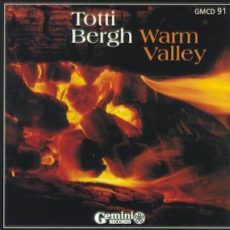
Saxophonist Totti Bergh, who released several albums as a leader and whose music is reminiscent of Lester Young and Dexter Gordon, died January 4, 2012 in his home city.