

Daily Dose Of Jazz…
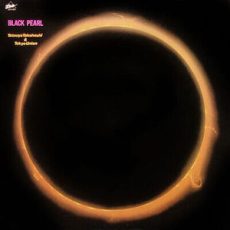
Tatsuya Takahashi was born on December 24, 1931 in Tsuruoka, Yamagata, Japan.
In the early 1950s Tatsuya played on US military bases and later in the decade moved to Tokyo, Japan. He worked with Keiichiro Ebihara from 1961, and by 1966 was leading his own ensemble, Tokyo Union, which remained active until 1989.
The 1970s saw him playing at the Monterey and Montreux Jazz Festivals. After leaving Tokyo Union, Takahashi worked in jazz education, and in 1996 founded a new ensemble, Jazz Groovys.
Saxophonist Tatsuya Takahashi died on February 29, 2008 in Tokyo, Japan.

More Posts: bandleader,history,instrumental,jazz,music,saxophone
Requisites
What Is This Thing Called Soul? ~ The Cannonball Adderley-Nat Adderley Quintet | By Eddie Carter
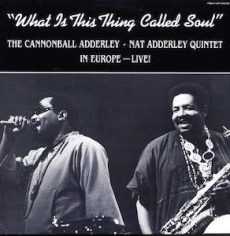
I revisited a few of my mom’s cherished albums a few nights ago. The first of them, this morning’s record from the library submitted for your approval, inspired today’s discussion. What Is This Thing Called Soul? (Pablo Live 2308-238) is a concise retrospective of three live performances by The Cannonball Adderley-Nat Adderley Quintet during their 1960 European Tour in Paris, France, Gothenburg, and Stockholm, Sweden. Released in 1984, the personnel for this live album are Nat Adderley on cornet, Cannonball Adderley on alto sax, Vic Feldman on piano, Sam Jones on bass, and Louis Hayes on drums. My copy is the original U.S. Stereo release.
Side One opens with Victor Feldman’s Azule Serape; the quintet sets things in motion with the effortlessly swinging melody. Cannonball is up first with a finger-snapping flight of pure joy. Nat provides the toe-tapping compliment in the following statement. Victor continues grabbing the listener in the third reading before the ensemble reassembles to take the song out, leaving the audience exhilarated. Cannonball takes a moment to announce the second tune, Big P, by Jimmy Heath, which turns the heat up significantly, beginning with Sam’s bass introduction to the group’s spirited theme. Cannonball is off to the races first with an inexhaustible flow of ideas. Nat follows with a solo full of energy ahead of the vigorous reprise and finale.
Cannonball quickly mentions Nat before presenting the next song, the cornetist’s One For Daddy-O, his tribute to the Chicago disc jockey, Daddy O-Daylie. The rhythm section starts with a relaxing introduction to the group’s laid-back theme. Cannonball’s opening solo is pleasant and friendly. Nat is as carefree as a day at the beach in the following reading preceding the out-chorus and ending. The second side opens with what Cannonball describes as a soul piece, The Chant by Victor Feldman. The ensemble starts the song with a happy melody, then steps aside for Cannonball’s funky opening statement. Nat emerges next with an enthusiastic performance; then Victor contributes an impressive interpretation before the quintet restates the theme.
What Is This Thing Called Love? by Cole Porter is a classic jazz standard from the thirties, or as Cannonball describes it in his introduction, What Is This Thing Called Soul? The quintet kicks off the melody vigorously; Cannonball then cooks up a storm in the opening statement so hard that the listener might need to check that their speakers aren’t on fire. Nat comes sailing in next and continues cruising down the road rapidly. Victor states his case in a furiously swinging solo, and then Louis engages in a heated exchange with Cannonball until the theme’s reappearance and climax. The ensemble launches into the melody of Cannonball’s Theme, where the saxophonist thanks the audience and reintroduces the group before the song ends as quickly as it began.
Cannonball and Nat Adderley produced What Is This Thing Called Soul? There’s no mention of who recorded these concerts, but I’m happy to say the album’s sound quality is excellent, allowing the listener to feel like they’re part of the French and Swedish audiences. My mom always loved Cannonball’s rapport with the crowd on his live albums, and his playing always possessed a soulful groove that got your fingers and toes tapping from the first note to the last. If you’re already a fan of both brothers and enjoy live hard-bop, I offer for your consideration What Is This Thing Called Soul? by The Cannonball Adderley-Nat Adderley Quintet on your next record hunt. It’s an overlooked but enjoyable album you won’t regret adding to your library!
~ What Is This Thing Called Love? – Source: JazzStandards.com
© 2024 by Edward Thomas Carter

More Posts: choice,classic,collectible,collector,history,instrumental,jazz,music,saxophone,trumpet
Requisites
Zoot ~ Zoot Sims Quartet | By Eddie Carter
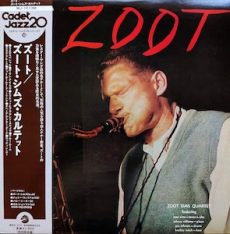
I’d just completed a long week and wanted to hear something soothing after dinner. I chose Zoot (Argo LP 608), a 1957 album by The Zoot Sims Quartet. John Haley Sims was born in Inglewood, California and began playing the clarinet and drums at an early age. By age thirteen, he started the tenor sax and later joined the big bands of Kenny Baker, Bobby Sherwood, and Benny Goodman. He got his nickname Zoot while playing with Kenny Baker and later gained attention in Woody Herman’s orchestra as one of the four brothers’ sax section. The personnel on this date are Zoot Sims on alto sax (track: B3) and tenor sax (A1 to B2, B4), Johnny Williams on piano, Knobby Totah on bass, and Gus Johnson on drums. My copy is the 1975 Japanese Mono reissue (Cadet MJ-1013M).
The first side opener, 9:20 Special by Earle Warren, begins with the quartet’s delightfully relaxing melody. Zoot is the first to whet the listener’s appetite in the opening reading. Johnny takes the baton for a light-hearted solo next. Knobby follows with a few well-placed bass notes, and Gus shares the finale with Zoot in a short conversation ahead of the theme’s reprise. The Man I Love by George and Ira Gershwin opens with the rhythm section’s tasteful background accompanying Zoot’s tenderly warm tone in the opening chorus and the saxophonist’s first reading. Johnny is equally thoughtful and sensitive in the following interpretation. Zoot adds a few soothing last thoughts, like gentle raindrops hitting the ground, into a mellow ending.
55th and State, an original by Zoot Sims, moves the beat upward to a medium bounce for the ensemble’s theme. Zoot leads off with an inspired improvisation, then passes the torch to Johnny, who follows with a rousing performance. Gus wraps up the finale, sharing a lively conversation with Zoot, leading to the theme’s return. Blue Room by Richard Rodgers and Lorenz Hart is an old show tune from the twenties. The quartet rises to the occasion, getting into an infectious groove on the melody. Zoot rolls out ideas effortlessly in the opening statement. Johnny extends the joyous mood in the following interpretation, and then Gus engages in a short exchange with Zoot, leading to the ending theme and conclusion.
Side Two begins with Gus’s Blues, an original by Gus Johnson that Johnny introduces, segueing to the foursome’s easygoing melody. Zoot sets a swinging groove on the opening performance. The pianist follows the leader with a bright, bouncy interpretation, and then the saxophonist returns for a closing presentation that disappears into nothingness. The group takes on another old chestnut with their rendition of That Old Feeling by Sammy Fain and Lew Brown. After the quartet establishes the opening ensemble, Zoot launches into one of his best solos on the album. Johnny responds with a compelling reading, and then the saxophonist delivers the last word in a short sermon before the group takes the song out.
Zoot switches to alto sax for Oscar Pettiford’s Bohemia After Dark. It’s a swinger from the word go, and this point is emphasized when the saxophonist takes charge during the foursome’s theme. Zoot continues cooking with confidence on the lead solo. Johnny meets the challenge head-on in a concise presentation, then turns it back over to Zoot, who delivers the knockout punch preceding the brisk reprise and climax. The closing track is Woody ‘n’ You, Dizzy Gillespie’s tribute to Woody Herman that takes off with the quartet’s brisk theme. Zoot opens with an enthusiastic performance. Johnny matches him in agility on the following statement. Knobby has a short stint next, and then Zoot and Gus share the exclamation point before the theme reprise and finale.
Dave Usher produced the album, but it’s unknown who the recording engineer was for the session. The album’s sound quality possesses a solid soundstage despite a minor issue during Knobby’s bass solo on Woody ‘n’ You, where the bass sounds distorted; the remainder of the album is excellent. Zoot Sims’s successful career as a leader and sideman lasted forty years, recording on various labels with many exceptional jazz musicians. He passed away from lung cancer on March 23, 1985, at the age of fifty-nine. If you’re a fan of Cool Jazz, I offer Zoot by The Zoot Sims Quartet for your consideration on your next record-shopping trip. This album of originals and standards is superbly performed and should become a welcome addition to your library!
~ That Old Feeling, The Man I Love, Woody ‘n’ You – Source: JazzStandards.com ~ Blue Room – Source: Wikipedia.org © 2024 by Edward Thomas Carter
More Posts: choice,classic,collectible,collector,history,instrumental,jazz,music,saxophone
Daily Dose Of Jazz…
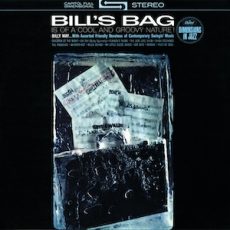
Chuck Gentry was born Charles T. Gentry on December 14, 1911 in Belgrade, Nebraska. He learned to play clarinet while growing up in Sterling, Colorado and attended Colorado State Teachers College before moving to Los Angeles, California to pursue a career in music.
He played with Vido Musso in 1939, then with Harry James in the first years of the Forties. During World War II he worked with Benny Goodman, the Army band of Glenn Miller, and Artie Shaw. Gentry then worked with Jan Savitt before returning to Goodman’s employ in 1946.
After 1947 Chuck worked as a session musician with June Christy, Louis Armstrong, Georgie Auld, Charlie Barnet, Ralph Burns, Benny Carter, Sammy Davis Jr., Ella Fitzgerald, Pete Fountain, The Four Freshmen, Erroll Garner, Woody Herman, Stan Kenton, Spud Murphy, Anita O’Day, Patti Page, Mel Powell, Della Reese, Shorty Rogers, Pete Rugolo, Mel Torme, and Nancy Wilson.
Saxophonist Chuck Gentry died on January 1, 1988 in California.
More Posts: history,instrumental,jazz,music,saxophone
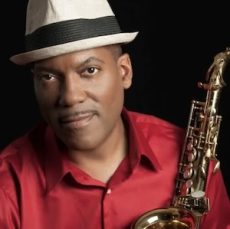
ERIC PERSON QUARTET
Acclaimed saxophonist Eric Person makes a strong impression live and on recordings. Person has worked with leaders within the vanguard of the jazz world namely McCoy Tyner, Dave Holland, Chico Hamilton, John Hicks, Will Calhoun, Wallace Roney, and many others. Eric’s work as a leader is stylistically diverse and intrepid. His 2022 release “Blue Vision” features his collaboration with tenor saxophone titan Houston Person. And critics have taken note of Eric’s signature sound on alto and soprano saxophone.
Cover Charge: $35.00 +2 Drink Minimum
More Posts: adventure,bandleader,club,genius,instrumental,jazz,music,preserving,saxophone,travel