

Daily Dose Of Jazz…
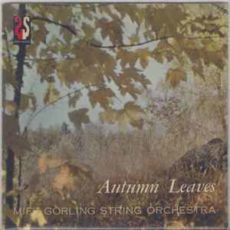
Miff Görling was born Uno Görling on March 21, 1909 in Stockholm, Sweden. He took his nickname from trombonist Miff Mole and got his start late in the 1920s with the Frank Vernon Orchestra, where he played until 1932.
He then worked with Arne Hülphers, Gösta Jonsson, Seymour Österwall, and Gösta Säfbom before organizing his own ensemble in 1938 and led bands well into the 1950s. He also did arrangement and composition work for other jazz groups as well as for popular Swedish musicians.
Bandleader, trombonist, arranger, and composer Miff Görling transitioned on February 24, 1988 in Stockholm.

More Posts: arranger,bandleader,composer,history,instrumental,jazz,music,trombone
Daily Dose Of Jazz…
Santo J. “Sonny” Russo was born on March 20, 1929 in New York City, New York and grew up in a musical family, both his father and grandfather were professional horn players. He first played piano and violin, and played with his father’s group at age 15, before settling on the trombone.
The consummate sideman, through the late Forties he started out playing with Buddy Morrow in 1947, Lee Castle in 1948, Sam Donahue in 1949, and Artie Shaw in 1949–50. The 1950s saw him performing with Art Mooney, Tito Puente, Jerry Wald, Tommy Tucker, Buddy Rich, Ralph Flanagan, the Sauter-Finegan Orchestra, Neal Hefti, Jimmy Dorsey, Tommy Dorsey, and Maynard Ferguson.
For a short period during the mid-1950s Russo found work in the bands of various Broadway shows, then in the late 1950s and 1960s he worked with Louie Bellson, Machito, Bobby Hackett, Benny Goodman, and Doc Severinsen. From 1969to 1972 he was a member of The Tonight Show orchestra, and he worked with Frank Sinatra from 1967 to 1988.
He played on Urbie Green’s 21 Trombones, soloed on numerous others, and toured with The World’s Greatest Jazz Band. Sonny recorded extensively with Jimmy Rushing, Tony Bennett, Lena Horne, Perry Como, Dinah Washington, Liza Minnelli, Elvis Presley, Paul Anka, Ray Charles, Steve Lawrence, and Eydie Gorme. He performs on the soundtracks to the films The Godfather, The Godfather II, Goodfellas, and Sophie’s Choice, and in 1971 on The Tonight Show he shared the stage with Louis Armstrong, playing the solo on Someday You’ll Be Sorry.
A fixture in the recording studios for radio and television, he was a regular in the Orchestra for Jerry Lewis’s Muscular Dystrophy Telethon in New York City. Always in demand he continued to work with Lewis on his one-man show, toured around the world with Sinatra who announced his playing a trombone solo on the tune I’ve Got You Under My Skin.
He has also done many gigs with the likes of Al Cohn, Zoot Simms, Mousey Alexander, and Milt Hinton. Trombonist Sonny Russo, a graduate of the Manhattan School of Music, transitioned on February 23, 2013.
More Posts: history,instrumental,jazz,music,trombone
Daily Dose Of Jazz…
Christopher Brubeck was born on March 19, 1952 in Los Angeles, California to pianist and composer Dave Brubeck. By the age of twenty he was joining his father and brothers Darius and Daniel in The New Brubeck Quartet.
Having toured for about 30 years in a group called Triple Play, he joined with guitarist Joel Brown and singer and harmonica virtuoso Peter Madcat Ruth, and swung jazz Louisiana style. He was a member of New Heavenly Blue, Chris also participated and recorded as a keyboardist/trombonist/guitarist in 1970’s Educated Homegrown.
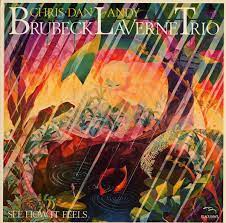
In 1999, Chris and his brother Daniel joined with other musicians to form The Brubeck Brothers Quartet, having previously partnered with Andy LaVerne and released a 1972 album, The Brubeck-LaVerne Trio. He has performed with Mike DeMicco and Chuck Lamb.
In 2003, Chris played his first Concerto for Bass Trombone and Orchestra with the Czech national Symphony Orchestra in Prague, Czech Republic. A year later, he composed his own concerto titled, The Prague Concerto for Bass Trombone and Orchestra. Many of his classical compositions still contain strong hints of the jazz influence of his father.
Grammy nominated electric bassist, bass trombonist and pianist Chris Brubeck continues to pursue his musical explorations.
More Posts: bandleader,bass,history,instrumental,jazz,music,piano,trombone

Daily Dose Of Jazz…
Åke Persson was born on February 25, 1932 in Hässleholm, Sweden and started his music career by playing valve trumper in school. Known as The Comet, he moved to Stockholm, Sweden in 1951, where he played in Simon Brehm’s quintet until 1954. During the Fifties he led several sessions for labels such as Metronome, Philips, and EmArcy.
Following this Persson worked through the Sixties and into the 1970s with Arne Domnérus, Hacke Björksten, Harry Arnold’s Radio Band, Quincy Jones, Lars Gullin, the RIAS Berlin Band, and the Kenny Clarke-Francy Boland Big Band.
Persson played with many American musicians, including George Wallington, Roy Haynes, Benny Bailey, Count Basie, Duke Ellington, and Dizzy Gillespie.
He drowned in the Djurgården canal as a result of him driving his car into the canal either accidentally or deliberately. A biography was written, Trombonist Åke Persson, authored by Bo Carlsson.
Trombonist Åke Persson, who flourished in the bebop and big band tradition, transitioned on February 5, 1975.

More Posts: bandleader,history,instrumental,jazz,music,trombone
Daily Dose Of Jazz…
Joe “Tricky Sam” Nanton was born Joseph Irish Nanton on February 1, 1904 in New York City, New York to British West Indies immigrant parents. He began playing professionally in Washington, D.C. with bands led by Cliff Jackson and banjoist Elmer Snowden.
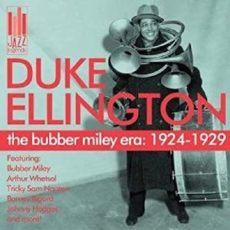
1923 saw him working with Frazier’s Harmony Five for a year then again with Snowden. At 22 Nanton discovered his niche in Duke Ellington’s Orchestra, when he reluctantly took the place of his friend Charlie Irvis in 1926, anchoring the trombone section with Lawrence Brown. He remained with Ellington until his early death.
Nanton was one of the great pioneers of the plunger mute after hearing trumpeter Johnny Dunn use a plunger, and realized he could have a similar effect on his trombone. Along with Ellington’s trumpeter Bubber Miley, he is largely responsible for creating the characteristic Wah-wah, or wa-wa, effect. Their highly expressive growl and plunger sounds were the main ingredient in the band’s early “jungle” sound, that evolved during the band’s late 1920s engagement at Harlem’s Cotton Club.
Trombonist Tricky Sam Nanton who was amajor soloist with the Duke Ellington Orchestra, transitioned from a stroke on July 20, 1946 in San Francisco, California while touring with the orchestra.
More Posts: history,instrumental,jazz,music,trombone