Daily Dose Of Jazz…
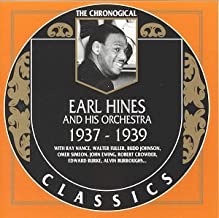
Edward Burke was born on January 13, 1909 in Fulton, Ohio. Adept at both violin and trombone, he played both professionally in jazz bands. He worked with Walter Barnes late in the 1920s, then with Cassino Simpson and Ed Carry in the early 1930s.
He worked with Kenneth Anderson in 1934 before joining Erskine Tate’s band through the end of 1935. Following a stint with Horace Henderson, Ed then joined Earl Hines’s band in 1938.
The 1940s saw Burke playing with Walter Fuller and Coleman Hawkins and later in the decade he was with first Duke Ellington and then Cootie Williams. In the early 1950s he joined Cab Calloway’s outfit before working with Buddy Johnson a few years later.
By the 1960s and through the 1970s he essentially went into retirement, though he occasionally played with musicians such as Lem Johnson and Wally Edwards. Violinist and trombonist Ed Bure transitioned on April 19, 1988 in East Elmhurst, New York.
Daily Dose Of Jazz…
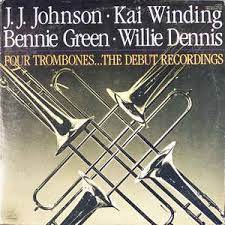
Willie Dennis wsa born William DeBerardinis on January 10, 1926 in Philadelphia, Pennsylvania. After working with Elliot Lawrence, Claude Thornhill, and Sam Donahue, he went to work with Charles Mingus, appearing on two of Mingus’s albums in 1959, Blues & Roots and Mingus Ah Um. In 1953, due to his relationship with Mingus he recorded Four Trombones (on the bassist’s Debut Records label and was released in 1957. The other three trombones were J. J. Johnson, Kai Winding and Bennie Green.
In 1951, Dennis began studying with Lennie Tristano. To make ends meet, he worked as an attendant at the Museum of Modern Art. The fullest recorded example of Dennis’s solo work is on a little-known 1956 Savoy disc by English pianist Ronnie Ball, who was also a Tristano student. The album was titled All About Ronnie, and included Ted Brown and Kenny Clarke.
He toured with Mingus in 1956, published an essay, The History of the Trombone, in Metronome. By the late 1950s Willie had returned to his big band roots and joined Buddy Rich in 1959 after stints with Benny Goodman and Woody Herman. During the 1960s, he often performed with Gerry Mulligan.
He had an extremely fast articulation on the trombone, which he obtained by means of varying the natural harmonics of the instrument with minimal recourse to the slide, a technique known as crossing the grain. He recorded with Cannonball Adderley, Manny Albam, Al Cohn, Mundell Lowe, Gary McFarland, Gerry Mulligan, Oliver Nelson, Anita O’Day, Shirley Scott, Zoot Sims and Phil Woods.
Known for his big band musicianship but who could also execute as an excellent bebop soloist, trombonist Willie Dennis, who was married to Morgana King in 1961, transitioned due to an automobile accident in Central Park on July 8, 1965 in New York City.
More Posts: bandleader,history,instrumental,jazz,music,trombone
Daily Dose Of Jazz…
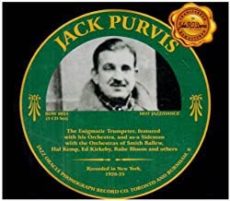
John “Jack” Purvis was born in Kokomo, Indiana on December 11, 1906 and became uncontrollable after his mother’s death in 1912. This resulted in being sent to a reform school, but while there, he discovered that he had an uncanny musical ability, and soon became proficient enough to play both the trombone and trumpet professionally. Leaving the reformatory he continued his high school education, while playing paying gigs on the side. One of the earliest jobs he had as a musician was with a band led by the Royal Canadian Mounted Police. Not long afterward, he worked with the dance band of Hal Denman.
After high school he worked in Indiana for a time then went to Lexington, Kentucky where he played with the Original Kentucky NightHawks. Around this time he learned to fly planes. In 1926 he was with Bud Rice and toured New England. The remainder of 1926 and the beginning of 1927 was with Whitey Kaufman’s Original Pennsylvanians. For a short time he played trumpet with Arnold Johnson’s orchestra, and by July 1928 he traveled to France with George Carhart’s band. A brush with the law forced him to return to New York City in 1928.
From 1929 on he joined Hal Kemp’s band and recorded with Kemp, Smith Ballew, Ted Wallace, Rube Bloom, the California Ramblers, and Roy Wilson’s Georgia Crackers. He led a couple of racially mixed recording sessions including the likes of J.C. Higginbotham, and Adrian Rollini. He worked with the Dorsey Brothers, Fletcher Henderson, Fred Waring, Charlie Barnet. the New Orleans Symphony Orchestra.
Moving to Los Angeles, California he found success with radio broadcasting, worked with the George Stoll Orchestra as a writer, and arranged for Warner Bros. Studios. He composed Legends of Haiti for a one hundred and ten piece orchestra.
Arrested in Texas in 1937, he spent a total of nine years in prison for robbery and breaking parole. After his final release he worked at non-musical careers which included working as a chef, aviator, carpenter, radio repairman and a mercenary. One of the earliest trumpeters to incorporate the innovations pioneered by Louis Armstrong in the late 1920s.
His mental stability was always in question, having attempted suicide on several occasions. Trumpeter Jack Purvis, who played trombone, harp, andcomposed Dismal Dan and Down Georgia Way, passed away on March 30, 1962.

More Posts: arranger,harp,history,instrumental,jazz,music,trombone,trumpet
Daily Dose Of Jazz…
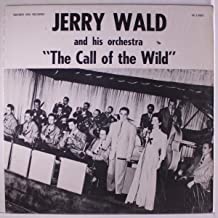
George Robert “Rob” Swope was born on December 2, 1926, in Washington, D.C., the younger brother of trombonist Earl Swope. In 1947 he played with Buddy Rich and recorded with Jerry Wald before playing and getting in the studio with Chubby Jackson in 1948-49.
He worked with Gene Krupa in 1949-50, then with Elliot Lawrence in 1950-51. Swope led his own trio in the D.C. area in the early 1950s, and was a member of The Orchestra, the band which accompanied Charlie Parker in 1953 and Dizzy Gillespie in 1955.
Spending time in New York City in the latter half of the Fifties, he played with Larry Sonn, Boyd Raeburn, Claude Thornhill, Jimmy Dorsey, and Louie Bellson. In the 1960s he worked in Washington, D.C. again, often as a leader. Trombonist Rob Swope passed away on January 9, 1967 in Washington, D.C.
More Posts: bandleader,history,instrumental,jazz,music,trombone
Daily Dose Of Jazz…
Edward Thomas Harvey was born on November 15, 1925 in Blackpool, England, but grew up in Sidcup, where he attended Chislehurst and Sidcup Grammar School. At the age of 16, he began studying engineering in nearby Crayford and took his first professional job as a musician playing trombone with George Webb and his Dixielanders, a pioneering UK traditional jazz band.
After the World World War II, Harvey joined Freddy Randall and also began performing at Club Eleven in London, England with a number of young musicians, among them Ronnie Scott and John Dankworth who were beginning to experiment with the bebop style that they had picked up from US musicians like Charlie Parker and Dizzy Gillespie.
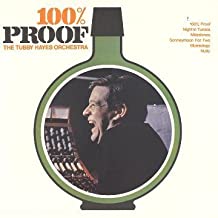
When the Dankworth Seven formed in 1950, Harvey was a founder member and the percussionist vocalist Frank Holder was also featured in this group. He stayed until 1953, performing on both piano and trombone, and spent the 1950s performing and recording with a number of important UK jazz groups including bands led by Tubby Hayes, Vic Lewis, Don Rendell, and Woody Herman. He also began arranging for groups like Jack Parnell’s Orchestra.
From 1963 to 1972 Eddie was pianist with the Humphrey Lyttelton band. During that time of the early 1970s he also became interested in teaching jazz. His jazz piano course at the City Lit was one of the first jazz education courses in Europe. This led to his writing Teach Yourself Jazz Piano, which was published in the Teach Yourself series. After ten years teaching Music at Haileybury College in Hertfordshire, he accepted the newly created role of Head of Jazz at the London College of Music. Later teaching posts included the Guildhall and Royal Colleges of Music.
Pianist, trombonist, arranger and educator Eddie Harvey, who never led a recording session but was the inspiration for the Richmond Canoe Club Walking Division, passed away on October 9, 2012.