


Daily Dose Of Jazz…
Leah Stillwell was born on April 12, 1976 and raised in Western Washington. She was initially influenced by the diverse flavors and talents of the local jazz community. Her inspiration came from the greats and fell in love with jazz immediately once introduced as a teen to the satin melodies of classics like Ella Fitzgerald, Sarah Vaughan and Billie Holiday.
Her vocal style is a personal amalgamation of the old standards along with other music that has ever appealed to ear, heart and soul. With a fresh new approach to a classic art form, Leah captures the style and charisma of jazz with her sultry voice and laid back expression.
Vocalist Leah Stillwell continues to perform and tour.
More Posts: bandleader,history,instrumental,jazz,music,vocal
Daily Dose Of Jazz…
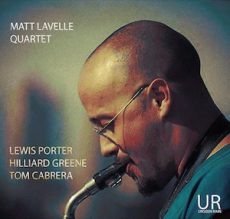
Matt Lavelle was born on April 11, 1970 in Paterson, New Jersey and began his music career with Hildred Humphries, a swing era veteran who played with Count Basie and Billie Holiday.
Playing in ensembles led by Sabir Mateen since 2002, three years later Matt began study with Ornette Coleman. He has been a member of the Bern Nix Quartet since 2010 and recorded with Giuseppi Logan the same year.
In 2011 he created the 12 Houses Orchestra. Lavelle is also a visual artist inspired by his Grandfather Fritz Kluber. He is author of the Substack No Sound Left Behind. Matt published a book titled New York City Subway Drama and Beyond, in 2011. In 2013 he published a short story titled The Jazz Musician’s Tarot Deck.
He has recorded nineteen albums as a leader, and another forty-five as a sideman with Nix and Logan as well as Sumari, Eye Contact, Daniel Carter, Bern Nix, Giuseppi Logan, Matana Roberts, William Hooker, Francois Grillot, Steve Swell, Sabir Mateen, Ras Moshe, Assif Tsahar, William Parker, Charles Waters, Barry Chabala, Earth People, Allen Lowe, D3, Julie Lyon, Tom Cabrera, The Cooperative Sound, Stars Like Fleas, Eric Plaks, and Pete Dennis.
Trumpeter Matt Lavelle, who also plays flugelhorn, alto and bass clarinet, continues to perform, record and tour.
More Posts: author,bandleader,clarinet,flugelhorn,history,instrumental,jazz,music,trumpet
The Jazz Voyager
From Nashville to Bern the Jazz Voyager is crossing the pond once more to sit in the audience at Marians Jazzroom. The venue’s 126 seats offers a guarantee of a musical experience in authentic ambience within the harmonious interior reminiscent of a New York jazz club.
But before I take in some jazz, I’m arriving early in the day and this jazz voyager will be checking out the Bear Park, Museum of Communications, the Clock Tower, and the Einstein Museum.Catching Grammy winner Bill Charlap on the third evening of his five-day engagement will be a treat, especially witnessing for the first time the talents of saxophonist Nicole Glover. She’s a member of Ursa Major led by bassist Christian McBride and leads her own quartet. This isn’t the first time these two have paired up for this
The jazzroom is located at Engestrasse 54, 3012 Bern, Switzerland. For more information contact the venue at https://www.mariansjazzroom.ch.

More Posts: adventure,club,genius,jazz,museum,music,piano,preserving,saxophone,travel

Daily Dose Of Jazz…
Jerzy “Duduś” Matuszkiewicz was born on April 10, 1928 in Jasło, Poland and began playing jazz as a youth. He founded a jazz club at the YMCA in Kraków, Poland at age 20. and played with the orchestra of Kazimierz Turewicz.
A music enthusiasts club, Melomani, was founded in 1947 at the Łódź YMCA, a hang-out of nonconformist thinkers during the late 1940s. Moving to Łódź, Poland to study at the new Łódź Film School, he became part of the club and joined the sessions. After only a few concerts, the YMCA was closed due to promoting imperialist ideology using jazz music.
Jerzy founded and led a band in 1950, playing saxophones and clarinet with Marek Szczerbiński-Sart, trumpeter Andrzej “Idon” Wojciechowski, drummer Witold “Dentox” Sobociński, Marian and Tadeusz Suchocki and pianist Andrzej Trzaskowski and bassist Witold Kujawsk. Being separated from Western jazz by the Stalinist regime, they played a repertoire that did not compare to Western standards.
The band was offered space to practise at the Film School, performed informal concerts at the Film School, as well as in bars and private events, once a week. When they received an invitation to play a concert in Warsaw, Poland at the Academy of Fine Arts, they named themselves Melomani.
In 1952, pianist Krzysztof Komeda joined the band and expanded their performance reach. They played at the first jazz festival in Sopot, Poland in 1956. 1958 saw them as the first Polish jazz band invited to perform at the National Philharmonic in Warsaw. The group disbanded that same year.
Until 1964 he performed both in Poland and abroad. The following year he began to mainly compose and conduct music for movies and commercials. Moving to Warsaw with his wife, Grażyna, saxophonist, pianist, composer and bandleader Jerzy Matuszkiewicz died on July 31, 2021 at 93.
More Posts: composer,history,instrumental,jazz,music,piano,saxophone
Daily Dose Of Jazz…
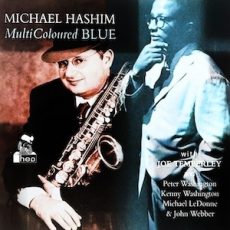
Michael James Hashim was born on April 9, 1956 in Geneva, New York. He began playing saxophone while in elementary school, then played with Phil Flanigan and Chris Flory as a high schooler. He worked with both into the middle 1970s.
In 1976 he toured with Muddy Waters and played with the Widespread Depression Orchestra, which he would later lead. Michael formed his own quartet in 1979, which has included Dennis Irwin, Kenny Washington, and Mike LeDonne as sidemen. In 1980 he toured with Clarence Gatemouth Brown.
Hashim played in New York City in the early 1980s with Roy Eldridge, Jo Jones, Brooks Kerr, Sonny Greer, and Jimmie Rowles. From 1987 he worked often with Judy Carmichael. The Nineties saw him touring China in 1992, and was one of the first jazz musicians ever to do so.
He worked with Flory through the 1990s, and toured North America and Europe regularly. In 1990 with his quartet he recorded Lotus Blossom, an album of Billy Strayhorn songs. In 1998 expanded this ensemble into 11 members as the Billy Strayhorn Orchestra.
Alto and soprano saxophonist Michael Hashim has been a member of the Raymond Scott Orchestra, a mainstay in the George Gee Orchestra, performs with The Microscopic Septet and continues to record as a leader and sideman..
More Posts: history,instrumental,jazz,music,saxophone