

Daily Dose Of Jazz…
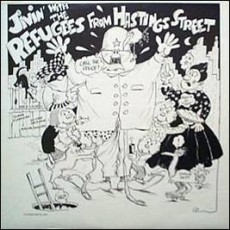
Eddie Locke was born on August 2, 1930 and at a very young age the drummer became a part of the fertile and vibrant Detroit jazz scene during the 1940s and 1950s. This period spawned such great musicians including Hank, Thad and Elvin Jones, Kenny Burrell, Lucky Thompson, Tommy Flanagan, Barry Harris, among so many others.
He eventually formed a variety act with drummer Oliver Jackson called “Bop & Locke” which played the Apollo Theater. A move to New York City in 1954 had him working with Dick Wellstood, Tony Parenti, Red Allen, Willie “The Lion” Smith and Teddy Wilson, to name a few. During this time he came under the tutelage of the great Jo Jones, and eventually became known as a driving and swinging drummer who kept solid time and supported the soloist.
During the late 1950s Eddie formed two of his most fruitful musical relationships, one with Roy Eldridge and the other with Coleman Hawkins. His recording debut came with Eldridge in 1959 on “On The Town”, and he rounded out the Coleman Hawkins Quartet in the 1960s with band members Tommy Flanagan and Major Holley, that made many fine records including the exquisite album “Today and Now” in 1963.
Throughout the 1970s, he played with Roy Eldridge’s band at Jimmy Ryan’s on 54th Street, wound out his career freelancing, teaching youngsters the drums and appearing in the “A Great Day In Harlem” photograph. Drummer Eddie Locke passed away on September 7 2009, in Ramsey, New Jersey.
More Posts: drums
Daily Dose Of Jazz…
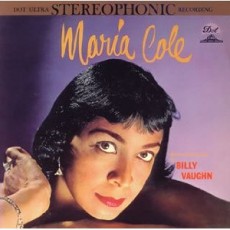
Maria Cole was born Maria Hawkins on August 1, 1922 in Boston, Massachusetts but grew up in her aunt’s genteel surroundings in North Carolina. Graduating in 1938 from the prestigious Black preparatory, the Palmer Memorial Institute, which was founded by her aunt, Dr. Charlotte Hawkins Brown. She returned to Boston to attend a clerical college but began working with a jazz orchestra by night and soon dropped out to pursue her love of music in New York.
Once in the city Maria joined Benny Carter’s band, performed with Count Basie and Fletcher Henderson before Ellington heard a recording of her throaty, resonant voice in the mid-1940s and hired her as a vocalist for his Orchestra. By 1946 she was appearing solo at Club Zanzibar in Harlem as an opening act for the Mills Brothers.
In 1943 she married Tuskegee Airman Spurgeon Ellington, who died in a training flight, met Nat King Cole while both performing at the Zanzibar, married him in 1948 and remained united until his death in 1965.
Jazz singer Maria Ellington Cole died in a nursing home in Boca Raton, Florida following a short battle with stomach cancer at the age of 89, on July 10, 2012.
More Posts: vocal
Daily Dose Of Jazz…
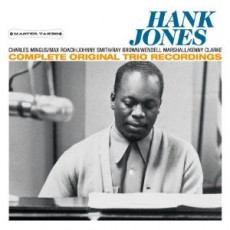
Hank Jones was born Henry Jones on July 31, 1918 in Vicksburg, Mississippi but grew up in Pontiac, Michigan. Raised in a musical family, his mother sang, his two older sisters studied piano and his two younger brothers— Thad played trumpet and Elvin, drums. He studied piano at an early age and came under the influence of Earl Hines, Fats Waller, Teddy Wilson and Art Tatum.
By age 13 Jones was performing locally in Michigan and Ohio and while playing with territory bands in Grand Rapids and Lansing in 1944 he met Lucky Thompson who invited Jones to work in New York City at the Onyx Club with Hot Lips Page.
In New York he mastered the bop style and worked with John Kirby, Howard McGhee, Coleman Hawkins, Andy Kirk, and Billy Eckstine. In 1947 he began touring with Jazz at the Philharmonic and from 1948 to 1953 he was accompanist for Ella Fitzgerald. During this period he made several historically important recordings with Charlie Parker that included “The Song Is You”, from the Now’s the Time album.
This led to engagements with Artie Shaw, Benny Goodman, Lester Young, Cannonball Adderley and Wes Montgomery. In addition to being the “house pianist” at one time on the Savoy label, Hank was the staff pianist for CBS studios from 1959 through 1975 backing such artists as Frank Sinatra, and for Marilyn Monroe when she sang her famous Happy Birthday for President Kennedy, and pianist and conductor for the Broadway musical Ain’t Misbehavin’.
During the late 1970s and the 1980s, Jones continued to record prolifically with John Lewis, Tommy Flanagan, Ron Carter, Tony Williams, Buster Williams, Eddie Gomez, Al Foster, Jimmy Cobb, Art Farmer, Benny Golson and Nancy Wilson to name a few as his list of jazz collaborators is extensive.
Jones has racked up an impressive catalogue of recordings numbering over sixty as a leader and more as a sideman, worked with Roberta Gambarini at the Monterey Jazz Festival, with Diana Krall on the compilation “We All Love Ella”, was nominated for five Grammys and was honored with a Lifetime Achievement Award, was inducted into the society of NEA Jazz Masters, and was awarded the National Medal of Arts among other accolades. Pianist Hank Jones passed away at a hospice in Manhattan, New York, on May 16, 2010.
More Posts: piano
Daily Dose Of Jazz…
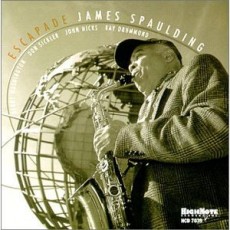
James Spaulding was born July 30, 1937 in Indianapolis, Indiana and started playing bugle while in grade school. He later learned to play trumpet and saxophone and flute. While in high school he studied clarinet and made his professional debut around his hometown in a rhythm and blues band.
After a three-year enlistment in the Army he settled to Chicago in 1957 leading his own groups. It was during this period he joined the Sun Ra Arkestra, making several recordings and remaining through 1959, while furthering his studies of flute at the Chicago Cosmopolitan School of Music. Spaulding subsequently freelanced as a studio musician and occasionally led his own groups before returning to Indianapolis in 1961.
Relocating to New York City in 1963, he recorded extensively for Blue Note Records as a sideman, and led several sessions as a leader for Storyville, Muse, 32 and High Note. He was also a member of the World Saxophone Quartet and recorded with Grant Green, Freddie Hubbard, Bobby Hutcherson, Lee Morgan, David Murray, Duke Pearson, Sam Rivers, Pharoah Sanders, Wayne Shorter, Stanley Turrentine, Larry Young and others.
As an educator he taught flute as an adjunct professor at Livingston College in New Jersey. Alto saxophonist James Spaulding continues to perform and record.
Daily Dose Of Jazz…
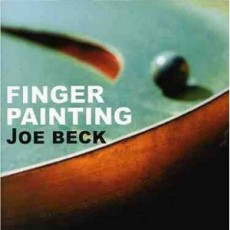
Joe Beck was born on July 29, 1945 in Philadelphia, Pennsylvania and learned to play guitar as a child. Briefly delving into 60’s and 70s rock music he turned his attention to jazz and got initiated in the post bop, mainstream, fusion and soul jazz eras.
Beck began as a member of the Gil Evans orchestra and in 1970 released Rock Encounter for Polydor, followed by a release on Kudu and a record session with Esther Phillips – What a Diff’rence a Day Makes in 1975 on the same label.
By the 1980s Beck was recording several CD’s for the DMP/Digital Music Products label including co-billed work with the noted flautist Ali Ryerson. To fill out the sound he wanted to present — bass lines, harmony, and melody—in the duo setting with Ali, he developed what he called the “alto guitar”. He would go on to collaborate with Jimmy Bruno and John Abercrombie, and record with Miles Davis, Herbie Hancock, Buddy Rich, Duke Ellington, Paul Desmond, Maynard Ferguson, Antonio Carlos Jobim, Woody Herman, Stan Getz, Sergio Mendes, Laura Nyro, Paul Simon, Houston Person and the list goes non.
On July 22, 2008, guitarist Joe Beck passed away from lung cancer in Woodbury, Connecticut after a career spanning more than 30 years in jazz and nearly two-dozen albums.
More Posts: guitar