

Requisites
Blues In Trinity ~ Dizzy Reece | By Eddie Carter
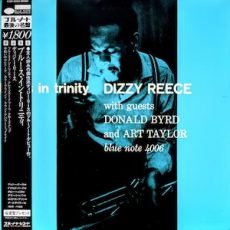
Last night, I listened to one of my mom’s favorites, Blues In Trinity (Blue Note BLP 4006/BST 84006) by Dizzy Reece, which inspired this discussion. It was his second album as a leader and first for Alfred Lion’s label. Reece was born in Kingston, Jamaica, and began playing the baritone sax at eleven. He took up the trumpet at fourteen and later got the nickname Dizzy. At sixteen, he started playing professionally and worked with some of the best musicians in England, France, and the United States. Donald Byrd (tracks: A3, B1) and Dizzy Reece (A1 to B2) on trumpet, Tubby Hayes (A1, A3, B1 to B3) on tenor sax, Terry Shannon on piano, Lloyd Thompson on bass, and Art Taylor on drums are the musicians. My copy is the 1983 King Record Company Japanese Mono reissue (Blue Note BLP 4006 – K18P 9245).
The title tune and first of four originals by Dizzy Reece, Blues In Trinity, gets the first side off to a good start with the quintet’s medium theme. Dizzy jumps out front with a bright lead solo, then Tubby blows a set of wailing choruses. Terry takes charge next with a stunning short performance until the trumpeter and tenor saxophonist exchange riffs preceding the theme’s return. I Had The Craziest Dream by Harry Warren and Mack Gordon is a beautiful song from the 1942 film Springtime In The Rockies. Reece and the rhythm section reveal the song’s sensual beauty in an elegantly tender presentation. He also delivers a heartfelt solo as the only soloist.
Close-Up opens with a relaxing ensemble melody. Dizzy takes the lead, making each note look effortless. Tubby takes an exciting turn next, then Donald sinks his teeth into an aggressive statement. Terry follows with a solo of absolute joy. The front line takes the final flight in an exchange, leading to the sextet’s reprise and finale. Shepherd’s Serenade starts Side Two at a burning beat with the sextet’s rollicking theme. Reece launches into the opening statement with pure fire. Hayes continues with a shower of fiery notes from his tenor sax. Donald follows, blowing fierce heat in his second and final presentation, and then Art converses with the front line before the theme’s reprise and close.
Color Blind eases the throttle back to medium for the quintet’s finger-popping opening chorus. Dizzy goes right to work on the opening solo with plenty of feeling. Tubby takes the baton and builds the following interpretation effectively. Teddy maintains the mellow mood in the third performance, and the front line shares the finale in a short exchange before the theme’s restatement and climax. ‘Round About Midnight by Thelonious Monk, Cootie Williams and Bernie Hanighen ends the album as a feature for Tubby Hayes and the rhythm section. The saxophonist combines the elements of elegance, restraint, and tenderness in a gorgeous performance that culminates softly.
Tony Hall produced the initial session of Blues In Trinity, and Rudy Van Gelder is credited as the recording engineer. However, he only re-recorded the initial session. The sound quality of this King reissue is sensational, with a superb soundstage that emerges from your speakers as if the musicians are playing right in front of your listening chair. This album holds a special place in my heart, as it was a staple during our Sunday jazz dinners with my mom and sister when I was younger. If you’re a hard bop fan, I offer Blues In Trinity by Dizzy Reece for consideration on your next record-shopping trip. It’s an underrated, excellent album by one of the best musicians most may not know, and I highly recommend it for a spot in your library!
~ ‘Round About Midnight – Source: JazzStandards.com
~ I Had The Craziest Dream – Source: Wikipedia.org
© 2024 by Edward Thomas Carter

More Posts: choice,classic,collectible,collector,history,instrumental,jazz,music,trumpet

Daily Dose Of Jazz…
John Grant Sangster was born November 17, 1928 in the Melbourne suburb of Sandringham, Victoria, Australia. He was an only child that attended primary schools in Sandringham and Vermont, and then Box Hill High School. While at high school he taught himself to play trombone and with a friend, Sid Bridle, formed a band.
In 1946 he started a civil engineering course at Melbourne Technical School. Two years later Sangster performed at the third annual Australian Jazz Convention, held in Melbourne. By the following year he led his own ensemble, John Sangster’s Jazz Six, which included Ken Evans on trombone. He provided trombone for Graeme Bell and his Australian Jazz Band, later took up the cornet and then the drums. They toured several times from 1950 to 1955, and in the late Fifties he began playing the vibraphone.
He went on to play with Don Burrows in the early 1960s, form his own quartet and experimented with group improvisatory jazz, after becoming interested in the music of Sun Ra and Archie Shepp. By the end of the Sixties his attention turned to rock musicians and he joined the expanded lineup of the Australian progressive rock group Tully, who provided the musical backing for the original Australian production of the rock musical Hair. He performed and recorded with Tully and their successors, Luke’s Walnut, throughout the two years he played in Hair. In 1970 he re-joined the Burrows group for Expo 1970 in Osaka, Japan.
In the 1970s Sangster released a series of popular The Lord of the Rings inspired albums that started with The Hobbit Suite in 1973. He was also the composer of a large number of scores for television shows, documentaries, films, and radio. In 1988, Sangster published his autobiography, Seeing the Rafters.
Trombonist John Sangster, who also plays trumpet, drums, percussion, cornet, vibraphone and is best known as a composer, died in Brisbane, Queensland, Australia on October 26, 1995 at age 66.
More Posts: bandleader,composer,cornet,drums,history,instrumental,jazz,music,trombone,trumpet,vibraphone
Daily Dose Of Jazz…
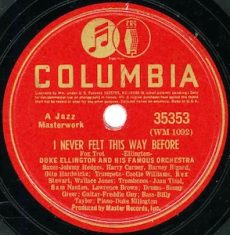
Wallace Leon Jones was born on November 16, 1906 in Baltimore, Maryland. He began playing trumpet in local Maryland bands such as Ike Dixon’s Harmony Birds and Percy Glascoe’s Kit Kat Orchestra early in his career.
He moved to New York City around 1935 and went to work with his cousin Chick Webb. He then joined Willie Bryant’s ensemble and recorded with Putney Dandridge and Duke Ellington, the latter where he was credited on clarinet, trombone and trumpet from 1938 to 1944.
He appeared in several sound films with Ellington, including 1943’s Cabin in the Sky. After this association, Wallace recorded with Ellington again in 1947, and also worked with Benny Carter, Snub Mosley, and John Kirby, but left music by the end of the Forties.
Trumpeter Wallace Jones died on March 23, 1983 in New York City.
More Posts: history,instrumental,jazz,music,trumpet
Daily Dose Of Jazz…
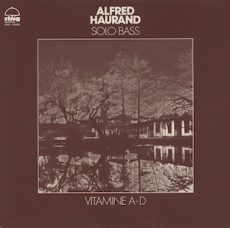
Ali Haurand was born Alfred Josef Antonius Haurand on November 15, 1943 in Viersen, Germany. After an apprenticeship as a confectioner and a business manager, he studied from 1966 to 1973 at the Folkwang School and the Rhineland Music Academy. He initially played with his own trio and from 1967 in the trio and quintet of pianist George Maycock. In 1968 he also toured with Philly Joe Jones, Jacques Pelzer, René Thomas and Jan Huydts.
He performed with Ben Webster, Don Byas, John Handy, Bobby Jones and Wilton Gaynair. This was followed by his own groups, Third Eye, the European Jazz Quintet with Leszek Zadlo, Gerd Dudek, Alan Skidmore and Pierre Courbois. Together with Alan Skidmore and Tony Oxley, they formed the trio SOH. Haurand played with his long-time companions, the saxophonist Gerd Dudek and the pianist Rob van den Broeck, in the formation The Trio.
Since 1982, the European Jazz Ensemble, which he formed out of the European Jazz Quintet with varying lineups that included Allan Botschinsky, Stan Sulzmann, Joachim Kühn and Daniel Humair. In the 2000s, he took part in several jazz and poetry projects.
For decades he was a presenter and consultant to the WDR television jazz editorial team, and for twelve years he was artistic director of the Düsseldorf Jazz Rally. From 1987 he was the founder, director and organizer of the Viersen Jazz Festival until 2014. For over 20 years he organized the jazz concerts in the Süchtelner Weberhaus.
Double bassist and bandleader Ali Haurand, who was also a television presenter, music producer and festival manager, died on May 28, 2018.
More Posts: bandleader,bass,history,instrumental,jazz,music
The Jazz Voyager
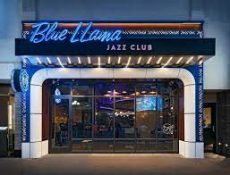
Heading west and coming in early to Ann Arbor, Michigan to investigate the African American Culture and History Museum, the Flight Museum and given time the Chelsea Area Historical Society Museum to see what the city and surrounding areas offer. The next leg of our tour stop of jazz clubs for a visit this week is the stylish lounge restaurant, Blue Llama. With Afro-Caribbean cuisine, designed by James Beard Award-winning Chef JJ Johnson paired with jazz, it creates a destination music venue.
On tap for entertainment is South African pianist Nduduzo Makhathini bringing the African warrior code that is deeply reliant on music for motivation and healing to the bandstand. With a deep influence of McCoy Tyner and Coltran’s quartet he allows his vision to be heard.
The Blue Llama is located at 314 S Main Street, 48104. For more information visit https://bluellamaclub.com.

More Posts: adventure,club,genius,jazz,music,piano,preserving,travel,vocal