

Daily Dose Of Jazz…
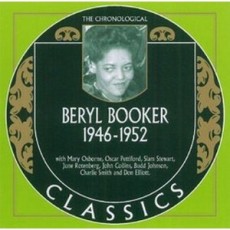
Beryl Booker was born on June 7, 1922 in Philadelphia, Pennsylvania and studied piano as a child. She played with Slam Stewart’s trio in 1946, playing off and on with him until 1951 and accompanied Dinah Washington.
In early 1952, Booker led a quintet that featured Don Elliot, Chuck Wayne, Clyde Lombard and Connie Kay. She recorded several sessions with Miles Davis and by 1953 had formed a trio with two female musicians – Bonnie Wetzel and Elaine Leighton. This group toured Europe in 1954 as part of the show “Jazz Club USA”, which featured Billie Holiday.
After another stint with Dinah Washington in 1959, she slipped into obscurity, however, in the 1970s she re-emerged to play and record with small groups.
On September 30, 1978, swing pianist Beryl Booker passed away at age 56.
More Posts: piano

Daily Dose Of Jazz…
Grant Green was born on June 6, 1931 in St. Louis, Missouri. He first performed as a guitarist in a professional setting at the age of 12, first playing boogie-woogie before moving to jazz. His influences were Charlie Christian, Charlie Parker, Ike Quebec, Lester Young, Jimmy Raney, Jimmy Smith and Miles Davis.
Grant first recorded in St. Louis with tenor saxophonist Jimmy Forrest on the Delmark label alongside Elvin Jones. But it was Lou Donaldson who discovered the young talent and after touring together, by 1959 Green had moved to New York. An impressive introduction to Alfred Lion led to his bypassing the sideman audition and recording as a bandleader, a relationship that lasted throughout the Sixties.
Grant’s first issued album as a leader was in 1961 with Grant’s First Stand, followed by Green Street, Grantstand and being named Down Beat critics’ poll best new star in 1962. He would often play the sideman for Hank Mobley, Ike Quebec, Stanley Turrentine, Harold Vick and Larry Young among others at the label.
Though he had an impressive catalogue of recordings many were not released during his lifetime though Grant always carried off his more commercial dates with artistic success during this period. Towards the late 60s he left Blue Note for Verve Records and other labels into the Seventies but was relatively inactive due to personal problems and heroin addiction.
The guitarist spent much of 1978 in the hospital, but against doctors’ advice, went back on the road to earn some money and collapsed in his car of a heart attack in New York City on January 31, 1979 at age 47.
More Posts: guitar
Daily Dose Of Jazz…
Pete Jolly was born Peter Ceragioli Jr. on June 5, 1932 in New Haven, Connecticut. He began playing the accordion at age three under his father’s tutelage, then took lessons from age seven and appeared on the CBS radio program Hobby Lobby at the age of eight. The emcee called him Jolly and liking it, adopted the name. He would soon add piano to his musical talents.
Moving to Phoenix, Arizona with his family, by high school Pete was playing at the Jazz Mill behind such visitors as Chet Baker and Benny Carter. After graduation he moved to Los Angeles in 1954 and within days was playing behind Shorty Rogers. Over the next ten years he would play with Gerry Mulligan, Mel Torme, Red Norvo, Buddy DeFranco, Terry Gibbs, Art Pepper, Anita O’Day, Ray Conniff and Marty Paich.
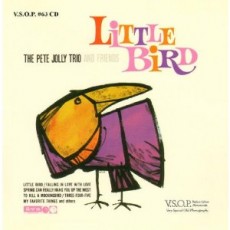
He also began his long recording career as a leader in 1955 with the album, Jolly Jumps In for RCA. Over the next forty-five years, Jolly would record over twenty albums, but rarely more than twice with the same label. The highlight of his career came in 1963, when his bossa nova flavored composition, “Little Bird” recorded for Ava Records, earned him a Grammy nomination. He formed the Pete Jolly Trio in 1964, recording as a solo artist and with trio several albums until his final in 2000.
Pete was well known for his performances on television programs such as Get Smart, The Love Boat, I Spy, Mannix, M*A*S*H and Dallas, as well as hundreds of movie soundtracks. He continued performing with his trio until shortly before being hospitalized in August 2004. Jazz pianist and accordionist Pete Jolly passed away on November 6, 2004 in Pasadena, California from complications of multiple myeloma at age 72.
Daily Dose Of Jazz…
Winard Harper was born Hiram Winard Harper on June 4, 1962 in Baltimore, Maryland and started beating on cans at age three and his natural affinity was encouraged by his father. By age five he was making guest nightclub appearances with his older brother Danny’s band. It was his hearing of the Clifford Brown/Max Roach recording that sealed his inspiration to play jazz.
Harper’s first major gig was in 1982 with Dexter Gordon, followed by Johnny Griffin and then spent four years with Betty Carter. It was with the later that he learned much about the music business, preparing him to be a bandleader and giving him the inside track on bookings. This experience gave him the foundation to launch The Harper Brothers along with his brother Philip, and a few of the hottest young talents of the Nineties – Justin Robinson, Javon Jackson, Walter Blanding, Kioshi Kitagawa, Stephen Scott, Kevin Hayes, Michael Bowie and Nedra Wheeler.
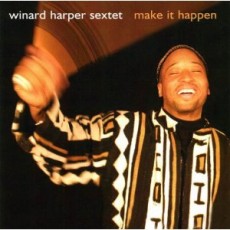
The Harper Brothers recorded four albums prior to the dissolution of the band and Winard went on to record seven albums to date as a leader. He has played the sideman to Avery Sharpe, Ray Bryant, Abdullah Ibrahim, Pharoah Sanders, Clifford Jordan, Steve Turre, Joe Lovano, Frank Wess, Jimmy Heath and Wycliffe Gordon. Since the turn of the century the drummer, composer and bandleader continues to perform, tour and record with his own sextet.
More Posts: bandleader,drums,history,instrumental,jazz,music
Daily Dose Of Jazz…
Grachan Moncur III was born June 3, 1937 in New York City, the son of bassist Grachan Moncur II, but was raised in Newark, New Jersey. He began playing cello at age nine but switched to trombone at eleven. In high school he attended Laurinburg Institute in North Carolina and began sitting in with touring musicians, establishing lasting friendships with Art Blakey and Jackie McLean.
After high school he toured with Ray Charles in 1959, gained membership into the Art Farmer/Benny Golson Jazztet in ’62, and then worked with Sonny Rollins. He took part in two classic McLean sessions in the early 1960s, One Step Beyond and Destination Out, to which he also contributed the bulk of compositions that led to two influential albums of his own for Blue Note Records – Evolution with McLean and Lee Morgan and Some Other Stuff with Herbie Hancock and Wayne Shorter.
Moncur joined Archie Shepp’s ensemble and recorded with other avant-garde players such as Marion Brown, Beaver Harris and Roswell Rudd. In 1969 while in Paris he recorded two albums as a leader for the BYG Actuel label, New Africa and Aco Dei de Madrugada, as well as appearing as a sideman on numerous other releases of the label. In 1974, the Jazz Composer’s Orchestra commissioned him to write a jazz symphony, Echoes of Prayer, and he has gone on to work with Cassandra Wilson, Frank Lowe, John Patton, Mark Masters, Joe Henderson, Tim Hagans, Gary Bartz and perform occasionally with the Paris Reunion Band.
The prolific composer and trombonist continued to perform, tour and record until he died from cardiac arrest on his 85th birthday in Newark, New Jersey on June 3, 2022.
More Posts: trombone