
Daily Dose Of Jazz…
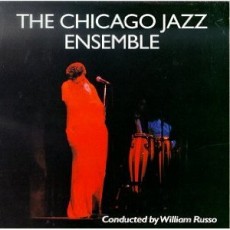
Bill Russo was born William Russo on June 25, 1928 in Chicago, Illinois and studied piano under Lennie Tristano. He would become an arranger and composer and by the 1950s was writing groundbreaking orchestral scores for the Stan Kenton Orchestra. He would compose for Kenton 23 Degrees N 82 Degrees W, Frank Speaking, Portrait of a Count and one of his most famous Halls Of Brass, featuring Buddy Childers, Maynard Ferguson and Milt Bernhart.
By the 60s Russo moved to England, founded the London Jazz Orchestra, and contributed to the Third Stream movement that sought to close the gap between jazz and classical music. Returning to Chicago by mid-decade he founded Columbia College’s music department, became the director of its Center for New Music, the college’s first full-time faculty member and the Director of Orchestral Studies at Scuola Europea d’Orchestra Jazz in Palermo, Italy.
Bill has composed classical symphonies, choral works, operas and several works for the theater. He has received a Koussevitsky award, had his work performed by the New York Philharmonic, the San Francisco and Chicago Symphony Orchestras, and has set music to the poetry of Gertrude Stein as well as scores for dance and film.
Russo has worked with Manny Albam, Teo Macero, Teddy Charles, Donald Byrd, Phil Woods, Bill Evans, Eddie Costa, Bob Brookmeyer, Al Cohn and Art Farmer among others. Starting the Chicago Jazz Ensemble, which is dedicated to preserving and expanding jazz, He was succeeded by Jon Faddis and it is currently under the artistic direction of Dana Hall. Trombonist, composer, arranger, eudcator and author Bill Russo passed away on January 11, 2003 after a bout with cancer. He was 74 years old.
Daily Dose Of Jazz…
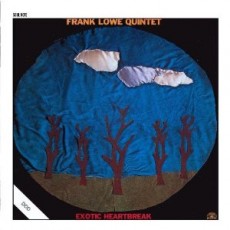
Frank Lowe was born on June 24, 1943 and raised in Memphis, Tennessee. Taking up the tenor saxophonist he was extremely influenced by the first and second waves of free jazz throughout the 1960s. He moved to San Francisco, California to explore the avant-garde jazz scene. While making several visits to New York City he began playing with Sun Ra and Alice Coltrane, recording with the later in 1971.
As a leader he recorded two-dozen albums between 1973 and 2002 working with the likes of Don Cherry, Billy Bang, Jack Walrath, James Carter, Geri Allen, Charnett Moffett, Carlos Ward and numerous others.
Composer and tenor saxophonist Frank Lowe passed away on September 19, 2003 of lung cancer. His legacy was a varied body of recordings and memorable performances and his composition “Spirits in the Field” was performed on Arthur Blythe’s 1977 album The Grip.
More Posts: saxophone
Daily Dose Of Jazz…
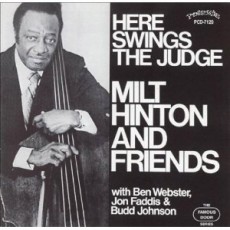
Milt Hinton was born Milton John Hinton on June 23, 1910 in Vicksburg, Mississippi but grew up in Chicago, Illinois from age eleven. He attended Wendell Phillips High School and Crane Junior College and learned to first play violin followed by bass horn, tuba, cello and the double bass.
In the late 1920s and early 1930s, he worked as a freelance musician in Chicago playing with Jabbo Smith, Eddie South, and Art Tatum. In 1936, he joined Cab Calloway’s band playing alongside Chu Berry, Cozy Cole, Dizzy Gillespie, Illinois Jacquet, Jonah Jones, Ike Quebec, Ben Webster, and Danny Barker, where he was equally adept at bowing, pizzicato, and “slapping” a technique for which he became famous while playing in the big band from 1936 to 1951.
Milt later became a television staff musician, working regularly on shows by Jackie Gleason and Dick Cavett, recorded eleven albums as a leader and worked as a sideman on numerous albums with Lionel Hampton, Milt Jackson, Elvin Jones, Charles Mingus, Ike Quebec, Ralph Sutton, Ruby Braff, Clark Terry and Branford Marsalis.
He has twice received awards from the National Endowment For The Arts for his work as a jazz educator and a fellow and is a 1993 NEA Jazz Master. Bassist Milt Hinton, who photographically documented many of the jazz greats, was nicknamed “The Judge”, was heralded as the “the dean of jazz bass players”, passed away on December 19, 2000 in New York City at age 90.
More Posts: bass
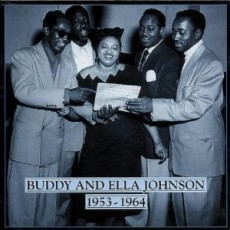
Daily Dose Of Jazz…
Ella Johnson was born Ella Mae Jackson on June 22, 1919 in Darlington, South Carolina. She joined her brother Buddy Johnson in New York as a teenager, where he was leading a popular band at the Savoy Ballroom in Harlem.
Ella scored her first hit in 1940 with “Please, Mr. Johnson” with subsequent hits included “Did You See Jackie Robinson Hit That Ball?”, “When My Man Comes Home” and “Hittin’ On Me”. Her popular 1945 recording of “Since I Fell For You” composed by her brother, led to its eventual establishment as a jazz standard.
She continued to perform with Buddy Johnson into the 1960s and her singing drew comparisons to Ella Fitzgerald and Billie Holiday. In February 2004, she died in New York City of Alzheimer’s disease, at the age of 84.
More Posts: vocal

Requisites
1+1+1 ~ Kenny Barron with Ron Carter and Michael Moore | By Eddie Carter
I’d had a really long week and was looking forward to hearing something soothing, so I turned to one of my favorite pianists, Kenny Barron. Submitted for your approval this morning is an impressive collaboration from 1986. 1+1+1 (BlackHawk Records BKH 50601) has the pianist in the company of two outstanding bassists, Ron Carter (tracks A2, A3, B2, B4), and Michael Moore (tracks A1, A4, B1). This enjoyable album is perfect to listen to whether you need something mellow to accompany your workday, to read along with, or to enjoy during a focused listening session after dinner. The copy I own is the 1986 U.S. Stereo release.
Side One opens with a tune from the twenties, The Man I Love by George and Ira Gershwin. A spirited introduction by Kenny gets the song underway, with Michael joining the melody. The pianist launches into a sizzling solo, pouring radiant energy into each note. Michael takes a short invigorating walk next, preceding the theme’s return and close. United Blues by Ron Carter introduces the bassist in a cheerful performance, beginning with piano and bass sharing the introduction and theme. Barron goes first with some vivacious notes, then Carter steps up for a superb example of choice notes ahead of the closing chorus.
The ensemble enters the thirties next with Prelude to a Kiss by Duke Ellington, Irving Gordon, and Irving Mills. Michael is back on bass as the duo’s introduction leads to a soft, tender melody. Kenny is the song’s only soloist and delivers an interpretation that’s lush and warm, with a touch of beauty, as Moore’s bass shadows him through every verse, into the reprise and the delicate climax. C Jam Blues by Duke Ellington, from 1942, picks up the pace again as Kenny and Michael introduce this old warhorse and present the lively theme. Barron takes the opening solo with a playful bounce, then Moore executes his ideas next. The duo then shares a brief conversation before the ending theme.
Side Two starts with Dave Brubeck’s In Your Own Sweet Way. It’s one of his loveliest compositions from the fifties, and the duo’s beautiful melody sets the tone. Kenny’s opening solo is a lovely demonstration of heartfelt and serene beauty. Michael follows, walking gracefully through the closing statement, leading to the duo’s theme restatement and an elegant ending. Giant Steps by John Coltrane brings Carter back for an upbeat melody with Barron, who continues capturing the sheer joy of this tune in the opening statement. The bassist responds with a cheerfully carefree interpretation that bounces along toward the duo’s culmination.
’Round Midnight by Thelonious Monk, Bernie Hanighen, and Cootie Williams, written in 1944, is Monk’s most famous composition and the jazz standard that has been recorded more than any other. Kenny has the spotlight to himself as he paints a beautiful portrait, soft as an affectionate embrace, from the opening notes to the closing chorus. It’s back to the thirties for the album’s finale, Beautiful Love by Victor Young, Wayne King, Egbert Van Alstyne, and Haven Gillespie. Ron joins Kenny for the upbeat melody. The mood is jubilant from the start of Barron’s opening statement. He then shares the second solo with Carter in a lively conversation that culminates in a splendid reprise and finale.
Don H. Nelson and Karen J. Nelson were the executive producers of this session, and Rudy Van Gelder managed the recording console. The sound quality across the highs, midrange, and bass is astonishing, with superb fidelity that transports the musicians to your listening room. Kenny Barron’s piano consistently captivates, providing a cohesive thread, while Ron Carter and Michael Moore add their own distinctive character to the music. If you’re a fan of jazz piano and in the mood for an album that’s perfect for unwinding after a long day or week, I offer 1+1+1 by Kenny Barron with Ron Carter and Michael Moore for your consideration on your next record shop visit. It’s a terrific album by a jazz master, showcasing remarkable skill and heartfelt expression on every track, and it should become a welcome addition to your library!
~ C Jam Blues, Giant Steps, In Your Own Sweet Way, Prelude To a Kiss, ‘Round Midnight, The Man I Love – Source: JazzStandards.com ~ Beautiful Love – Source: Wikipedia.org © 2026 by Edward Thomas Carter

More Posts: choice,classic,collectible,collector,history,instrumental,jazz,music,piano