

Requisites
Portraits at The Penthouse – Live in Seattle ~ Bill Evans –| By Eddie Carter
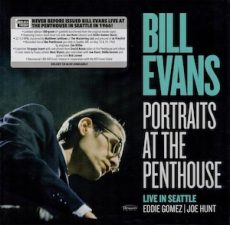
I was still in a mindset to hear another pianist-led release after listening to Mal Waldron, so I chose a Bill Evans album that has become a favorite in my household. Portraits at The Penthouse: Live in Seattle (Resonance Records HLP-2979) is the 8th album reissued by the Bill Evans estate and captures the pianist and his trio in performance over two May nights. The program consists of eight originals and two standards. Sharing the spotlight with Bill Evans are Eddie Gomez on bass and Joe Hunt on drums. The copy I own is the 2025 U.S. Record Store Day, Deluxe Edition, Limited Edition, mono audiophile pressing. Number 1849 of 5000.
The trio’s introduction welcomes the audience into the Penthouse’s intimate atmosphere. They then begin the first night’s set with a lively rendition of How My Heart Sings by Earl Zindars, the title tune from Bill’s 1964 release. Bill steps up first after the opening chorus for a jaunty statement, with an almost dance-like resilience. Eddie takes over, showing how he can build an outstanding solo, while Joe provides excellent support behind them into the reprise and close. ’Round Midnight by Thelonious Monk, Bernie Hanighen and Cootie Williams is one of jazz’s most beloved and recorded standards. The trio honors the classic by beginning the theme that gently glows like embers in a hearth. Evans opens with a graceful solo, radiating warmth and charm. Gomez responds with a tender, heartfelt statement, leading to a beautiful conclusion.
Up next is Come Rain or Come Shine by Harold Arlen and Johnny Mercer, which begins with Bill’s solo introduction, segueing into the ensemble’s medium melody. Bill gets things off to a good start in the opening statement with an infectious swing. Eddie comes in next and conveys his message with authority, preceding the trio’s theme restatement and soft climax. The second night’s set gets underway with Nardis by Miles Davis, and the trio begins by cruising comfortably on the opening melody. Eddie kicks off the opening solo with a lengthy, leisurely walk that swings easily. Bill comes in next and dines on a splendid performance, leading to the theme reprise and soft finale that receives a warm ovation from the club audience.
Earl Zindars’ second contribution to the album is his beautiful ballad, Elsa, which first appeared on “Explorations.” Bill has the stage to himself for the introduction, ahead of the lovely opening ensemble. Evans sets things in motion with a lyrical solo that builds to an effective climax. Eddie follows with one of his most thoughtfully sensuous interpretations, and Bill brings the trio back to the ending theme with a few final thoughts. The second side starts with Bill’s gorgeous introduction to Time Remembered by Bill Evans. The trio’s melody gets things going before stepping aside for Bill’s opening solo that gradually shifts from a gentle, understated mood to a livelier one. Eddie steps in next with a tender reading, until the groups return to the ending theme, with approving applause from the crowd.
Who Can I Turn To? by Leslie Bricusse and Anthony Newley debuted in the 1965 Broadway musical, “The Roar of the Greasepaint – The Smell of the Crowd.” Bill’s solo introduction adds emotional depth, leading to the trio’s lightly swinging theme. Eddie sets the tone with a wonderfully delicate interpretation, then Bill rolls ahead in the following solo before the trio’s closing chorus ends the song on a good note. The beat slows down again for Bill’s tender introduction to Detour Ahead by Lou Carter, Herb Ellis, and Johnny Frigo. The lightly swinging pace picks up for the group’s theme. Eddie is up first and walks with a lively bounce that’s easy to listen to. Bill then effectively illustrates a few melodic ideas, leading back to the out-chorus and the crowd’s approval.
A sprightly piano introduction by Evans sets the tone for Autumn Leaves by Jacques Prévert, Johnny Mercer, and Joseph Kosma. The trio’s melody dresses up this old favorite for Eddie’s opening statement, shared with Joe’s spirited brushwork. Bill follows with a short solo that sizzles with exhilaration ahead of the theme’s restatement and ovation from the audience. The ensemble’s theme returns, a bright-tempoed rendition of How My Heart Sings by Earl Zindars, beginning with a lively opening chorus. Bill leads the way in the first of two solos, and his first swings with scintillating skillfulness, matched by the steady support of Eddie and Joe. Eddie follows with energetic exuberance on the second statement, then the pianist cooks on a vigorously spicy comment before the group takes it out.
I Should Care by Sammy Cahn, Alex Stordahl, and Paul Weston brings the album to a close with a fun tune from the first few notes of the trio’s brisk theme. Eddie has the solo spotlight to himself in a happy, effervescent performance, which flows efficiently to the out-chorus and a very fulfilling finish. Zak Shelby-Szyszko was the album’s production manager. Zev Feldman produced Portraits at The Penthouse for release. Charlie Puzzo, Jr., and Zak Shelby-Szyszko were the associate producers. George Klabin was the executive producer, and Jim Wilke was the engineer. Matthew Lutthans mastered the album. It’s a good recording, but not perfect. The piano tends to be somewhat subdued and less forward in the mix compared to the bass. Occasionally, tape is noticeable, though it doesn’t persist throughout the album.
The record was pressed on 180-gram vinyl in a deluxe-edition gatefold and transferred from the original master tapes. Also included in this album is a 16-page booklet with rare photos by David Azoze and others, plus interviews with Joe Hunt, Eddie Gomez, and Bob James. Even though a few tracks may not have perfect sound quality, fans of Bill Evans seeking relaxing music after a busy day or week will find Portraits at The Penthouse to be an enjoyable live album with comforting moments and musical gems you’re sure to enjoy!
~ Explorations (Riverside RLP 351/RLP 9351), How My Heart Sings (Riverside RM 473/RS 9473) – Source: Discogs.com Autumn Leaves, Come Rain or Come Shine, I Should Care, ‘Round Midnight – Source: Jazz Standards.com ~ Detour Ahead, Nardis, Time Remembered, Who Can I Turn To? – Source: Wikipedia.org © 2026 by Edward Thomas Carter
More Posts: choice,classic,collectible,collector,history,instrumental,jazz,music,piano

Daily Dose Of Jazz…
Herbie Fields was born May 24, 1919 in Asbury Park, New Jersey and attended Juilliard School of Music. He served two years in the Army during WWII until 1943. He began recording in 1944 with two sides for Bob Thiele’s Signature label and over the next year and a half he recorded for Savoy, and shared a date with “Rubberlegs” Williams that featured teenaged Miles Davis’ recording debut.
Fields replaced Earl Bostic as alto saxophonist in Lionel Hampton’s band and was fluent in a variety of reed instruments, from clarinet to baritone saxophone. In 1945, he won Esquire Magazine’s New Star Award on the Alto Sax. In 1946, RCA Victor signed Fields as leader of his own big band.
Herbie would lead the big band with sidemen Neal Hefti, Bill Evans, Eddie Bert, Manny Albam, Marty Napoleon and Serge Chaloff among others and Dardanella was their biggest hit. He formed a septet in 1949 based in Chicago that backed numerous stage shows and in 1950 accompanied Billie Holiday 3-month East Coast tour.
Fields gravitated toward an R& B conception in the Fifties without success and recorded sporadically. He moved to Miami, Florida, opened a restaurant and on September 17, 1958 alto saxophonist Herbie Fields died of an overdose of sleeping pills at his home.
More Posts: saxophone
Daily Dose Of Jazz…
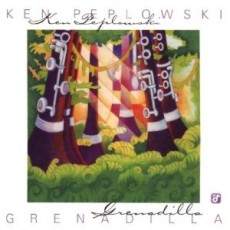
Ken Peplowski was born May 23, 1959 in Cleveland, Ohio. He began playing clarinet and saxophone in Polish polka bands as a child and played his first professional gig while still in elementary school. With his trumpeter brother they played local radio and television shows, dances and weddings all through high school. By his teens Ken was experimenting with jazz, playing in the school bands, jamming with the local jazz musicians and teaching at the local music store.
After a year of college, he joined the Tommy Dorsey Orchestra under the direction of Buddy Morrow. It was during this time that he met Sonny Stitt who became a great inspiration. In 1980 Peplowski moved to New York City and played from Dixieland to avant-garde jazz. He would work for Benny Goodman, recorded some 20 albums for Concord Records, toured around the world, recorded film soundtracks and most recently signed with Nagel-Heyer Records.
His collaborations include Mel Tormé, Leon Redbone, Charlie Byrd, Peggy Lee, Madonna, George Shearing, Hank Jones, Rosemary Clooney, Tom Harrell, James Moody, Cedar Walton, Houston Person, Steve Allen and Woody Allen among others. Jazz clarinetist and saxophonist Ken Peplowski continues to perform, tour, record, conduct student workshops, has been named the jazz advisor for the Oregon Festival of American Music and music director at the Jazz Party at the Shedd.
Clarinetist and tenor saxophonist Ken Peplowski passed away quietly in his cabin on February 2, 2026 while participating in the Jazz Cruise aboard the Celebrity Summit sailing in the Gulf of Mexico.
Daily Dose Of Jazz….
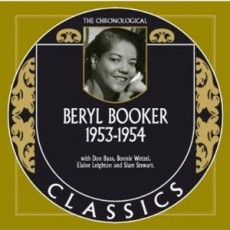
Elaine Leighton was born on May 22, 1926 in New York City and while in high school she was in the same class as Stan Getz and Shorty Rogers. Early in her career around 1949 Leighton worked with Jackie Cain and Roy Kral. She then went to work with Ann Mae Winburn who led the International Sweethearts of Rhythm.
In the mid-Fifties Leighton would play in a trio with pianist Carl Drinkard and accompanied Billie Holiday, recording with her on several sessions including the 1954 Koln live recording. She would be part of an all female trio with bassist Bonnie Wetzel and pianist/singer Beryl Booker. Following a European tour Elaine started freelancing in New York, from 1957 to 1959, then led her own trio.
She has worked with Buddy DeFranco and Red Norvo, was a part of the Jazz USA tour with Clark Terry, Lucky Thompson, Tal Farlow, Kenny Clarke, Terry Pollard, Norma Carson and Mary Osborne, and recorded as a part of the Leonard Feather “Cats vs. Chicks” sessions for MGM. Drummer Elaine Leighton never led a recording session but performed on many classic recording dates but no longer performs at the age of 91.
More Posts: drums
Daily Dose Of Jazz…
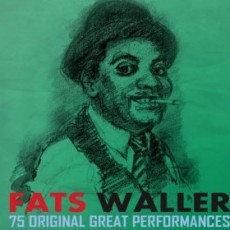
Fats Waller was born Thomas Wright Waller on May 21, 1904 in New York City. He started playing the piano when he was six and graduated to the organ in his father’s church four years later. At the age of fourteen he was playing the organ at the Lincoln Theater in Harlem. Within twelve months he had composed his first rag, and recorded his first piano solos “Muscle Shoals Blues” and “Birmingham Blues” in 1922 when he was 18 years old.
The prize pupil, friend and colleague of stride pianist James P. Johnson, he became one of the most popular performers of his era, finding critical and commercial success at home and Europe. Waller was a prolific songwriter, composing hundreds with his closest collaborator Andy Razaf and many became standards such as Honeysuckle Rose, Ain’t Misbehavin’ and Squeeze Me. He recorded profusely for RCA, Victor and EMI and performed and recorded with Gene Austin, Billy Banks, Adelaide Hall, Erskine Tate, Bill Coleman, Al Casey, Rudy Powell and Jack Teagarden among others.
Waller was kidnapped in Chicago leaving a performance in 1926, taken to the Hawthorne Inn, and upon insistence at gunpoint became the surprise guest at Al Capone’s birthday. Rumored he played three nights but when he left he was drunk, tired and thousands of dollars richer. He appeared on one of the first BBC radio broadcasts, influenced many pre-bop pianists such as Count Basie and Erroll Garner and was first to play syncopated jazz compositions were performed on a full sized church organ.
He received a Grammy Lifetime Achievement Award and was inducted into the Grammy Hall of Fame, Gennett Records Walk of Fame, Jazz At Lincoln Center: Nesuhi Ertegun Jazz Hall Of Fame, Big Band and Jazz Hall of Fame and the Songwriters Hall of Fame. Pianist, organist, composer, singer and comedic entertainer Fats Waller, passed away of pneumonia in Kansas City, Missouri on December 15, 1943.