

Daily Dose Of Jazz…
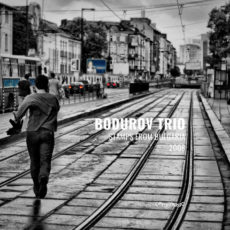
Dimitar Bodurov was born on September 17, 1979 in Bulgaria and studied at the Conservatory of Sofia and the Rotterdam Conservatory, where he graduated in 2004 jazz piano and in 2006 jazz composition.
In 2000 Dimitar moved to Amsterdam, Netherlands and began performing throughout the country and Europe. He recorded his debut recording as a leader in 2004 titled Melatonic on the Acoustic Records label followed by his live sophomore release the same year titled Resumption Suite. He would go on to record solo and trio albums on both Dutch and Norwegian labels.
Bodurov ventured into composing for theater, opera, and orchestra. He has received several jazz awards, receiving a mention at the Martial Solal Jazz Solo Piano Competition in Paris. He has released a number of CD and digital albums as a leader, producer, and guest for Dutch and Norwegian labels. In 2012 he founded his own label Optomusic.
As an active event organizer, Dimitar has initiated several events: Jazz and Vino ~ a series of concerts with charity purpose in Varna, Bulgaria; Keys and Stix Festival ~ celebrating duets of piano and drums in collaboration with Bimhuis, Amsterdam & Unterfahrt, Münich; and since 2013, he has been the artistic leader of Radar Festival, Varna, Bulgaria.
Pianist and composer Dimitar Bodurov, who has worked with Randy Brecker, Didier Lockwood, Theodosii Spassov, Claron Mcfadden and Svetlin Rouseev, continues to compose, perform and record.

More Posts: bandleader,composer,history,instrumental,jazz,music,piano
Daily Dose Of Jazz…
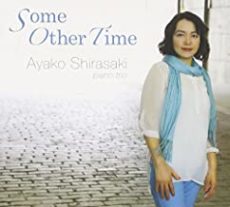
Ayako Shirasaki was born on September 16, 1969 in Tokyo, Japan and started classical piano lessons at age five, and was intrigued by her father’s professional trombone-playing. By age twelve she began her professional career playing gigs at the “J” jazz club in Tokyo.
After attending the Tokyo Metropolitan High School for Arts, Shirasaki majored in classical music at the Tokyo National University of Fine Arts and Music and gave concerts as a classical pianist for several years after graduating before returning to play jazz.
Her 1997 move to New York City saw her pursuing a master’s degree at the Manhattan School of Music, studying with pianist Kenny Barron. Landing in the Park Slope neighborhood of Brooklyn, Ayako operates the Brooklyn location of the Sakura Music School, which specializes in teaching music to small children with an emphasis on those of Japanese ancestry.
Performing regularly in the New York area, she tours internationally, in addition to recording. Her debut trio album Existence brought drummer Lewis Nash and bassist Marco Panascia together in 2003. She has since recorded four addition albums, has been featured on Marian McPartland’s National Public Radio show Piano Jazz, and was a finalist in the Mary Lou Williams Women In Jazz Piano Competition in 2005 and 2006 and the Great American Jazz Piano Competition in 2004, 2005 and 2006. Pianist and educator Ayako Shirasaki continues to perform, tour, record, and teach.
More Posts: bandleader,educator,history,instrumental,jazz,music,piano
Daily Dose Of Jazz…
Bobby Nichols was born on September 15, 1924 in Boston, Massachusetts. He began playing trumpet when he was nine and later attended the New England Conservatory. His biggest job before joining the military was as a trumpeter with Vaughn Monroe’s Orchestra from 1940 to 1943, impressive for a 15-year old. Joining the Army in 1943 he became a member of the Glenn Miller Army Air Force Band and during its two years of existence, his advanced swing solos gave the huge group much of its jazz credibility.
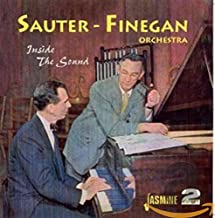
After his discharge, staying busy for the next 15 years, Bobby never became known to the general public. He worked with Tex Beneke between 1946-47, led his own group, and worked with Ray McKinley in 1948. After playing with Tommy Dorsey in 1951, he became a longtime member of the Sauter-Finegan Orchestra from 1952-61 and a studio musician. When the Sauter-Finegan big band eventually broke up, having never led his own record date, he slipped completely into obscurity.
Trumpeter Bobby Nichols, who at nineteen exhibited fire in his playing but never made it big despite his many solos, at 95 years old is sought by collectors of the Glenn Miller Army Air Force Band recordings, died in 1975 in Aruba.
More Posts: history,instrumental,jazz,music,trumpet
Daily Dose Of Jazz…
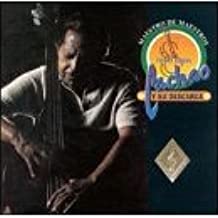
Israel López Valdés was born into a family of musicians on September 14, 1918 in Havana, Cuba. Better known as Cachao, a nickname and stage name given to him by his grandfather, as an 8-year-old bongo player, he joined a children’s son Cubano septet directed by a 14-year old Roberto Faz. A year later, already on double bass, he provided music for silent movies in his neighborhood theater, in the company of a pianist who would become a true superstar, the great cabaret performer Ignacio Villa, known as Bola de Nieve.
His parents made sure he was classically trained, first at home and then at a conservatory. In his early teens, Lopez was already playing contrabass with the Orquesta Filarmónica de La Habana, of which Orestes was a founding member. Under the baton of guest conductors such as Herbert von Karajan, Igor Stravinsky, and Heitor Villa-Lobos, he played with the orchestra from 1930 to 1960.
He and his older brother Orestes were the driving force behind one of Cuba’s most prolific charangas, Arcaño y sus Maravillas. As members of the Maravillas, Cachao and Orestes pioneered a new form of ballroom music derived from the danzón, the danzón-mambo, which subsequently developed into an international genre, mambo.
In the 1950s, Cachao became famous for popularizing improvised jam sessions known as descargas. In 1961, Cachao went into exile. He crossed the Atlantic by boat, reaching Madrid thanks to Ernesto Duarte, who demanded him to play with his orchestra–Orquesta Sabor Cubano–and where he spent a few years touring the country until the orchestra finally broke up in 1963. Moving to the United States that same year, Cachao became a session musician and was one of the most in-demand bassists in New York City, along with Alfonso “El Panameño” Joseph and Bobby “Big Daddy” Rodríguez.
Joseph and López substituted for each other over a span of five years, performing at New York City clubs and venues such as the Palladium Ballroom, The Roseland, The Birdland, Havana San Juan and Havana Madrid. While Cachao was performing with Machito’s orchestra in New York, Joseph was recording and performing with Cuban conga player Cándido Camero. When Joseph left Cándido’s band to work with Charlie Rodríguez and Johnny Pacheco, it was Cachao who took his place in Cándido’s band. In the 1970s, Cachao fell into obscurity after moving to Las Vegas, Nevada and then later Miami, Florida releasing albums sporadically as a leader.
The 1990s saw his re-discovery by actor Andy García, who brought him back to the forefront of the Latin music scene with the release of a documentary and several albums. Throughout his career, he performed and recorded in a variety of music styles ranging from classical music to salsa.
Double bassist and composer Cachao Lopez, who rose to prominence during the boogaloo years, who recorded sixteen albums as a leader and another twenty as singles, collaborator, and sideman, passed away in Coral Gables, Florida at age 89 on March 22, 2008.
More Posts: bandleader,bass,composer,history,instrumental,jazz
Daily Dose Of Jazz…
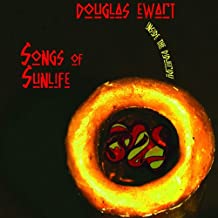
Douglas Ewart was born on September 13, 1946 in Kingston, Jamaica and emigrated to the United States in 1963. Settling in Chicago, Illinois he became associated with the Association for the Advancement of Creative Musicians (AACM) in 1967, studying with Joseph Jarman and Roscoe Mitchell. He served as that organization’s president from 1979 to 1986.
Douglas recorded eight albums as a leader and has performed or recorded fifteen with J. D. Parran, Muhal Richard Abrams, Art Ensemble of Chicago, Anthony Braxton, Alvin Curran, Anthony Davis, Robert Dick, Von Freeman, Joseph Jarman, Amina Claudine Myers, Roscoe Mitchell, James Newton, Rufus Reid, Wadada Leo Smith, Cecil Taylor, Richard Teitelbaum, Henry Threadgill, Hamid Drake, Don Byron, Malachi Favors Maghostut, Muhal Richard Abrams, Spencer Barefield, Tani Tabbal, Jean-Luc Cappozzo, Joëlle Léandre, Bernard Santacruz, Michael Zerang, Chico Freeman, Dennis González, Yusef Lateef, Adam Rudolph,
In 1992 he collaborated with Canadian artist Stan Douglas on the video installation Hors-champs which was featured at Documenta 9 in Kassel, Germany. The installation features Ewart in improvisation of Albert Ayler’s Spirits Rejoice with musicians George Lewis, Kent Carter, and Oliver Johnson.
Douglas Ewart has lived in Minneapolis, Minnesota since 1990 and plays sopranino and alto saxophones, clarinets, bassoon, flute, bamboo flutes, panpipes, and didgeridoo; as well as Rastafarian hand drums.
More Posts: bamboo flute,bassoon,clarinet,didgeridoo,flute,hand drums,history,instrumental,jazz,music,panpipe,saxophone