

Daily Dose Of Jazz…
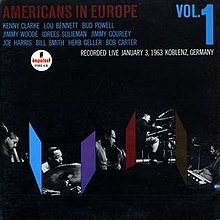
William Overton Smith was born on September 22, 1926 in Sacramento, California and grew up in Oakland, California where he began playing clarinet at the age of ten. Putting together a jazz group to play for dances at 13, by 15 he joined the Oakland Symphony. Idolizing Benny Goodman, after high school and a brief cross-country tour with a dance band, he ended his romance for the road. Giving notice when the band reached Washington, D.C., he was encouraged by an older band member to get the best education he could, so he headed to New York.
He started his formal music studies at the Juilliard School of Music, playing in New York jazz clubs at night. Uninspired at Juilliard, he returned to California after hearing the music of Darius Milhaud, who was then teaching at Mills College in Oakland. At Mills, Smith met pianist Dave Brubeck, with whom he often played, was a member of the Dave Brubeck Octet, and later occasionally subbed for saxophonist Paul Desmond in the Dave Brubeck Quartet. Brubeck’s 1960 album Brubeck à la mode that featured ten of his own compositions. Rejoining Brubeck’s group in the 1990s.
Bill went on to study composition with Roger Sessions at the University of California, Berkeley, where he was graduated with a bachelor’s and a master’s degree. He won the Prix de Paris, study at the Paris Conservatory, was awarded the prestigious Prix de Rome in 1957, and spent six years in Italy. After a teaching stint at the University of Southern California, he went on to a thirty-year career at the University of Washington School of Music in Seattle, Washington. He co-led the forward-thinking Contemporary Group, first with Robert Suderburg, and then with trombonist Stuart Dempster, from 1966 to 1997.
Clarinetist and composer Bill Smith, who recorded in jazz, classical and third stream genres, passed away at age 93 in his home from complications of prostate cancer on February 29, 2020.

More Posts: bandleader,clarinet,educator,history,instrumental,jazz,music
Daily Dose Of Jazz
Fred Hunt was born Herbert Frederick Hunt was born in London, England on September 21, 1923. As the younger son of a pianist mother and a cellist father, he enjoyed thorough musical education from his distinguished parents. A self-taught pianist, he started playing piano at the age of 13 and played local gigs before joining the Royal Air Force.
After his discharge, Hunt began his musical career playing semi-professionally with Mike Daniels and the Cy Laurie Four in 1951. Becoming professional and went on to join Alex Welsh’s band from 1954 to 1962 and again from 1964 to 1974.
As Welsh’s primary pianist, and often a featured soloist, he became one of Britain’s leading trad jazz musicians and recorded with Eddie Davis, Bud Freeman, Eddie Miller, and Ben Webster in 1967. Accompanying visiting Americans, he recorded with the four-tenor group, Tenor Of Jazz, featuring Webster and Eddie “Lockjaw” Davis, which toured in the late 60s.
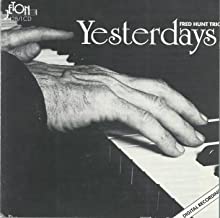
Departing Welsh in 1974, he played in Copenhagen and South Africa, however, after 1976 he split his time between Britain, Denmark, and Germany. He led a trio featuring drummer Lennie Hastings beginning in 1978 and the following year the German label Erus Records released a direct cut LP called Yesterdays which featured his trio with bassist Brian Mursell and drummer Roger Nobes in front of a live audience.
He toured with Wild Bill Davison in the latter part of the 1970s and played with Welsh once more in the early 1980s before retiring due to failing health after being incapacitated and confined to a wheelchair. He worked frequently at London’s PizzaExpress Jazz Club until 1986. Pianist Fred Hunt, who became a top pianist in both modern jazz and trad jazz musical settings, passed away on April 25, 1986. in Weybridge, Surrey aged 62.
More Posts: history,instrumental,jazz,music,piano
Daily Dose Of Jazz…
Bill DeArango was born William Louis DeArango on September 20, 1921 in Cleveland, Ohio. A self-taught on guitar, while attending Ohio State University, he played with Dixieland bands at night. After serving in the Army from 1942–44, he moved to New York City and worked first with Don Byas and Ben Webster.
A year later, Bill was playing on an album with Sarah Vaughan, Charlie Parker, and Dizzy Gillespie. Working as a sideman with Eddie “Lockjaw” Davis, Ike Quebec, Slam Stewart, he then led his own band with Terry Gibbs.
In 1947, DeArango returned to Cleveland and performed locally for two decades, recorded an album with pianist John Williams in 1954. By the 1960s had opened up a guitar store, taught guitar lessons, and late in the decade, he managed the rock band Henry Tree. Performing regularly in the Seventies at Cleveland’s Smiling Dog Saloon working with Ernie Krivda and Skip Hadden, mixing hard rock and free jazz.
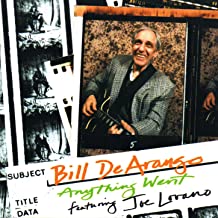
His next recording was on the album Another Time/Another Place by Barry Altschul, then 298 Bridge Street by Kenny Werner, and Names by Jamey Haddad. In 1993, he released his second solo album, Anything Went, with Joe Lovano.
He entered a nursing home in 1999 and suffered dementia until his death seven years later, although he continued performing locally until late 2001. Guitarist William DeArango passed away on December 26, 2005 in his hometown.
More Posts: arranger,bandleader,composer,guitar,history,instrumental,jazz,music
Daily Dose Of Jazz…
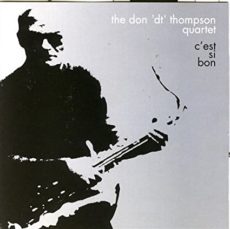
Don D.T. Thompson was born in Drumheller, Alberta on September 19, 1932. He played saxophone and clarinet at twelve and began promoting his own jazz concerts, Jammin’ the Blues, in Edmonton at 17. Moving to Toronto, Canada in 1952, he toured Canada and the United States from 1954 to 1958 with Anne Marie Moss.
Save for a period in 1965 and 1966 with the Lionel Hampton Orchestra in the United States, Thompson was a mainstay of the Toronto jazz scene through the 1960s. During the early 1960s, he led singer Tommy Ambrose in a big band ensemble. He appeared regularly at the First Floor Club with small groups and a big band from 1959 until 1965, and was seen in the NFB’s Toronto Jazz with a quintet.
He performed on many CBC TV pop music shows, Club Six and Music Hop and played in several Toronto studio orchestras. In 1961 he recorded as a member of the Pat Riccio Big Band in Ottawa and 1963 saw him with pianist Wray Downes and trombonist Rob McConnell. He also released a record as part of a quintet that included trumpeter Fred Stone.
After touring for ten years beginning in 1971 and recording with pop singer Anne Murray, he returned to jazz. In 1981 moving away from his early bebop-based style he landed on a simpler, full-toned, melodic approach in the manner of a Stanley Turrentine. D.T. wrote and recorded several jazz themes; his pop-song arrangements appear on albums by Murray, John Allan Cameron and Gordon Lightfoot.
Saxophonist, composer, and arranger Don D.T. Thompson passed away in Vancouver, Canada on March 21, 2004.
More Posts: arranger,composer,history,instrumental,jazz,music,saxophone
Daily Dose Of Jazz…
John L.Thomas was born September 18, 1902 in Louisville, Kentucky, but relocated to Chicago, Illinois as a child, receiving his formal education in the Windy City. Sliding into on-stage trombone performances with the Clarence Miller Orchestra around 1923. Between 1927 and 1928 he worked with Erskine Tate, which led to his entry into Louis Armstrong’s legendary Hot Seven, replacing Kid Ory in Armstrong’s band and also played with Erskine Tate, among others, becoming associated with the Chicago jazz scene.
He was briefly with McKinney’s Cotton Pickers for jobs in the Northeast in the ’30s; in 1937 he was part of a touring revue fronted by pianist and singer Nat King Cole. He was once again with Tate as well as drummer Floyd Campbell’s outfit prior to switching his trombone case for the tool kit of a defense plant worker during the Second World War. That hiatus from playing took place prior to dropping out completely during the ’50s, as he did gig once again in a group led by guitarist Walter Dysett in 1944.
He had a wonderful repertory band led by Franz Jackson with which Thomas performed and recorded through the first half of the ’60s. The ’50s, on the other hand, may have simply depressed the trombonist with its onslaught of rock & roll, because he simply stopped playing completely representing the first major halt in musical action for this performer since his professional activities began in the Roaring Twenties.
The trombonist continued working with a wide range of classic jazz bandleaders, including trumpeter Freddie Keppard. Preferring to move in and out of groups such as that of the aforementioned Tate and Reuben Reeves, in one lineup and then out of the next. Trombonist John L. Thomas passed away on November 7, 1971 in Chicago, Illinois.
More Posts: history,instrumental,jazz,music,trombone