

Daily Dose Of Jazz…
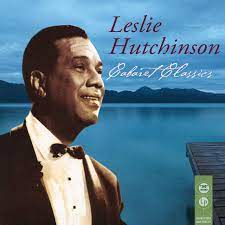
Jiver Hutchinson was born Leslie George Hutchinson on March 16, 1906 in Kingston, Jamaica. He played in Bertie King’s band in Jamaica in the 1930s, then moved to England, where he played with Happy Blake’s Cuba Club Band. By 1936 he was a part of Leslie Thompson’s Emperors of Jazz and two years later he was performing with Ken “Snakehips” Johnson, before joining Geraldo’s band in 1939.
He led his own ensemble from 1944 to 1950, featuring many of the musicians from Thompson’s band. His ensemble toured throughout the United Kingdom and Europe, and in 1945 played concerts in India.
Recording with his ensemble in 1947, he returned to play with Geraldo after the group’s dissolution, and recorded with Mary Lou Williams in 1952. During the Fifties he worked in television on the Benny Hill Show and Make Mine Music.
Trumpeter and bandleader Jiver Hutchinson was killed in a car crash in Weeting, England while on tour with his band on November 22, 1959.

More Posts: bandleader,history,instrumental,jazz,music,trumpet
Daily Dose Of Jazz…
Voltaire “Volly” De Faut was born March 14, 1904 in Little Rock, Arkansas but his family moved to Chicago, Illinois when he was six. He started out studying the violin, however, by fourteen switched to the clarinet and saxophone.
At seventeen he had his first professional gig at a summer resort and the next year he was playing with Sig Meyers. During the early 1920s he spent time in the New Orleans Rhythm Kings before joining Art Kassel. He also played with The Bucktown Five.
His first recordings were made with Muggsy Spanier in 1924 followed by his recording with Jelly Roll Morton the next year. The late 1920s saw Volly playing with Merritt Brunies and Jean Goldkette, and played for a time in Detroit, Michigan.
Around the end of the decade De Faut held several positions in theater orchestras in Chicago, while working as a studio musician. He started his own dog breeding business but abandoned it to join the military and play in bands there.
He returned to Chicago in the middle of the 1940s, playing with Bud Jacobson and working extensively on the local jazz scene. In the 1950s he moved to Davenport, Iowa but returned to Chicago in 1965. In the last two decades of his life De Faut worked often with Art Hodes, including on many of his recordings for Delmark Records.
Clarinetist and saxophonist Volly De Faut transitioned on May 29, 1973 in Chicago Heights, Illinois.
More Posts: clarinet,history,instrumental,jazz,music,saxophone
Daily Dose Of Jazz…
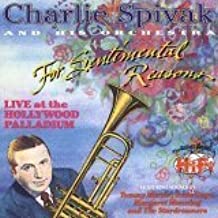
Charlie Spivak was born on February 17, 1905 in Kyiv, Ukraine and learned to play trumpet when he was ten years old. He played in his high school band, going on to work with local groups before joining the Johnny Cavallaro Orchestra.
He went on to play with Paul Specht’s band for most of 1924 to 1930, then spent time with Ben Pollack early Thirties, and the Doresy Brothers to the middle of the decade. Ray Noble was his next stop prior to the Glenn Miller Orchestra in 1935. He spent the next two years working mostly as a studio musician with Gus Arnheim, Glenn Miller, Raymond Scott’s radio orchestra, and others, followed by periods with Bob Crosby, Tommy Dorsey, and Jack Teagarden to the end of the Thirties.
Finally, with the encouragement and financial backing of Glenn Miller, he formed his own band in late 1939. His first attempt was a failure within a year, but his second proved successful, one of the most successful bands in the 1940s, and survived until 1959. He scouted top trumpeter Paul Fredricks (formerly of Alvino Rey’s Orchestra) just as Fredricks left the service at the end of World War II, in 1946. Trumpeter Paul Fredricks was recruited after WWII service and became instrumental in the band’s success in the coming years as it reached its peak.
Spivak’s experience playing with jazz musicians had little effect on his own band’s style, which was straight dance music, made up mainly of ballads and popular tunes. Trombonist Nelson Riddle, saxophonist Manny Albam and Sonny Burke arranged for the band. When the orchestra broke up he went to live in Florida, where he continued to lead a band until illness led to his temporary retirement in 1963. On his recovery, he continued to lead large and small bands, first in Las Vegas, Nevada and then moved to Greenville, South Carolina in 1967, where he led a small group featuring his wife as vocalist.
Trumpeter and bandleader Chalie Spivak, known during his heyday as The Man Who Plays The Sweetest Trumpet In The World, continued to play and record until his transition on March 1, 1982 in Greenville.

More Posts: bandleader,history,instrumental,jazz,music,trumpet
Daily Dose Of Jazz…
Raymond Colignon was born on February 7, 1907 in Liège, Belgium. He initially was active as an accompanist for silent films, then went on to tour Switzerland, France and Algeria. In the early 1930s, he joined the Lucien Hirsch and His Orchestra who made the first recordings for Columbia Records. Between 1931 and 1934 he worked in a nightclub in his native town. From 1935 to 1940 he played and wrote big band arrangements with Fud Candrix.
As a soloist, he recorded under his own name for the Brussels Jazz Club record label. In 1939 he recorded Honeysuckle Rose for Telefunken and Swinging Through the Style, accompanied by bassist Camille Marchand and drummer Armand Dralandts. The early Forties saw him playing in Brussels, Belgium with Jack Lowens and His Swing Quartet, in Berlin, Germany with Kurt Widmann and his dance orchestra, and in Adolf Steimel ‘s Organum dance orchestra.
In 1941/42 further recordings were made in Brussels under his own name, with trumpeter and singer Billy West recording I Hear A Rhapsody and with Tony Jongenelen Gute Nacht, Mutter (Good NIght , Mother) sung in German. In the post World War II period he worked mainly as an organist in the genre of dance and entertainment music, recording Surprise Party – Calling All Dancers or Come Dance with Me for Philips.
Pianist, organist and arranger Coco Colignon, who was involved in 53 jazz recording sessions between 1931 and 1961, transitioned on February 10, 1987 in Wavre, Belgium.
More Posts: arranger,bandleader,history,instrumental,jazz,music,organ,piano
Daily Dose Of Jazz…
Arthur “Artie” Bernstein, born February 4, 1909 in Brooklyn, New York, started his musical career playing cello on board cruise ships to South America. He studied law at New York University, however, by 1929 he had started playing bass, and began performing in clubs around New York City. He performed with trumpeter Red Nichols, Red Norvo and others, and recorded with Ben Pollack, Jimmy and Tommy Dorsey, and many others in the 1930s.
In 1939 he performed with Benny Goodman at the second From Spirituals to Swing concert. He fell out with Goodman in 1941 after the bandleader fiddled with Bernstein’s music-stand light so that he would have problems reading the music to appear incompetent, giving the pretext to fire him.
He went on to win the Down Beat readers’ poll in 1943 and later moved to Los Angeles, California. Artie worked in the film industry for Universal Studios and Warner Bros., continuing to work for the latter organization until 1963.
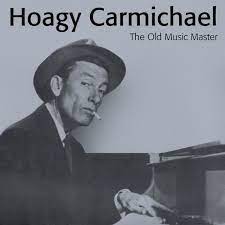
Over the course of his career he worked with Arnold Ross Quintet, Charlie Christian Jammers, Hoagy Carmichael Trio, Ralph Burns Quintet, as well as the orchestras of Adrian Rollini, Billie Holiday, Cloverdale Country Club, Clyde Hurley, Cootie Williams, Eddie Condon, Frankie Trumbauer, Harry James, Jack Teagarden, Larry Clinton, Lionel Hampton, Metronome All Stars, Mildred Bailey And Her Swing Band, Putney Dandridge, Teddy Wilson, and Ziggy Elman.
Double bassist and cellist Artie Bernstein transitioned on January 4, 1964 in Los Angeles, one month to the day shy of his 55th birthday.