

Daily Dose Of Jazz…
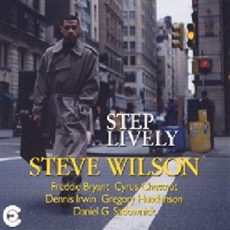
Steve Wilson was born February 9, 1961 in Hampton, Virginia. As a teenager, Wilson played in various R&B and funk bands and after a year of playing with Stephanie Mills he attended Virginia Commonwealth University. By 1987 he moved to New York, where he established himself as a sideman performing with American Jazz Orchestra, the Mingus Big Band and the Smithsonian Jazz Orchestra among others.
Wilson toured Europe in 1988 with Lionel Hampton and was a member of “Out Of The Blue”, an ensemble featuring young Blue Note musicians. An accomplished flautist and alto and soprano saxophonist, he also plays the clarinet and piccolo and has played and recorded with the Dave Holland Quintet, the Chick Corea Origin Sextet, with Japanese composer Yoko Kanno, has been a member of the Seatbelt’s New York Musicians, the Blue Note 7 and has performed as a soloist for Queen Elizabeth II and Prince Philip.
In 1997 he formed the Steve Wilson Quartet and has performed together for over a decade and produced two CDs. He also heads a larger ensemble, Generations, which performs jazz classic and original compositions.
He has held teaching positions in several schools and Universities, as well as holding jazz clinics, notably at the Manhattan School of Music, SUNY at Purchase, Columbia University, has been artist-in-residence at Hamilton College, Old Dominion and University of North Carolina and continues to maintain a busy career as a session musician both in studio and on tour.
Daily Dose Of Jazz…
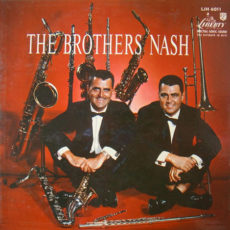
Dick Nash: The Trombone Voice Behind Hollywood’s Golden AgeRichard Taylor Nash was born on January 26, 1928, in Boston, Massachusetts, and discovered brass instruments at age ten but it was tragedy that would deepen his commitment to music. After his parents’ death, while living in boarding school, the young Nash threw himself into trumpet and bugle, finding solace and purpose in the discipline and beauty of making music. What began as comfort became calling.
From Big Bands to the Studio
Nash’s first professional work came in 1947 with bands like Tex Beneke’s popular ensemble, a solid apprenticeship with a name bandleader. After serving in the Army, where he continued playing, he joined Billy May’s swinging outfit, gaining experience in the competitive world of post-war big bands.
But Nash’s real destiny was waiting in Los Angeles, where he would become one of the most sought-after studio musicians in the entertainment capital of the world. When producers needed a trombonist who could nail it on the first take, who could read anything, who could deliver both technical perfection and emotional depth, they called Dick Nash.
Mancini’s Secret Weapon
Nash became the favorite trombonist of composer and conductor Henry Mancini, and if you know Mancini’s work, you understand the honor that represents. Mancini wrote sophisticated, jazz-inflected scores that required musicians who could swing, play with taste, and capture specific moods with just a few perfectly placed notes.
Nash was the featured trombone soloist on several iconic Mancini soundtracks: the cool, late-night jazz of Mr. Lucky and Peter Gunn, the exotic adventure of Hatari!, the wistful romance of Breakfast at Tiffany’s, and the achingly beautiful melancholy of The Days of Wine and Roses.
If you’ve ever heard that gorgeous trombone solo floating over “Moon River” or punctuating the Peter Gunn theme, that’s Dick Nash—his sound became part of America’s collective musical memory, even if most listeners never knew his name.
Equally at Home in Jazz
But Nash wasn’t just a studio musician grinding out commercial work. By 1959, he was playing bass trombone on saxophonist Art Pepper’s brilliant Art Pepper + Eleven: Modern Jazz Classics session—a challenging, ambitious album that showcased Nash’s ability to function in pure jazz settings alongside one of the West Coast’s most intense improvisers.
A Who’s Who of Collaborations
Over the course of his career, Nash remained predominantly associated with swing and big band genres, but his résumé reads like a directory of 20th-century popular music greatness. Besides working on countless film scores, the trombonist performed and recorded with Quincy Jones, Ella Fitzgerald, Harry James, Count Basie, Oscar Peterson, Louie Bellson, Nat King Cole, Mel Tormé, June Christy, Stan Kenton, Les Brown, Don Ellis, Jimmy Witherspoon, Frank Sinatra, Lena Horne, Peggy Lee, Erroll Garner, Anita O’Day, Teresa Brewer, Randy Crawford, The Manhattan Transfer, Sonny Criss… and the list goes on.
The Ultimate Professional
Think about that range: from Basie’s driving swing to Sinatra’s intimate balladry, from Kenton’s progressive big band experiments to Ellis’ avant-garde explorations, from pop sessions to pure jazz dates. Nash could do it all, and do it with the kind of musicality that elevated everything he touched.
The Invisible Artist
Dick Nash represents a particular kind of musical excellence that often goes unrecognized: the studio musician who serves the music rather than their own ego, who makes everyone around them sound better, whose artistry is heard by millions but whose name remains known primarily to fellow musicians and serious fans.
He didn’t need the spotlight. He was the light—illuminating countless recordings, soundtracks, and live performances with his warm tone, impeccable technique, and deep musicality.
From a grieving boy in boarding school finding comfort in a bugle to becoming Henry Mancini’s go-to trombonist and one of the most recorded musicians in American history, Dick Nash’s journey reminds us that sometimes the greatest artists are the ones who help others shine.
And if you’ve ever been moved by a film score, charmed by a classic pop recording, or thrilled by a big band arrangement, there’s a good chance Dick Nash’s trombone was part of what made you feel that way—even if you never knew it.
More Posts: trombone
Daily Dose Of Jazz…
Jimmy Maxwell: The Trumpet Master You’ve Heard a Thousand Times
Born on January 9, 1917, in Stockton, California, Jimmy Maxwell was practically born with a trumpet in hand—he picked up the instrument at the remarkable age of four. Even as a child prodigy, he understood the value of serious training, studying throughout the 1930s with a roster of legendary brass teachers, including the renowned Herbie Clarke.
A Young Gun in the Swing Era
During the vibrant 1930s, Maxwell’s precocious talent found him working alongside some of the biggest names in jazz: Gil Evans, Jimmy Dorsey, vocalist Maxine Sullivan, and bandleader Skinnay Ennis. His big break came when he joined the prestigious Benny Goodman Orchestra—a gig that announced his arrival as a world-class player.
The Golden Age of Television
In 1943, Maxwell transitioned to what would become a legendary three-decade run as a studio musician for NBC. Night after night, his trumpet graced America’s living rooms through The Perry Como Show, The Patti Page Show, The Pat Boone Show, and The Tonight Show. While many musicians might have settled into such comfortable work, Maxwell’s restless talent demanded more.
A Secret Weapon on Countless Sessions
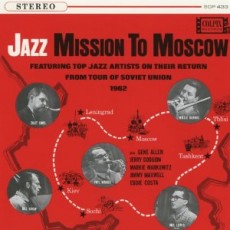
Maxwell’s studio work was merely the foundation. In 1962, he toured the Soviet Union during the height of the Cold War—music as cultural diplomacy. He appeared on hundreds of recordings and commercials, becoming one of those invisible giants whose sound defined an era. As a sideman, he lent his brilliant tone to sessions with Woody Herman, Count Basie, Duke Ellington, Oliver Nelson, Gerry Mulligan, Maynard Ferguson, Quincy Jones, the New York Jazz Repertory Company, and Chuck Israels’ National Jazz Ensemble.
That Haunting Solo
Perhaps Maxwell’s most iconic moment came when he played the unforgettable trumpet solo for The Godfather soundtrack—that lonely, haunting theme that perfectly captured the film’s operatic melancholy. Millions heard it; few knew the master behind it.
Full Circle
Later in life, Maxwell returned to his roots, working with Dixieland jazz and swing ensembles and even reuniting with Benny Goodman for nostalgic performances. In 1977, he finally stepped into the spotlight as a leader, recording a session for Circle Records—a rare glimpse of Maxwell unfiltered.
Though he eventually retired from recording and performing, Maxwell never stopped teaching. From 1950 until 2001—an astonishing fifty-one years—he passed on his knowledge to new generations of brass players. When he passed away on July 20, 2002, the world lost not just a brilliant musician, but a patient mentor who had helped shape the sound of American music for over seven decades.
If you’ve watched television, heard a commercial, or listened to jazz from the mid-20th century, you’ve almost certainly heard Jimmy Maxwell’s trumpet—even if you never knew his name.
More Posts: history,instrumental,jazz,music,trumpet
Daily Dose Of Jazz…
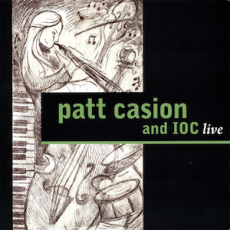
Patt Casion was born Patt Spears on December 31, 1963 in the Monterey Peninsula, California and grew up in Marina where she learned to play music while at church. It was there she started building her musical chops that led to her attending Berklee College of Music in Boston, Massachusetts, where one of her classmates was Lalah Hathaway, daughter of Donny Hathaway.
Opportunity gave way to her playing local gigs and recording two albums and took her to many places around the world, one was as a member of the Church of God Christ International Orchestra based in Memphis, Tennessee.
Soprano saxophonist Patt Casion, who after a two year battle with cancer, died on December 31, 2017 at Community Hospital of the Monterey Peninsula at the age of 55.

More Posts: bandleader,history,instrumental,jazz,music,saxophone

Daily Dose Of Jazz…
Morris “Moe” Koffman was born on December 28, 1928 in Toronto, Canada. At the age of nine he began his musical studies in his native city, studying violin. He attended the Toronto Conservatory of Music, where he was a student of Samuel Dolin.
Dropping out of school when he found work performing in dance bands, in 1950, he moved to the United States, where he played with big bands including those of Sonny Dunham and Jimmy Dorsey. In 1955, he returned to Toronto where he formed a quartet and later a quintet and recorded Swinging Shepherd Blues in 1957 which helped establish his reputation as a flautist.
Koffman was inspired by Rahsaan Roland Kirk to play multiple instruments at once. He had a modified set of straps to hold a tenor and alto saxophones so that he could put forward incredible chords and improvise at the same time. He performed with Dizzy Gillespie and Peter Appleyard during the 1980s, as well as continuing to front the Moe Koffman Quintet. He often performed with Rob McConnell’s Boss Brass.
He was appointed to the Order of Canada in 1993 and inducted into the Canadian Music Hall of Fame in 1997.
Saxophonist, flautist, composer and arranger Moe Koffman, who was diagnosed with non-Hodgkin’s lymphoma in 2000, died of cancer in Orangeville, Ontario, Canada on March 28, 2001 at the age of 72.
More Posts: arranger,composer,flute,history,instrumental,jazz,music,saxophone