

Daily Dose Of Jazz…
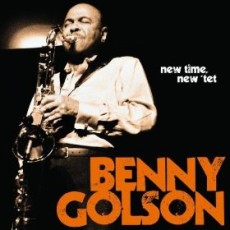
Benny Golson was born January 25, 1929 in Philadelphia, Pennsylvania. While in high school he played with several other promising young musicians, including John Coltrane, Red Garland, Jimmy Heath, Percy Heath, Philly Joe Jones and red Rodney. After matriculating Howard University, Benny joined Bull Moose Jackson’s R&B band where he met and learned about writing from pianist Tadd Dameron.
From 1953 to 1959 Golson played with Dameron’s band and then with the bands of Lionel Hampton, Johnny Hodges, Earl Bostic, Dizzy Gillespie and Art Blakey & The Jazz Messengers. While working with the Lionel Hampton band at the Apollo in 1956, Benny learned that his friend trumpeter Clifford Brown had died in a car accident. In honor, Golson composed “I Remember Clifford”.
From 1959 to 1962 Golson co-led the Jazztet with Art Farmer. Golson then left jazz to concentrate on studio and orchestral work for 12 years and during this period he composed music for such television shows as Ironside, Room 222, M*A*S*H and Mission: Impossible.
By the mid-1970s Golson returned to jazz playing and recording, he re-organized the Jazztet in 1983, was honored as a NEA Jazz Maser in ’95, made a cameo appearance in the Tom Hanks vehicle “The Terminal” that was related to his participation in the classic photo “A Great Day In Harlem”, received the Mellon Living Legend Legacy Award, the Outstanding Lifetime Achievement Award from the University of Pittsburgh International Academy of Jazz, in which he was also inducted into their Hall of Fame.
Since 1996 Howard University created and has awarded the prestigious Benny Golson Jazz Master Award to several distinguished jazz artists. As of 2007, Benny Golson, tenor saxophonist, composer and arranger in the bebop and hard bop genres continues to tour regularly. He is known for his jazz standards “Stablemates”, “Whisper Not”, “Killer Joe”, “Along Came Betty and “Are You Real”, that have been performed and recorded by countless jazz musicians.
More Posts: saxophone
Daily Dose Of Jazz…
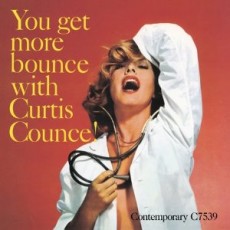
Curtis Counce was born in Kansas City, Missouri on January 23, 1926. Studying violin and tuba early on before settling on the string bass, he went on the road when he was 16, playing with the Nat Towles Band in Omaha.
After some freelancing, Counce moved to Los Angeles in 1945, working with Johnny Otis and making his recording debut the following year with Lester Young. During the ‘50’s he was a key member of the West Coast jazz scene, recording as a sideman with Shelly Manne, Lyle Murphy, Teddy Charles, Clifford Brown, and many others.
In 1956, Counce organized a quintet comprised of trumpeter Jack Sheldon, tenor saxophonist Harold Land, pianist Carl Perkins, and drummer Frank Butler. During a 15-month period, they recorded enough material to document their endeavor, all of which were originally released by Contemporary and fall stylistically between West Coast cool jazz and hard bop.
Changing personnel, the Curtis Counce Quintet recorded a final album for the Dooto label before breaking up in 1958. The bassist continued working in the Los Angeles area until his death on July 31,1963 from a heart attack.
More Posts: bass
Daily Dose Of Jazz…
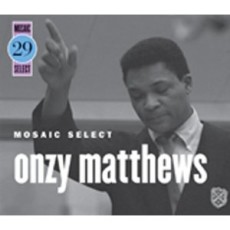
Onzy Matthews was born in Fort Worth, Texas on January 15, 1936, grew up in Dallas until he was 14, when his mother pulled up stakes and moved to Los Angeles for a better job. He graduated from high school at 16 and had already decided he wanted to sing. Nearly every day he walked to a nearby park, where he could play piano for hours in the recreation building.
Augmenting his early gospel roots with healthy doses of smooth California jazz and big band music, Matthews taught himself to accompany his singing on piano until he realized he needed arrangements.
He attended Westlake College of Music, studied ear training and harmony, started singing with a dance band and learning about arranging. After several years of performing, attending concerts and asking questions he had 21 original songs arranged for big band.
His musical career sprang from eight bars of music. As an aspiring singer, pianist and composer in 1963, a young Mr. Matthews gave his first professional arrangement to Les Brown for a tryout with the Band of Renown. Out of the arrangement came 8 bars that sounded good to Onzy and Les Brown advised him to take those 8 bars and start from there. Doing so he went on to become one of the most sought-after arrangers in jazz and pop music. It was later through Dexter Gordon that these first twenty-one were played by the best musicians in Hollywood that turned into a regular Wednesday night jam session. The word spread and he started getting courted by record labels to work with their artists.
Onzy’s first major arranging job was on Lou Rawls’ album Black & Blue, followed by his debut as a leader in 1964 on “Blues With A Touch Of Elegance” for Capitol. About a year later, with his career in full swing, he held a guest spot on a New York radio show hosted by mercer Ellington who introduced him to his dad, friendship was struck and four years later became collaborators, filling the void from Billy Strayhorn’s death.
Matthews tailors the arrangements according to the empathy of the artist by listening to the artist and arranging to bring out things in them they weren’t aware of. This was his magic. After Ellington death in ’74, he moved to Seattle, formed a big band for three years moved between Texas and New York and finally moved to Paris in ’79, put together another big band, played with Miles Davis and finally moved back to Dallas in 1994.
Onzy D. Matthews, whose 35-year career had him working with some of jazz’s most notables, was discovered in his Dallas apartment passed away at his typewriter by jazz singer Jeanette Brantley and her husband Hans Wango on November 15, 1997. He was 67.
Daily Dose Of Jazz…
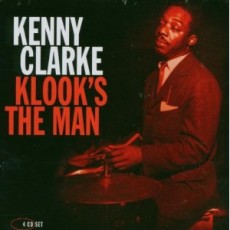
Born Kenneth Spearman Clarke on January 9, 1914 in Pittsburgh, Pennsylvania, Kenny Clarke grew up in a musical family, studied multiple instruments, including vibes and trombone, as well as music theory and composition while still in high school. As a teenager he played in the bands of Leroy Bradley and Roy Eldridge. He later toured around the Midwest for several years with the Jeter-Pillars band that also featured bassist Jimmy Blanton and guitarist Charlie Christian. By 1935, he was more frequently in New York, where he eventually moved and worked in groups led by Edgar Hayes and Lonnie Smith.
While working in the bands of Edgar Hayes and Roy Eldridge, Clarke started developing the rhythmic concepts that would later define his contribution to the music. He began experimenting with moving the time-keeping role from the combination of snare drum or hi-hat and bass drum to embellished quarter notes on the ride cymbal, the familiar “ding-ding-da-ding” pattern, which Clarke is often credited with inventing. One of these passages, a combination of a rim shot on the snare followed directly by a bass drum accent, earned Clarke his nickname, “Klook”, which was short for “Klook-mop”, in imitation of the sound this combination produced. This nickname was enshrined in “Oop Bop Sh’Bam”, recorded by Dizzy Gillespie in 1946 with Clarke on drums, where the scat lyric to the bebop tune goes “oop bop sh’bam a klook a mop.”
Clarke himself claimed that these stylistic elements were already in place by the time he put together the famous house band at Minton’s Playhouse, which hosted Monk, Parker, Gillespie, Russell, saxophonist Don Byas and many others while serving as the incubator of the emerging small group sound. While playing at Minton’s, Clarke made many recordings, most notably as the house drummer for Savoy Records. When the musicians from the Minton’s band moved to different projects, Clarke began working with a young pianist and composer John Lewis and vibraphonist Milt Jackson, and with the addition of bassist Ray Brown they formed the Modern Jazz Quartet or MJQ. The group pioneered what would later be called chamber jazz or third stream, referring to its incorporation of classical and baroque aesthetics as an alternative to hard bop.
Clarke stayed with the MJQ until 1955, relocating in Paris in 1956. As soon as he moved to Paris, he regularly worked with visiting American musicians in, as well as forming a working trio, known as “The Bosses”, with Bud Powell also a Paris resident and Pierre Michelot. In 1961 along with pianist Francy Boland, Kenny formed a regular big band “The Kenny Clarke-Francy Boland Big Band that lasted eleven years and featured leading European and expatriate American musicians, such as Johnny Griffin and Ronnie Scott.
Drummer Kenny Clarke continued recording and playing with both visiting U.S. musicians along with his regular French band mates until his death on January 26, 1985 in Montreuil-sous-bois. In 1988 he was inducted into the Down Beat Jazz Hall of Fame and his innovation set the stage for the development of the bebop combo, which relied heavily on improvised exchanges between drummer and soloist to propel the music forward.
More Posts: drums
Daily Dose Of Jazz…
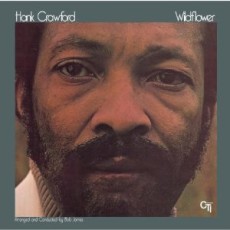
Hank Crawford was born Bennie Ross Crawford, Jr. on December 21, 1934 in Memphis, Tennessee. He began formal piano studies at age nine and was soon playing for his church choir. His father had brought an alto saxophone home from the service and when Crawford entered Manassas High School, he took it up in order to join the band, hanging out with George Coleman, Booker Little, Harold Mabern and Frank Strozier. At eighteen he appeared on an early 1952 Memphis recording for B. B. King playing alongside Ben Branch and Ike Turner.
In 1958 Crawford attended Tennessee State University, majored in music studying theory and composition, played alto and baritone saxophone in the Tennessee State Jazz Collegians and led his own rock ‘n’ roll quartet, “Little Hank and the Rhythm Kings”. It was during this period that he met Ray Charles and got his nickname “Hank” because he looked and sounded like local legendary saxophonist Hank O’Day.
Charles hired Crawford originally as a baritone saxophonist but he switched to alto in ’59 and became musical director until ’63 when he left to form his own septet, having already established himself with several albums on Atlantic Records, recording a dozen albums between 1960 and 1970. He also arranged for Etta James, Lou Rawls and others, although much of his career has been in R&B. However, in the Seventies, Hank had several successes on the jazz and pop charts.
In 1983 a move to Milestone Records gave him the opportunity to become a premier arranger, soloist, and composer, writing for small bands—that include guitarist Melvin Sparks, Dr. John and organist Jimmy McGriff, the later with whom he toured extensively and co-led dates for Milestone’s “Soul Survivor”, Steppin’ Up”, “On The Blue Side” and Road Tested”. The new century found Crawford pursuing a more mainstream jazz sound with the “World of Hank Crawford”, covering Ellington and Tadd Dameron compositions.
Hank Crawford, alto and baritone saxophonist in the hard bop, R&B, jazz-funk and soul jazz genres, credits Charlie Parker, Louis Jordan, Earl Bostic and Johnny Hodges as early influences. His piercing full-bodied signature sanctified church sound, easily recognizable, will live on through his music since his passing on January 29, 2009 at 74.