

Daily Dose Of Jazz…
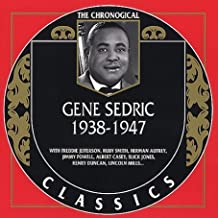
Gene Sedric, born Eugene Hall Cedric on June 17, 1907 in St. Louis, Missouri into a family where his father played ragtime piano. He played with Charlie Creath in his hometown and then with Fate Marable, Dewey Jackson, Ed Allen, and Julian Arthur.
Joining Sam Wooding’s Orchestra in 1925 he toured Europe with him until 1931 when the unit dissolved. During his time in Europe he recorded with Alex Hyde. When he returned to New York City he played with Fletcher Henderson and Alex Hill, before joining Fats Waller’s Rhythm in 1934, where he remained to 1942. When Waller went on solo tours Sedric found work gigging alongside Mezz Mezzrow in 1937 and Don Redman from 1938 to 1939).
Sedric put together his own group in 1943, prior to playing with Phil Moore in 1944 and Hazel Scott in 1945. He put together another ensemble from 1946–51, playing in New York City. His later associations through the late 1940s into the early 60s include time with Pat Flowers, Bobby Hackett, Jimmy McPartland, Mezzrow again, Conrad Janis, and Dick Wellstood. He recorded sparingly as a leader in 1938, 1946, and with Mezzrow in 1953.
Clarinetist and tenor saxophonist Gene Sedric, who acquired the nickname “Honey Bear” in the 1930s because of his large camel hair coat, passed away on April 3, 1963 in New York City.

More Posts: bandleader,clarinet,history,instrumental,jazz,music,saxophone
Daily Dose Of Jazz…
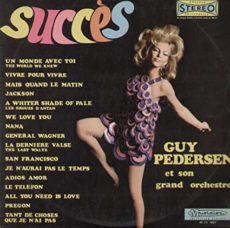
Guy Eugène Hilarion Pedersen was born on June 10, 1930 in Grand-Fort-Philippe, France. Coming from a family of popular musicians all members of his maternal family are fiddlers and his great-grandfather composed the jazz standard Tiger Rag.
At the age of 13 he started music theory in 1943, taking free lessons at the Roubaix Conservatory until 1952. In 1950, he won the prize for the best double bassist in the Brussels competition, then that of Jazz Hot in Paris, and then decided to become a musician. Already passionate about jazz, he listened to radio broadcasts by Hugues Panassié and bought his first American records by Charlie Parker, Thelonious Monk, and Lee Konitz at Deruyck in Roubaix.
He began working in Paris with singer Fats Edward, then played with pianist Henri Renaud and drummer Jean-Louis Viale at Tabou, and at Ringside founded by boxing champ Sugar Ray Robinson. He went on to work with Jacques Hélian and then Claude Bolling with whom he learned the large orchestra profession. From 1955 to 1966, he was a member with drummer Daniel Humair of the most famous trio led by Martial Solal, recording the historic Jazz à Gaveau in 1962.
Guy Pedersen and Daniel Humair then joined the Swingle Singers to record the second disc. They will travel around the world in their company, even passing through the White House in 1966.
From 1973 Guy toured with Baden Powell, recording more than a dozen records with him. Between 1973 and 1980, he recorded seven albums and toured frequently with Jean-Christian Michel.
During that time, Pedersen led an active career as a studio musician, appeared in variety shows on television, accompanying the group Les Troubadours. The late 1960s saw him composing, writing a lot of music for short films. Some of his recordings on the musical illustration labels Tele Music and Montparnasse 2000 are today cult, especially in the disc jockeys world.
In 1977 a serious cardiac accident forced him to withdraw from the world of music. He then became an antique dealer. Bassist Guy Pedersen passed away on January 4, 2005 at the age of 74.
More Posts: bandleader,bass,history,instrumental,jazz,music
Daily Dose Of Jazz…
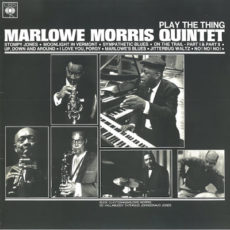
Marlowe Morris, born May 16, 1915 in New York City, New York and learned drums, harmonica, and ukulele as a child. He accompanied June Clark from 1935 to 1937, then played solo for a few years before playing with Coleman Hawkins in 1940–41.
After serving in the Army during World War II, he worked with Toby Browne, Al Sears, Sid Catlett, and Tiny Grimes in addition to leading his own trio in the early and middle 1940s. Marlowe also appeared in the film Jammin’ the Blues in 1944. He quit playing full-time and worked in a post office in the late Forties, then returned in 1949 to play primarily solo organ.
He led a trio in the 1960s with Julian Dash as one of his sidemen, recording for Columbia Records. Morris also recorded with Lester Young, Ben Webster, Big Joe Turner, Sister Rosetta Tharpe, Joe Williams and Jimmy Rushing.
A distant relative of jazz pianist Fats Waller, pianist and Hammond organist Marlowe Morris passed away on May 28, 1978 at the age of 63 in New York City.

More Posts: bandleader,history,instrumental,jazz,music,organ,piano
Daily Dose Of Jazz…
Trevor Ramsey Tomkins was born May 12, 1941 in London, England. As a young teenager, he first took up the trombone before switching to the drums on which he made his first professional appearance. Although he studied extensively, mostly in the classical vein, he was deeply interested in jazz, studied harmony and music theory, and in the early 60s moved permanently into this field.
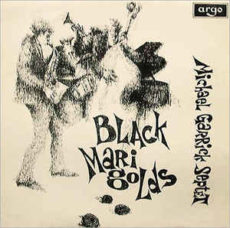
Trevor worked and recorded several albums in small groups with trumpeter Ian Carr, as well as pianist Michael Garrick and saxophonist Don Rendell in the late 1960s and early 1970s. In the Seventies, he was a member of the jazz-fusion group Gilgamesh that was part of the Canterbury scene in Kent, England. He also performed and recorded with saxophonist Barbara Thompson, pianist Mike Westbrook, and others.
After spending some time in the United States, he returned to England and became one of the most sought after jazz drummers in the UK. Tomkins worked with Ian Carr’s Nucleus, Giles Farnaby’s Dream Band, David Becker, and Henry Lowther’s Quaternity. He appears on the 1971 album First Wind by Frank Ricotti and Mike de Albuquerque and on Tony Coe’s 1978 album Coe-Existence. He is also in demand as accompanist to American jazzmen visiting the UK, amongst them Lee Konitz.
Mainstream and bop drummer Trevor Tomkins, who has never been a leader and was a member of various trios and other line-ups with Roy Budd, remains a first call drummer and much-respected teacher on the jazz scene.
More Posts: drums,history,instrumental,jazz,music
Daily Dose Of Jazz…
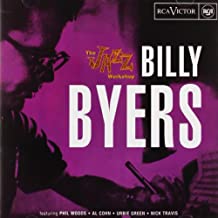
Billy Byers was born on William Mitchell Byers on May 1, 1927 in Los Angeles, California. He picked up the trombone and played with Karl Kiffle before serving in the Army in 1944–45. In the second half of the 1940s, he arranged and played trombone for Georgie Auld, Buddy Rich, Benny Goodman, Charlie Ventura, and Teddy Powell.
Following this period of playing, Byers composed for WMGM (AM) radio and television in New York City. During the mid-1950s, he was living and arranging in Paris, France where he also led a session as a leader, released as Jazz on the Left Bank, at this time. Later in the 1950s in Europe, he played with Harold Arlen (1959–1960) and with the Quincy Jones Orchestra. Becoming Quincy’s assistant at Mercury Records in the Sixties, he arranged for Count Basie albums.
He also led some recording sessions of Duke Ellington standards, toured Europe and Japan alongside Frank Sinatra in 1974, and had extensive credits arranging and conducting for film. Billy won the Drama Desk Award for Outstanding Orchestrations for the City of Angels.
He recorded with Count Basie, Bob Brookmeyer, Al Cohn, Billy Eckstine, Coleman Hawkins, J. J. Johnson, Lee Konitz, Jack McDuff, Gary McFarland, Hal McKusick, Carmen McRae, Joe Newman, Lalo Schifrin, Bud Shank, Charlie Shavers, Julius Watkins, Andy Williams, Cootie Williams, Kai Winding, and Frank Zappa. With four albums as a leader and another twenty-eight as a sideman, trombonist Billy Byers, passed away in Malibu, California, on May 1, 1996.
More Posts: arranger,bandleader,history,instrumental,jazz,music,trombone