

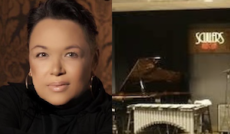
SHAWNN MONTEIRO
Shawnn Monteiro who has jazz in her blood, jazz in her soul and jazz in her history. Her father was bassist Jimmy Woode, her godmother was Sarah Vaughan and her godfather was Clark Terry.
Having toured all over the world singing jazz with so many of the greats, many of whom are gone now, Shawnn remembers and comes to Scullers with many stories to share.
She is one of the few of jazz royalty left who is still sharing her incredible voice and dynamic performance with jazz lovers of all ages.
Cover: $42.45 ~ $59.25
More Posts: adventure,bandleader,club,genius,instrumental,jazz,music,preserving,travel,vocal
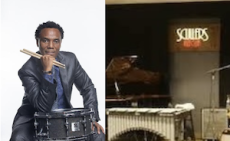
YORON ISRAEL
Yoron Dael Israel was born on November 24, 1963, in Chicago, Illinois. The jazz drummer learned to play organ and trumpet as a child, then switched to drums. As a high school student, he played in an R&B group led by his uncle. He took his bachelor’s degree at Roosevelt University and his master’s degree at Rutgers, then became the drummer in a house band for a Chicago jazz club and worked with Hank Crawford, David Friedman, Von Freeman, and Ira Sullivan.
He relocated to New York City in 1989 and played that year with Henry Threadgill, Kenny Burrell, and Jay Hoggard. In the 1990s he worked with Charles Fambrough, Art Farmer, Jim Hall, Roy Hargrove, Tom Harrell, Ahmad Jamal, Abbey Lincoln, Joe Lovano, Russell Malone, Sonny Rollins, Vanessa Rubin, Horace Silver, Ronald Muldrow and James Williams.
He also toured with Tony Bennett and with Steve Coleman in 1995. He taught at Rutgers from 1995 and is now an assistant professor at Berklee College of Music.
Tickets: $42.45 ~ $64.85 fee included
More Posts: bandleader,club,drums,genius,instrumental,jazz,music,preserving,travel
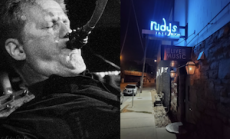
DON ALIQUO
Saxophonist Don Aliquo’s playing has been described as “smooth as silk…with an unfailing feel for breath and phrasing” while extremely supple in the addressing of his axe but always zeroed in on what he’s describing”.
“Growth” his newest release, explores new territory with intriguing compositions and ample solo space for Aliquo’s inspired improvisations. The eight originals are both complex and open, which shows him expanding his boundaries not only as an instrumentalist and improviser, but also as a composer. The music is an electrifying modern outing with one foot in the future and one in the tradition.
Aliquo has released six solo projects and has worked collaboratively or performed as a sideman on many others. His previous solo cd “Sun and Shield” features veteran jazz masters Rufus Reid, Jim McNeely, and the dynamic Obed Calvaire.
Notable collaborations include a duo recording with eclectic pianist Michael Jefry Stevens and quartet recordings with Roger Humphries and the late Beegie Adair. He also has recorded with his mentor, notable Pittsburgh tenor stalwart, Don Aliquo Sr. on the MCG label.
Don has performed in concerts and recordings with many world-class artists including Gary Burton, Greg Osby, Rufus Reid, Roger Humphries, Harold Danko, Adam Nussbaum, Donald Brown, Pete Christlieb, Scott Robinson, and Bobby Shew.
Cover: $20.00 advance/door
More Posts: adventure,bandleader,club,genius,instrumental,jazz,music,preserving,saxophone,travel
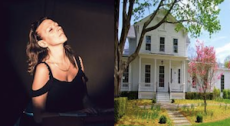
AMINA FIGAROVA SEXTET
Amina Figarova was born in Baku, Azerbaijan, and as a child studied to be a classical concert pianist. Graduated from the Baku Conservatory as classical concert pianist. In 1990, she entered Rotterdam Conservatory (where she met Bart Platteau, a fellow student from Belgium) to pursue jazz, coming to the United States in 1992 to complete her formal education at Boston’s Berklee College of Music. In 1998 she was invited to the Thelonious Monk Institute’s summer jazz colony in Aspen, and after more than a decade of bookings in major U.S. jazz clubs, concert halls and festivals, the couple gained legal immigrant status in 2013, and became US citizen in 2020. They currently live in Harlem, NY and tour constantly.
Hailing from Azerbaijan, the New York-based Amina Figarova is an internationally influenced—and recognized—composer, pianist, and bandleader. Those three roles come to the forefront in Figarova’s sextets, bands with a remarkable chemistry that brings her detailed arrangements to life. Every member of the group stands out as a first-rate individual, but their dedication to Figarova’s eclectic and powerful compositions gives this group its depth of feeling and elite status. The Amina Figarova Sextet has been a hit at major festivals like the Newport Jazz Festival and New Orleans Jazz and Heritage Festival
Suite for Africa is Amina’s 18th album, all with original compositions by Amina. Other compositions for Symphonic orchestra, Musical Diana, a ballad book for Trio Del Norte, brass ensemble, flute duo and quartet, and many more.
The Band:
Amina Figarova – Piano
Charlie Porter – Trumpet
Bart Platteau – Flutes
Wayne Escoffery- Tenor sax
Luques Curtis – Bass
Donald Edwards – Drums
Tickets: Student ~ $27.98 +fee | GA ~ $59.75 +fee
More Posts: adventure,bandleader,club,genius,instrumental,jazz,music,piano,preserving,travel
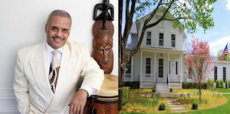
CHEMBO CORNIEL QUINTET
Wilson “Chembo” Corniel, Jr. Born in Manhattan on November 22, 1953 of proud Puerto Rican parents, Chembo was raised in the humble streets of Red Hook, Brooklyn. It was during these years, as a quick-witted youngster, that he had the privilege and honor to study with such percussion luminaries as, Tommy Lopez Sr., “Little Ray” Romero, Louie Bauza, and Cachete Maldonado. Chembo honed his skills at The Harbor Conservatory for the Performing Arts in New York, and also at the prestigious La Escuela Nacional de Arte in Havana, Cuba under the direction of the great Chucho Valdés. His intense studies with such legends noted above channeled his energy onto a path where Wilson “Chembo” Corniel has now created a reputation for himself among musicians and the public.
Today, he is considered as one of the best hard-hitting, versatile percussionists around. Chembo teaches percussion to students at the SUNY Purchase Conservatory of Music a also at The Collective and leads numerous clinics throughout the United States where he brings awareness to others of the rich Afro-Caribbean traditions. Among his credits, Chembo was chosen to create his own instructional DVD called, “An Introduction to Hand Percussion: Volume I—Congas”. It was released in December of 2000 and with distribution by Warner Brothers it has been a success.
The Band:
Evan Francis – Tenor sax/ Flute
Gabriel Chakarji – Piano
Gabriel Case – Acoustic Bass
Diego Lopez – Drums
Chembo Corniel – Tumbadoras
Tickets: Student $27.98 +fee | GA $59.75 +fee
More Posts: adventure,bandleader,club,genius,instrumental,jazz,music,travel,tumbadoras