


Daily Dose Of Jazz…
Chuck Wayne was born Charles Jagelka on February 27, 1923 in New York City to a Czechoslovakian family. As a boy, he learned banjo, mandolin, and balalaika. By the early 1940s he was playing in jazz bands on 52nd Street and after two years in the Army, he returned to New York City, joined Joe Marsala’s band, and settled in Staten Island until a 1991 move to New Jersey. He changed his musical style after hearing Charlie Parker, recording with Dizzy Gillespie in 1945. Frustrated with the difficulty of getting the sound he wanted, he considered switching to saxophone.
Wayne was a member of Woody Herman’s First Herd, the first guitarist in the George Shearing quintet, worked with Coleman Hawkins, Red Norvo, Bud Powell, Jack Teagarden, George Shearing, Lester Young, and Barbara Carroll. During the 1950s, he played with Tony Bennett, Gil Evans, Brew Moore, Zoot Sims, and George Wallington. In the Sixties, CBS hired him as a staff guitarist and for the next two decades, he played on Broadway, accompanied vocalists, and performed in guitar duos with Joe Puma and Tal Farlow.
He wrote Sonny in honor of Sonny Berman. Years later, Miles Davis took the song, renamed it Solar, and claimed he wrote it. His Butterfingers and Prospecting have been incorrectly attributed to Zoot Sims. Chuck was known for a bebop style influenced by saxophone players of his time and he developed a technique not widely adopted, and also developed a comprehensive approach to guitar chords and arpeggios.
Over the course of his career, he recorded eight albums as a leader beginning with his 1953 album The Chuck Wayne Quintet on the Progressive label. He worked as a sideman with Gil Evans, Anthony Perkins, Dick Katz, Duke Jordan, and Frank Wess, among others. Guitarist Chuck Wayne, one of the first jazz guitarists to learn bebop, passed away on July 29, 1997.
More Posts: bandleader,guitar,history,instrumental,jazz,music
Daily Dose Of Jazz…
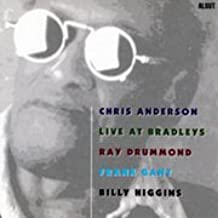
Chris Anderson was born on February 26, 1926 in Chicago, Illinois and was a self-taught pianist. He began playing in Chicago clubs in the mid-1940s and played with Von Freeman and Charlie Parker, among others. Hired as Dinah Washington’s accompanist in New York City, his tenure with Washington was a brief six weeks as she changed accompanists frequently. After his firing, he decided to stay in the city.
In 1960 he recorded what might be his best-regarded album My Romance on the VeeJay label with bassist Bill Lee and drummer Art Taylor. He was a great influence on his student Herbie Hancock.
Despite the respect of his peers, Anderson had difficulty finding work or popular acclaim due in large to his disabilities. He was blind and his bones were unusually fragile, causing numerous fractures, which at times compromised his ability to perform at the times or places requested, although he continued to record until he was well into his 70s. A DownBeat profile indicated he had osteogenesis, probably meaning osteogenesis imperfecta.
He would record his first album as a leader in 1960 and ultimately record a total of ten. As a sideman, he worked with Charlie Haden, Clifford Jordan, Sun Ra, and Frank Strozier. Pianist Chris Anderson passed away on February 4, 2008 in Manhattan, New York City.
More Posts: bandleader,history,instrumental,jazz,music,piano
Daily Dose Of Jazz…
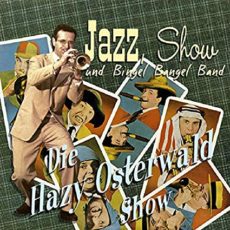
Hazy Osterwald was born Rolf Osterwald on February 18, 1922 in Bern, Switzerland. He began his career as a pianist, arranged for Fred Böhler in the late 1930s and joined him as a trumpeter in 1941. Around this time he also worked with Edmond Cohanier, Philippe Brun, Bob Huber, Eddie Brunner and Teddy Stauffer.
Hazy led his own ensemble starting in 1944, recording through the 1970s, with sidemen including Ernst Höllerhagen and Werner Dies. In the late 1940s he recorded with Gil Cuppini and played at the Paris Jazz Fair with Sidney Bechet and Charlie Parker. Trumpeter, vibraphonist, vocalist and bandleader Hazy Osterwald passed away on February 26, 2012 in Lucerne Switzerland.
More Posts: bandleader,history,instrumental,jazz,music,trumpet,vibraphone,vocal

Daily Dose Of Jazz…
Harry Dial was born on February 17, 1907 in Birmingham, Alabama who became one of the classic drummers of the early jazz world. His specialty was keeping time behind artists known for their fun and pep. In fact, a glance at Dial’s discography is something like a partial scan of the most entertaining albums of all time, because such a list would surely include sides by two guys named Louis, Armstrong and Jordan, as well as Fats Waller and Ella Fitzgerald.
Harry was a solid, energetic drummer who pushed the beat forward without cluttering the airspace. His use of the sock cymbal and his fat, marching band snare drum sound are often imitated. He was also one of the rare breeds of singing drummers, the vocal side of his talents usually only exposed when he was in charge of the band. He was allowed to make comments on records with Fats Waller, the best example of which is the introduction to the upbeat Don’t Let It Bother You.
Dial’s career as a bandleader included a series of sides for Vocalion beginning in 1930. The group, whose recordings included the deadly “Poison,” was known as Harry Dial’s Blusicians, and included players such as banjoist Eursten Woodfork, trumpeter Shirley Clay, and the fine alto saxophonist Lester Boone. Some of this material has been reissued on the compilation Chicago 1929-1930: That’s My Stuff.
He was already recording with Armstrong around this time and began cutting tracks with Waller as a member of Fats Waller’s Rhythm before the middle of that decade. It might have taken him an additional ten years to master the art of playing the maracas since he seemed to find a way to include the delicate shakers on just about every funny style of music he played with Jordan beginning in the mid-’40s when he joined the Tympany Five.
In the late ’40s, he took another crack at recording under his own name, producing “Prince’s Boogie” for Decca with one of the earliest versions of the catchy “Diddy Wah Diddy” on the flipside. Dial liked to write as well, beginning with a song entitled “Don’t Play Me Cheap,” recorded by the famous Armstrong. His songs were also recorded by the merely infamous, a category that would not exist if it didn’t include a singer named Bea Booze, who cut Dial’s “Catchin’ as Catch Can” for Decca in 1942.
Many years later, the drummer published his All This Jazz About Jazz: The Autobiography of Harry Dial. The dapper, suave musician would have felt it important that he is most certainly not the Harry Dial who made it into the Guinness Book of World Records by claiming to have gone 78 years without bathing. Drummer Harry Dial passed away on January 25, 1987 in New York City.
More Posts: author,bandleader,drums,history,instrumental,jazz,music
Daily Dose Of Jazz…
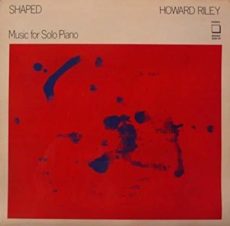
Howard Riley was born on John Howard Riley on February 16, 1943 in Huddersfield, Yorkshire, England. He began learning the piano at the age of six and started playing jazz as early as the age of 13. He studied at the University of Wales from 1961 to 1966, then Indiana University, and finishing up at York University in 1970). While studying he played jazz professionally, with Evan Parker (1966) and then with his own trio (1967–76), with Barry Guy on bass and Alan Jackson, Jon Hiseman, and Tony Oxley for periods on drums.
He worked with John McLaughlin in the late Sixties, the London Jazz Composers Orchestra and Oxley’s ensemble through the Seventies to 1981. He and Guy worked in a trio with Phil Wachsmann from 1976 well into the 1980s and played solo piano throughout North America and Europe. He played in a quartet, with Guy, Trevor Watts, and John Stevens, did duo work with Keith Tippett, with Jaki Byard, and with Elton Dean. From 1985 he worked in a trio with Jeff Clyne and Tony Levin.
Pianist and composer Howard Riley who worked in jazz and experimental music idioms continues to teach at the Guildhall School of Music and Drama and Goldsmiths, University of London, where he has taught since the 1970s.
More Posts: bandleader,educator,history,instrumental,jazz,music,piano