

Daily Dose Of Jazz…
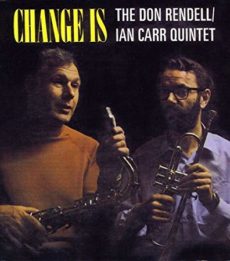
Donald Percy Rendell was born in Plymouth, England on March 4, 1926 and raised in London where his father, Percy, was the musical director of the D’Oyly Carte Opera Company; his mother Vera was also a musician. He attended the City of London School, to which he gained a choral half-scholarship and during school was evacuated during the Second World War to Marlborough College, where he heard jazz for the first time.
Rendell began playing the piano at the age of five but switched to saxophone in his teens. While working for Barclay’s Bank, he left to become a professional musician and began his career on alto saxophone but changed to tenor saxophone in 1943. During the rest of the 1940s, he was in the bands of George Evans and Oscar Rabin. Beginning in 1950, he spent three years in the Johnny Dankworth Septet and performed with Billie Holiday in Manchester, England, before playing in the bands of Tony Crombie and Ted Heath.
After touring in Europe with Stan Kenton, he played in Cyprus with Tony Kinsey, then Don was a member of Woody Herman’s Anglo American Herd in 1959. During the late 1950s and early Sixties, he led bands, including one with Ian Carr that lasted until 1969, one with Barbara Thompson in the 1970s, and as the sole leader in the 1980s and 1990s. In particular, the Rendell-Carr Quintet gained an international reputation, performing in France at the Antibes Festival and was the Band of the Year for three years in succession in the Melody Maker poll. He performed in festivals in England and France as well as working with Michael Garrick and Brian Priestley.
He taught at the Royal Academy of Music for three years in the early 1970s, at the Guildhall School of Music and Drama beginning in 1984 and wrote instruction books on flute and saxophone. Don Rendell, who played soprano saxophone, flute, clarinet and was also an arranger, passed away after a short illness at the age of 89 on October 20, 2015.

More Posts: arranger,author,bandleader,clarinet,educator,flute,history,instrumental,jazz,music,saxophone
Daily Dose Of Jazz…
Cliff Smalls was born Clifton Arnold on March 3, 1918 and was raised in Charleston, South Carolina. His father, a carpenter, performed piano and organ for Charleston’s Central Baptist Church. He taught Smalls classical music at an early age. He left home with the Carolina Cotton Pickers and also recorded with them, for instance, Off and on Blues and “Deed I Do, which he arranged and featured Cat Anderson in 1937 when he was 19.
With his career coinciding with the early years of bebop, from 1942 to 1946 he was a trombonist, arranger and also backup piano-player for band-leader and pianist Earl Hines, alongside Dizzie Gillespie and Charlie Parker. While in the Hines band he performed often during broadcasts seven nights a week on open mikes coast-to-coast across America. Hines also used Teddy Wilson, Jess Stacy and Nat “King” Cole as backup piano-players but Smalls was his favorite. He also played in the Jimmie Lunceford and Erskine Hawkins bands.
After the inevitable post-World War II breakup of the Hines big-band, Cliff went on to play and record in smaller ensembles with his former Earl Hines band colleagues, singer and band-leader Billy Eckstine, trombonist Bennie Green, saxophonist Earl Bostic and singer Sarah Vaughan. In 1949 he recorded with JJ Johnson and Charlie Rouse. He was the pianist on Earl Bostic’s 1950 hit Flamingo along with John Coltrane but had a serious automobile accident, with Earl Bostic, in 1951 and laid in bed all of 1952, till March of 1953.
Recovering, Smalls shifted his musical career to serve as music director/arranger for singers Eartha Kitt, Ella Fitzgerald, Sammy Davis, Jr., Smokey Robinson and the Miracles, Clyde McPhatter, Roy Hamilton and Brook Benton. He recorded Bennie Green with Art Farmer in 1956 and was, for many years, a regular with Sy Oliver’s nine-piece Little Big-Band from 1974-1984, a regular stint in New York’s Rainbow Room.
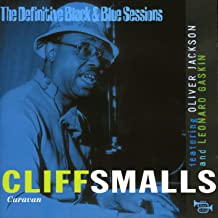
In the 1970s he returned to jazz-recording, including four solo tracks for The Complete Master Jazz Piano Series in 1970, with Sy Oliver in 1973, Texas Twister with Buddy Tate in 1975, Swing and Things in 1976 and Caravan in France in 1978. In 1980 Smalls was featured playing piano in The Cotton Club, directed by Francis Ford Coppola. Trombonist, pianist, conductor and arranger Cliff Smalls, who worked in the jazz, soul and rhythm & blues genres, passed away in 2008.
More Posts: arranger,bandleader,conductor,history,instrumental,jazz,music,piano,trombone
Daily Dose Of Jazz…
Buell Neidlinger was born in New York City on March 2, 1936 and raised in Westport, Connecticut, where his father ran a cargo shipping business. He played cello in his youth and began studying double bass after a music teacher recommended it to strengthen his hands. He took lessons from jazz bassist Walter Page. In his teens, suffering from a nervous breakdown, which he attributed to the pressure of being perceived as a child prodigy on cello, while institutionalized, he met jazz pianist Joe Sullivan who was in treatment for alcoholism.
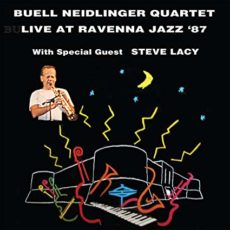
Dropping out of Yale University after one year, where he had been studying orchestral music, he moved to New York City and began playing in various jazz settings. He joined Cecil Taylor’s group in 1955 and recorded extensively with Taylor’s groups with Steve Lacy and with Archie Shepp among others until 1961. He played with Herbie Nichols and was also involved with new directions in classical music.
By 1971, Buell moved to California and became the principal bassist for the Los Angeles Chamber Orchestra and was also principal bassist in the Warner Bros. studio orchestra for 30 years. He worked extensively as an orchestral and as a session bassist before becoming a music educator at the New England Conservatory and CalArts. Together with Marty Krystall, he founded K2B2 Records. The sessions he performed on as a strings player included Tony Bennett’s I Left My Heart In San Francisco and the Eagles’ Hotel California.
In 1983, he performed on the Antilles Records release Swingrass ’83. In 1997, and moved to Whidbey Island, Washington State. There, he played in a band called Buellgrass, which included fiddler Richard Greene and featured their version of bluegrass music. Neidlinger’s fourth wife, Margaret Storer, was also a bass player. They played baroque music with friends where he played cello, while she played the violin.
His final recording was The Happenings, accompanied by Howard Alden on guitar and Marty Krystall on bass clarinet and flute, released in December 2017. Bassist and cellist Buell Neidlinger, who worked prominently with iconoclastic pianist Cecil Taylor in the 1950s and ’60s, passed away on March 16, 2018.
More Posts: bandleader,bass,cello,history,instrumental,jazz,music
Daily Dose Of Jazz…
Paul William Rutherford was born on February 29, 1940 in Greenwich, South East London, England. He initially played saxophone but switched to trombone. During the Sixties, he taught at the Guildhall School of Music and Drama.
By 1970, Rutherford, guitarist Derek Bailey and bassist Barry Guy formed the improvising group Iskra 1903, sans drums and percussion, permitting the players to explore a range of textures and dynamics which set it apart from such other contemporary improvising ensembles. The group stayed together until 1973, recording a double album from Incus, later reissued with much bonus material on the 3-CD set Chapter One.
The group’s name is the Russian word for spark and was the title of the Iskra revolutionary newspaper edited by Lenin. The “1903” designation means 20th-century music for the trio. Another edition of the group included Evan Parker under Iskra 1904, and Rutherford at one point assembled a 12-piece ensemble called Iskra 1912.
The group was later revived with Philipp Wachsmann replacing Bailey, a phase of the group’s life that lasted from roughly 1977 to 1995, documenting their earlier work on Chapter Two (Emanem, 2006) and its final recordings were issued on Maya (Iskra 1903) and Emanem (Frankfurt 1991).
Rutherford went on to play with Globe Unity Orchestra, London Jazz Composer’s Orchestra, Centipede, the Mike Westbrook Orchestra, and the Orckestra, a merger of avant-rock group Henry Cow, the Mike Westbrook Brass Band and folk singer Frankie Armstrong. He also played a very small number of gigs with Soft Machine.
He is perhaps most famous for solo trombone improvisations. His album The Gentle Harm of the Bourgeoisie is a landmark recording in solo trombone and his 1983 trio album Gheim, recorded at the Bracknell Jazz Festival is another acclaimed work. A film soundtrack was separately released as Buzz Soundtrack.
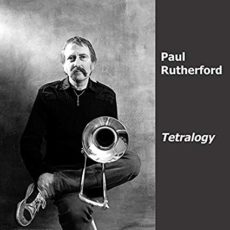
A major player in the British free improvisation scene and part of the European free jazz scene, he was one of the first to use unorthodox playing techniques for improvisation. Trombonist Paul Rutherford, one of the first to use trombone multiphonics, i.e. he sang into the trombone and blew at the same time, passed away from cirrhosis of the liver and a ruptured aorta on August 5, 2007, at the age of 67.
More Posts: bandleader,history,instrumental,jazz,music,trombone
Daily Dose Of Jazz…
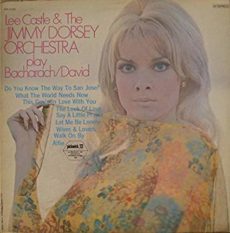
Lee Castle was born Lee Aniello Castaldo on February 28, 1915 in New York City. His first major professional job under his birth name was with Joe Haymes in 1935. This he followed by a couple of stints with Artie Shaw, Tommy Dorsey and also studied under Dorsey’s father. He also performed with Jack Teagarden, Glenn Miller, Will Bradley, and Benny Goodman.
Lee put together his own band in 1938, and continued to lead off and on through the Forties. He didn’t adopt the name Lee Castle in 1942. In 1953 he returned to duty under Tommy Dorsey and his brother Jimmy Dorsey. After Jimmy’s death, Castle became the leader of his ensemble, remaining in the position until the 1980s.
Trumpeter and bandleader Lee Castle passed away on November 16, 1990 in New York City.
More Posts: bandleader,history,instrumental,jazz,music,trumpet