

The Quarantined Jazz Voyager
As the virus is continuing to evolve the Jazz Voyager is staying close to home, especially since the country has lifted the masking mandate and it appears that everything is “back to normal”, even though it is not yet. Supply chain is still limiting production and delivery of items. As you travel around your city, state, country, and internationally please continue to be careful and protect yourself and others.
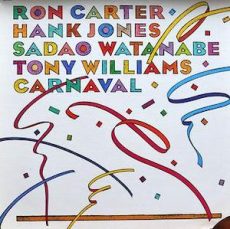
Carnaval is an album recorded Live Under The Sky in Denen Coliseum in Tokyo, Japan on July 30, 1978 by bassist Ron Carter, pianist Hank Jones, saxophonist Sadao Watanabe and drummer Tony Williams. The album was produced by Ed Michel and released five years later in 1983 on the Galaxy record label.
he art direction for the album was performed by Phil Carroll, the recording engineer was Jim Stern, mastered by George Horn, and the remix was done by Allen Sudduth.
Tracks | 43:18- Chelsea Bridge (Billy Strayhorn) ~ 10:12
- Manhã de Carnaval (Luiz Bonfá, Antônio Maria) ~ 9:01
- I’m Old Fashioned (Jerome Kern, Johnny Mercer) ~ 8:18
- Confirmation (Charlie Parker) ~ 6:40
- Moose the Mooche (Parker) ~ 8:05
- Ron Carter ~ bass
- Hank Jones ~ piano
- Sadao Watanabe ~ alto saxophone
- Tony Williams ~ drums

More Posts: adventure,album,bass,club,drums,genius,jazz,museum,music,piano,preserving,restaurant,saxophone,travel
MONTCLAIR JAZZ FESTIVAL
LACKAWANNA BLOCK PARTY
FAMILY JAZZ DISCOVERY ZONE | 12:00 pm~5:00 pm
Get in the zone for an afternoon of family fun! Bring your wee be-boppers to the zone, a special place where kids and their families can gather to play, improvise, create, make new friends and of course, share our passion for jazz!
JAZZ HOUSE WORKSHOP STUDENT ENSEMBLES | 1:00 pm~4:00 pm
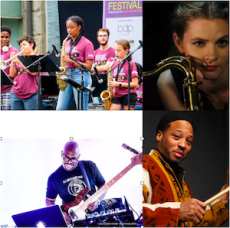
Keeping in the 13 year tradition of the Montclair Jazz Fest, student ensembles from the Jazz House Summer Workshop will take the Lackawanna Block Party stage throughout the afternoon starting at noon on Saturday. Directed by trumpeter and educator Ted Chubb, the award-winning workshop continues on the campus of Montclair State University for two sessions.
NICOLE GLOVER QUARTET | 4:00 pm~7:00 pm
Saxophonist and bandleader Nicole Glover grew up in Oregon, where she was introduced to the music through her father’s record collection and studied in programs dedicated to learning jazz and priming students for touring and performing, such as the award-winning American Music Program and Next Generation Jazz Orchestra. She moved to the East Coast to attend William Paterson University, where she studied with Mulgrew Miller, Harold Mabern and Rich Perry. Assuming permanent residence in NYC in 2015, soon establishING herself as a rising star.
WINARD HARPER + JELI POSSE | 4:00 pm~7:00 pm
Winard Harper was born in Baltimore in 1962 and started like most drummers by beating on cans just after learning to walk. A child prodigy, a five-year-old Winard would sometimes sit in and play his drums in older brother Danny’s rock n roll band after the family moved to Washington D.C. Winard and his younger brother Philip, a trumpeter, would busk in the streets of Georgetown and sit in at jam sessions around the city. For more than a year, Winard worked in a trio with pianist Reuben Brown and bassist Steve Novosel, veterans of the DC jazz scene.
DJ BROTHER MISTER | 7:00 pm~10:00 pm
Dance with DJ Brother Mister who will be capping off the summer series. Join us for an old school funk + soul party featuring DJ Brother Mister aka 7x Grammy winner Christian McBride.
~ Rain Date: August 13, 2022
~ No Tickets Required | Suggested Donation: $10
~ Beach and Lawn Chairs: Welcomed
~ Pop-Up Tents: Prohibited
More Posts: adventure,album,bass,club,drums,genius,jazz,museum,music,piano,preserving,restaurant,saxophone,travel

THE COOKERS
Each member of the Cookers has spent time leading his own series of groups, and each has a keenly individual sound. But it’s the unmistakable power of teamwork that makes this music so commanding and resonates with a kind of depth and beauty that speaks of the seasoned track record of its principals (combined, the group has over 250 years of experience in the jazz world and has been a part of over 1,000 recordings). You can feel the collective weight of that experience in their CDs and especially in their live performances.
David Weiss, trumpet
Eddie Henderson, trumpet
Donald Harrison, alto sax
Billy Harper, tenor sax
George Cables, piano
Cecil McBee, bass
Billy Hart, drums
Showtimes:
Streaming: Fri, Sat, November 18~19, 7:30 pm | Sun, November 20, 5:00 pm
$10 + $1.70 fee
Live: Fri, Sat, November 18~19, 7:30 & 10:00 pm | Sun, November 20, 5:00 pm
$35 – $45 + $3.46 – $4.16 fee
More Posts: adventure,album,bass,club,drums,genius,jazz,museum,music,piano,preserving,restaurant,saxophone,travel,trumpet
DUDUKA DA FONSECA & BRAZILIAN ALL STARS
Duduka Da Fonseca & Brazilian All Stars: Samba Jazz & Bossa Nova
Special Guest: Maucha Adnet – voice
Featuring:
Billy Drewes – sax & flute
Helio Alves – piano
Peter Washington – bass
Duduka Da Fonseca – drums
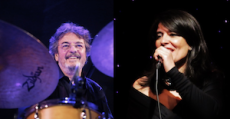
Born in Rio de Janeiro, Duduka Da Fonseca is a 4-time Grammy Award nominated drummer. He has appeared on over 250 albums alongside American Jazz icons as well as Brazilian Jazz Icons, including 25 albums as a leader/co-leader, making him one of the most recorded Brazilian drummers in this idiom.
Also born in Rio de Janeiro, Brazil, Maucha Adnet started singing professionally at age 15 as part of vocal group Céu da Boca, from 1978 to 1984. With Céu da Boca, Maucha toured around Brazil and recorded two albums released by Polygram. From 1984 until 1994, Maucha performed all over the world with legendary composer Antonio Carlos Jobim and that’s how she ended up in New York, where she has been living since 1987.
Showtimes:
Streaming: Fri, Sat, November 4~5, 7:30 pm
$10 + $1.70 fee
Live: Fri, Sat, November 4~5, 7:30 pm & 10:00 pm
$35 – $45 + $3.46 – $4.16 fee
More Posts: adventure,album,club,drums,genius,jazz,museum,music,preserving,restaurant,travel

BELA DONA
Washington DC is the birthplace of this exciting and diverse all-female band.The high-energy concert style presentation and dynamic musicianship exuded on stage is the selling point of these phenomenal ladies.
Their unique style of Funk, Jazz, R&B and Rock command an impressive drawing power attracting many beloved fans and local promoters. Individually, each band member has toured with various national artists such as Nile Rodgers(Chic), Pieces of a Dream, Chuck Brown, High Five, EU, Salt & Pepa, Pleasure, Stephanie Mills, Ginuwine, Crystal Waters, and many others.
Vocals: Sweet Cherie ~ MD/Keys, Karis Hill ~ MC, Kim Scott; Chella Davis; Taylor Gamble ~ Guitar; Shannon Browne ~ Drums; Tempest “Storm” Thomas ~ Bass, Claudia”Kool Keys”Rodgers ~ Keys; Natarsha Proctor ~ Percussion
Actual Showtime:
Streaming: Thu, July 28, 7:30 PM | $10 + $1.70 fee
Live: Thu, July 28, 7:30 PM | $30 – $35 + $3.10 – $3.46 fee
More Posts: adventure,album,bass,club,drums,genius,guitar,jazz,keys,museum,music,percussion,preserving,restaurant,travel,vocal