

Daily Dose Of Jazz…
Rich Lamb was born on May 27, 1954 in New York City where he learned his bass craft. By the turn of the 1980’s he co-founded the jazz fusion band, Dry Jack, and gained worldwide recognition with his brother pianist Chuck Lamb, guitarist Rod Fleeman and drummer Jon Margolis. The group was listed as part of the new wave of fusion in Rolling Stone Magazine’s History of Rock `n’ Roll.
With Dry Jack he performed with vocalist Eddie Jefferson and avant garde saxophonist Richie Cole. They opened shows for Pat Metheny, The Dixie Dreggs, Gino Vinelli, Freddie Hubbard and McCoy Tyner among many others. He played with trumpeter Dave Douglas inthe mid eighties.
Moving from New York to Colorado in 1989, Rich has been performing with Brazilian drummer Claudio Sloan and Hammond B3 Pat Bianchi. In 1992 he played in concert with saxophonist Ernie Watts and Ed Summerlin recorded at the Deer Mountain Jazz Festival in South Dakota, as well as performing there with saxophonist Hank Crawford.
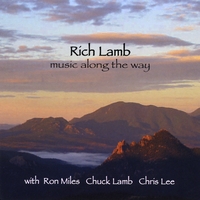
He performs with Hazel Miller, has subbed several times on the nationally syndicated radio program E Town. As a composer and first time as a leader, Lamb released his debut album, Music Along The Way. This is an improvisational collection of his music written during his performing career.
Bassist Rich Lamb currently freelances and plays his upright bass with pianists Pat Bianchi, Geoff Cleveland, Eric Moon, Dana Marsh and Bill Unrau.

Daily Dose Of Jazz…
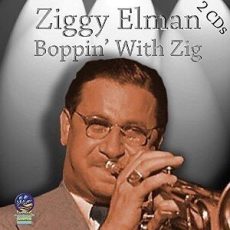
Ziggy Elman was born Harry Aaron Finkelman on May 26, 1914 in Philadelphia, Pennsylvania. but his family settled in Atlantic City, New Jersey when he was four. His father was a violinist who had hoped he would play violin and although he did learn to play violin, he preferred brass instruments. He began playing for Jewish weddings and nightclubs at age 15.
In 1932, made his first recording, playing the trombone. In 1936, he joined the Benny Goodman orchestra as a trumpeter, after playing briefly with a band led by Alex Bartha at Steel Pier in Atlantic City, where Goodman heard him. In 1938, while with Goodman, he got a contract with Bluebird, RCA’s cheaper label, to record 20 sides as Ziggy Elman and his Orchestra, although all the members were in Goodman’s band.
One original tune was Frailach in Swing, based on a 1918 recording of Der Shtiller Bulgar (The Quiet Bulgar) by Abe Schwartz. During the first half of 1939, Benny Goodman and His Orchestra was featured on the Camel Caravan radio show, with singer and songwriter Johnny Mercer as singer, writer of speciality numbers, and announcer. After leaving Goodman in 1940, Elman joined Tommy Dorsey and stayed until he was drafted in 1943. After he was discharged in 1946, he re-joined Dorsey for another year.
In 1956, he was asked to recreate a klezmer solo with the vocalist Martha Tilton for the movie, The Benny Goodman Story, but was unable to, his technique having since withered away. Elman appeared performing it in the film, but another trumpeter, Mannie Klein, played the solo on the soundtrack.
By the 1950s, the music had changed. Big bands had declined and for a time he switched to entertainment work. In this decade he appeared in films mostly as himself. In 1956 he had a heart attack, curtailing his music career. By the end of the 1950s he was financially ruined, and had to work for a car dealership. In 1961, it was revealed at an alimony hearing that he was virtually bankrupt. He later worked in a music store and gave trumpet lessons.
Trumpeter Ziggy Elman died of liver failure on June 26, 1968 at the age of 54 and was buried at Mount Sinai Memorial Park Cemetery in Los Angeles, California.
More Posts: history,instrumental,jazz,music,trumpet
Requisites
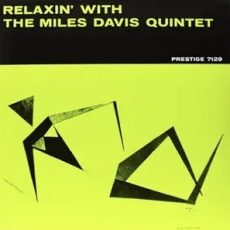
Relaxin’ With The Miles Davis Quintet ~ The Miles Davis Quintet | By Eddie Carter
In just two days in 1956, the Miles Davis Quintet recorded four remarkable albums, which are widely regarded as quintessential examples of hard bop and have endured as jazz classics over time. They fulfilled Davis’s contract with Prestige Records before moving to Columbia Records, his home for some of the most iconic music over the next thirty years. The albums are Cookin’ (1957), Workin’ (1959), Steamin’ (1961), and today’s focus, Relaxin’ With The Miles Davis Quintet (Prestige PRLP-7129), released in 1958. Miles Davis is on muted trumpet (tracks: A1 to A3, B1, B2), and trumpet (B3), John Coltrane is on tenor sax, Red Garland is on piano, Paul Chambers is on bass, and Philly Joe Jones is on drums. My copy is no. 535 of the Craft Recordings Limited Edition mono reissue (Prestige CR 00227).
The first side opener, If I Were a Bell by Frank Loesser, became a jazz standard after Davis’s rendition on this album. Miles snaps his fingers to set the rhythm ahead of the quintet’s medium-paced melody. The muted trumpet’s ideas unfold in the opening statement. John demonstrates his signature fluidity next. Red takes an energetic solo ahead of the theme’s reprise and a subtle conclusion. After two brief false starts, You’re My Everything by Mort Dixon, Harry Warren, and Joe Young begins with the quintet’s tender introduction, ahead of Miles’s delicately heartfelt melody and opening solo highlighting his more sentimental side. John executes a graceful, intimate statement, supported by the trio’s rich foundation, leading to a thoughtfully reflective finale from Davis.
The pace picks up noticeably for I Could Write a Book by Richard Rodgers and Lorenz Hart. The trio gets things started, leading to the quintet’s collective medium-fast melody. Miles takes off first with brisk, vibrant notes that set the mood. John fills the air with pure joy next, and then Red’s reading is so full of energy before the leader takes the song out, which ends abruptly. Sonny Rollins’s Oleo opens the second side with two false starts and some lighthearted studio chatter, ahead of Davis’s introduction and the quintet’s lively theme with John completing the melody. Miles goes first, delivering a spirited statement, then John soars into an energetic turn. Red concludes with an upbeat reading while Paul and Philly propel each soloist to new heights before the group’s brisk finish.
Up next is It Could Happen To You by Jimmy Van Heusen and Johnny Burke. The ensemble adopts a relaxed midtempo vibe with Miles leading the theme. He then continues with a sweet-toned first solo. John follows with a compelling statement that’s as cool as the other side of the pillow. Red brings out the liveliness in a cheerful interpretation, engaging beautifully with Paul and Philly in the subdued climax. Woody ‘n’ You by Dizzy Gillespie begins with Red’s brief introduction preceding the opening ensemble. Miles commands the lead solo with fiery passion on the open horn, paving the way for John’s high-energy performance. Davis and Jones share the song’s final moments in the closing chorus, culminating in a gentle fade. A few final words from Miles brings the jazz standard to a close.
Bob Weinstock oversaw the original session, and Rudy Van Gelder was the recording engineer. For this audiophile reissue, Mark Piro and Mason Williams took charge of production, and Bernie Grundman mastered the album from the original tapes. The record is pressed on 180-gram vinyl, using Neotech’s VR900 vinyl compound, and manufactured using a one-step lacquer process. The sound quality of this reissue is truly exceptional, offering a beautifully balanced soundstage that’s ideal for demonstration on a good mid-fi or high-end audio system. This limited-edition box set is 5,000 copies, each individually numbered and presented in a foil-stamped, linen-wrapped slipcase featuring an acrylic inset of the original artwork. The record is protected by an archival-quality, anti-static, non-scratching inner sleeve.
One of the highlights of this reissue is the inclusion of studio snippets, such as false starts and Miles’s conversations with Rudy Van Gelder. These moments offer the listener a unique sense of connection to the studio sessions, making them part of the event. On mid-fi or high-end audio systems, the tonal balance across highs, midrange, and low frequencies truly shines in a stunning soundstage. Relaxin’ With The Miles Davis Quintet is an excellent album of standards, showcasing inspired performances by every member. It’s a superb choice for enjoying at any time of the day or evening. I highly recommend it for a spot in your library, and I urge you to pick up a copy before it sells out, because you ain’t gettin’ mine!
~ Cookin’ With The Miles Davis Quintet (Prestige PRLP 7094), Steamin’ With The Miles Davis Quintet (Prestige PRLP 7200), Workin’ With The Miles Davis Quintet (Prestige PRLP 7166) – Source: Discogs.com
~ Oleo, It Could Happen To You, Woody’n You – Source: JazzStandards.com
~ If I Were A Bell, You’re My Everything, I Could Write A Book – Source: Wikipedia.org
© 2025 by Edward Thomas Carter

More Posts: choice,classic,collectible,collector,history,instrumental,jazz,music,trumpet
Daily Dose Of Jazz…
Christof Lauer was born on May 25, 1953 in Melsungen, Germany. Most well known in Europe where he has performed and/or recorded with Palle Danielsson, Carla Bley, Anthony Cox, Michel Godard, Gary Husband, Vince Mendoza’s Jazzpaña, Michel Portal, Maria João, Alphonse Mouzon, and Peter Erskine.
Since 1979 he has been a member of the Jazzensemble des Hessischen Rundfunks led by Albert Mangelsdorff. In 1994 Lauer joined the United Jazz and Rock Ensemble, replacing Charlie Mariano. and is also.
Tenor and soprano saxophonist Christof Lauer, who is a member of the Hamburg NDR Radio Orchestra, continues to perform, record and tour.
More Posts: history,instrumental,jazz,music,saxophone
Daily Dose Of Jazz…
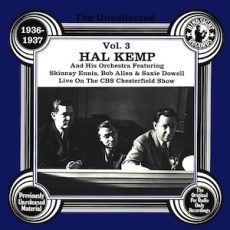
Horace Kirby Dowell, known professionally as Saxie, was born on May 24, 1904 in Raleigh, North Carolina. Attending the University of North Carolina he met Hal Kemp and joined Kemp’s orchestra as a tenor saxophonist, clarinetist, flutist and vocalist in the fall of 1925.
He composed I Don’t Care, which was recorded by Kemp for Brunswick in 1928. When the band’s style changed in the early 1930s to that of a dance band, Dowell became the group’s comedic vocalist for novelty songs. After Three Little Fishies became a hit in 1939, Dowell was involved in a legal dispute with lyricists Josephine Carringer and Bernice Idins. In 1940 he wrote the song Playmates.
Dowell left Kemp and started a big band in 1940. Drafted during World War II he served as a bandleader aboard an aircraft carrier, the U.S.S. Franklin. He went on to record for Brunswick, Sonora, and Victor. Around 1946 he led a naval air station band with 14-year-old Keely Smith as a singer.
>After the war he reunited his orchestra, performing mostly in Chicago, Illinois. In 1949 he became a disc jockey for WGN radio in Chicago, and retired in the late 1950s. He moved to Scottsdale, Arizona and worked as a disc jockey part-time for KTAR in Phoenix during his retirement.
Saxophonist and vocalist Saxie Dowell died on July 22, 1974 in Scottsdale.
More Posts: bandleader,history,instrumental,jazz,music,saxophone,vocal