

Daily Dose Of Jazz…
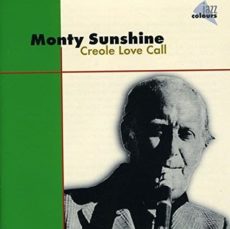
Monty Sunshine was born on April 9, 1928 in Stepney, London, England. Along with Lonnie Donegan, Jim Bray, and Ron Bowden, formed the backline of what was the embryo Chris Barber Band. A few personnel changes between 1953 and ‘54 with the departure of Ken Colyer whose name headed the band for a time until they adopted Baber’s name permanently.
The band quickly gained an international reputation following their inaugural tour of Denmark, before their professional debut in the United Kingdom. Sunshine stayed with the band for several years, until leaving in 1960 and forming his own band, staying true to the original six-man lineup.
In January 1963, the British music magazine NME reported that the biggest trad jazz event to be staged in Britain had taken place at Alexandra Palace. The event included Sunshine, George Melly, Diz Disley, Acker Bilk, Chris Barber, Kenny Ball, Ken Colyer, Alex Welsh, Bob Wallis, Bruce Turner, and Mick Mulligan.
Sunshine returned to play a reunion concert with the original Chris Barber Band at the Fairfield Halls, Croydon in June 1975. This was well-received, and the band reformed once again for an international reunion tour in 1994. Sunshine retired from music around 2001. His discography is extensive, and compact discs have been issued of recordings with Colyer and Barber, as well as with his own band. He has also worked with Beryl Bryden, Johnny Parker, the Crane River Jazz Band, and Donegan’s Dancing Sunshine Band.
Clarinetist Monty Sunshine, who is known for his clarinet solo on the track Petite Fleur, a million-seller for the Chris Barber Jazz Band in 1959, passed away on November 30, 2010, at the age of 82.

More Posts: bandleader,clarinet,history,instrumental,jazz,music
Daily Dose Of Jazz…
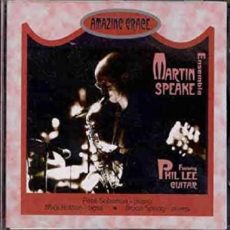
Phillip Robert Lee was born on April 8, 1943 in London, England and studied guitar with Ike Isaacs as a teenager. He was a member of the National Youth Jazz Orchestra, including their performance in the 1960 Antibes Jazz Festival. By the 1960s he was playing with John Williams and Graham Collier, was resident at Ronnie Scott’s Old Place, and in a band that included Bob Stuckey, Dudu Pukwana, and John Marshall.
During the 1970s, he played in jazz-rock bands such as Gilgamesh and Axel with Tony Coe and with Michael Garrick, Henry Lowther, and John Stevens. He recorded Twice Upon a Time in 1987 with Jeff Clyne.
Later in his career, he worked with Gordon Beck, Andres Boiarsky, Benny Goodman, Lena Horne, Marian Montgomery, Annie Ross, Dardanelle, Harry Edison, Ken Peplowski, Eddie Daniels, Jimmy Smith and the London Jazz Orchestra.
Phil Lee began playing jazz in the 1960s and. Since then he has recorded and appeared live with a vast range of musicians. including Pat Smythe, Duncan Lamont, Norma Winstone, Michael Garrick, Jimmy Hastings and Martin Speake. Phil has toured with Charles Aznavour, Michel Legrand, Gordon Beck and recently Jessye Norman.
In the 1970s he was a member of the fusion band Gilgamesh. His musicianship is held in high regard not only by fellow jazz players but also by musicians in other genres. His film credits include brief appearances in Eyes Wide Shut and Alan Plater’s TV film Misterioso and his playing featured in The Last of the Blonde Bombshells. Guitarist Phil Lee continues to perform, record and tour.
More Posts: guitar,history,instrumental,jazz,music
Three Wishes
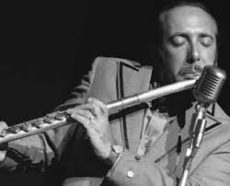
Herbie Mann responded to Nica’s question of three wishes with the following:
-
-
“That all these nuts should quit messing around these goddamn bombs! Otherwise: forget it.”
-
“I think I’d like to be independently wealthy as far as money goes, and be free to play what I want, when I want to, and not have to worry about what people worry about.”
-
“I’d like everybody to mean what they say they mean about non-discrimination.”
-
*Excerpt from Three Wishes: An Intimate Look at Jazz Greats ~ Compiled and Photographed by Pannonica de Koenigswarter

More Posts: baroness,history,instrumental,jazz,music,pannonica,three,wishes
Daily Dose Of Jazz…
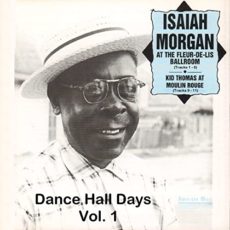
Ike Morgan, born Isaiah Morgan, came into the world on April 7, 1897 in Bertrandville, Louisiana into a musical family. He played in Plaquemines Parish in the early 1910s and then moved to New Orleans.
He led his brothers Al, Sam and Andrew in the Young Morgan Band beginning in 1922, which was later led by Sam and this ensemble recorded for Columbia Records. After Sam suffered a stroke in 1932, Ike resumed the leadership of the group, but it disassembled in 1933.
In the Thirties and Forties, Morgan was a bandleader in the Biloxi, Mississippi area, and played with Andrew there as well. Isaiah recorded in 1955 on an album called Dance Hall Days, Vol. 1, his group at this time featured Freddie Land on piano.
Retiring from music the following year, trumpeter Ike Morgan passed away on May 11, 1966 in New Orleans, Louisiana.
More Posts: bandleader,history,instrumental,jazz,trumpet
Daily Dose Of Jazz…
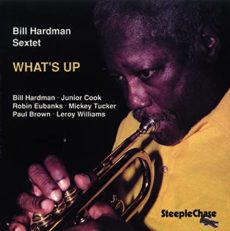
Bill Hardman was born William Franklin Hardman, Jr. on April 6, 1933 in Cleveland, Ohio. Growing up he worked with local players like Bobby Few and Bob Cunningham and while in high school he appeared with Tadd Dameron. After graduating he joined Tiny Bradshaw’s band.
Hardman’s first recording was with Jackie McLean in 1956, later playing with Charles Mingus, Art Blakey and the Jazz Messengers, Horace Silver, and Lou Donaldson. He led a group with Junior Cook and recorded as a leader: Saying Something on the Savoy label. The album received critical acclaim in jazz circles but was little notoriety with the general public. He had three periods in as many decades with Art Blakey’s Jazz Messengers, though his misfortune was not to be with the Messengers at the time of their popular Blue Note recordings. Blakey occasionally featured him playing several extended choruses unaccompanied.
Though he was a crackling hard bop player with blazing technique, crisp articulations, and a no-frills sound, he never received commercial success like his colleagues Donald Byrd, Freddie Hubbard, and Lee Morgan.
Bill later incorporated into his sound the fuller, more extroverted romantic passion of a Clifford Brown – a direction he would take increasingly throughout the late-1960s and 1970s. As a leader, he recorded six albums, as a sideman he recorded more than three dozen with Dave Bailey, Walter Bishop Jr., Charles Earland, Curtis Fuller, Benny Golson, Eddie Jefferson, Ronnie Mathews, Jimmy McGriff, Hank Mobley, Houston Person, Mickey Tucker, Steve Turre, Mal Waldron, and Reuben Wilson.
Hard bop trumpeter and flugelhornist Bill Hardman passed away on December 5, 1990 in Paris, France.
More Posts: bandleader,flugelhorn,history,instrumental,jazz,music,trumpet