

Daily Dose Of Jazz…
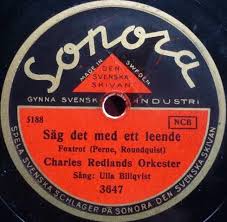
Charles Redland was born Carl Gustaf Mauritz Nilsson on July 7, 1911 in Södertälje, Sweden. The son of a musician, he learned several instruments when he was young.
In the 1930s he was a member of bands in which he played alto saxophone, clarinet, trumpet, and trombone. During that decade he also worked as a leader.
On clarinet, he recorded with Benny Carter in Sweden in 1936. He composed and arranged jazz and popular music. He also composed for more than 80 films, as well as for radio and television programs. Alto saxophonist, Charles Redland passed away on August 18, 1994 in Stockholm, Sweden.

More Posts: bandleader,clarinet,history,instrumental,jazz,music,saxophone,trombone,trumpet
Daily Dose Of Jazz…
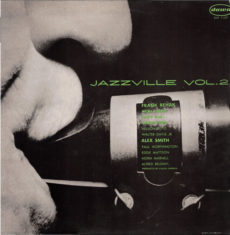
Frank Rehak was born on July 6, 1926, in New York City and started on piano and cello before switching to trombone. He was a member of the Gil Evans band and worked with Miles Davis, appearing with Davis on the broadcast The Sounds of Miles Davis.
As a leader he recorded Jazzville Vol. 2 on the Dawn label but as a sideman he had a prolific career. He recorded with Tony Bennett, Al Cohn, Dizzy Gillespie, Woody Herman, Quincy Jones, Gene Krupa, Hugo Montenegro, Cat Anderson, Ernestine Anderson, Charlie Barnet, Big Maybelle, Art Blakey, Bob Brookmeyer, Ruth Brown, Cándido Camero, Chris Connor, Urbie Green, Johnny Hartman, Michel Legrand, Melba Liston, Mundell Lowe, Teo Macero, Carmen McRae, Red Mitchell, Whitey Mitchell, Blue Mitchell, André Previn, Gerry Mulligan, Kai Winding and the list goes on.
Along with a failed marriage to nightclub dancer Jerri Gray, he also had a heroin addiction, which combined with other financial problems led to his withdrawal from music. With that, he lapsed into relative obscurity.
In an effort to deal with these issues he spent time at Synanon, which led to his mention in Art Pepper’s autobiography. Trombonist Frank Rehak passed away on June 22, 1987 in Badger, California.
More Posts: bandleader,cello,history,instrumental,jazz,music,piano,trombone
Requisites
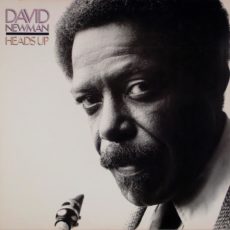
Heads Up ~ David Newman | By Eddie Carter
Up next from the library is an album by the flutist, alto, and tenor saxophonist, David Newman. Heads Up (Atlantic 81725-1) finds him leading a first-rate quintet with Kirk Lightsey on piano; Steve Nelson on vibraphone; David Williams on bass and Eddie Gladden on drums. My copy used in this report is the original 1987 Stereo release.
Ain’t Misbehavin’ by Fats Waller, Harry Brooks and Andy Razaf starts Side One at a slow ballad tempo. The song premiered at the Harlem club Connie’s Inn and was the opening tune for the 1929 all-black musical revue, Hot Chocolates. The show was so successful it ran on Broadway for 219 performances, and Louis Armstrong performed the first instrumental version during the intermission. Kirk opens with a tender introduction that gently grows into David’s seductive melody. Newman also delivers a beautiful work of richness and sincerity on the lead solo. Kirk and Steve split the next few verses, each man offering a romantic sensitivity before a pretty closing chorus.
Makin’ Whoopee is by Walter Donaldson and Gus Kahn, first appearing in the 1928 Broadway musical Whoopee, the song was sung by Eddie Cantor who reprised it two years later in the 1930 film. The quintet proceeds smoothly from the introduction to the opening chorus led by Newman who also casts a distinct voice with expressive beauty on the first reading. Nelson also gives an enticing presentation on the second solo. Williams is as sweet as honey on the third statement with an exquisite tone and Lightsey makes the final statement a delightfully nostalgic performance into the coda. Newman’s Heads Up comes at you next vivaciously with David taking off first with a rocking beat compelling one to snap their fingers and tap their toes. Steve conveys a festive celebration on the second reading, then Kirk dazzles with the vigorous zest of a sanctified church service. David sums everything up with a few short comments leading to the group’s finale.
Newman opens Side Two on flute for an upbeat rendition of Delilah by Victor Young. It’s a catchy 1954 tune with the quintet producing a vibrant melody. David’s opening solo is delivered with abundant spirit and energy. Kirk steps up next with driving ambition, then Nelson takes the final bow with driving ambition and dexterity. Lover Man by Jimmy Davis, Roger Ramirez, and Jimmy Sherman slows the pace with the leader back on tenor sax. After the ensemble’s ravishingly beautiful theme, David demonstrates his rhythmic mastery with grace and elegance. Kirk etches a delicately thoughtful presentation next, then Steve follows with an amorously tender interpretation. Newman closes with a few sultry comments before the warm-hearted ending. For Buster, David’s second original closes the album with the leader on alto-sax expressing a down-home blues flavor. Newman and Nelson are the featured soloists and each man offers an interpretation eminently fitting for the blues into David’s earthy reprise and climax.
Heads Up was engineered by Tony May whose work has appeared on many Jazz, Latin, Pop, and Soul albums. His assistant Ira McLaughlin has worked on albums for Atlantic, CBS, and Profile Records. This album was digitally recorded and has a highly effective soundstage placing the musicians in the center of your listening room. David Newman who the jazz world would come to know as “Fathead” originally worked with Ray Charles and had a prolific career recording albums of Hard-Bop, Post-Bop, Soul-Jazz, Jazz-Funk, and Jazz-Fusion for another twenty-one years after Heads Up was released. He passed away at the age of seventy-five on January 20, 2009, from pancreatic cancer. If you’re seeking an album displaying his skills as a composer and multi-instrumentalist, consider this your Heads Up!
~ Ain’t Misbehavin’, Lover Man, Makin’ Whoopee – Source: JazzStandards.com ~ © 2020 by Edward Thomas Carter SynopsisHeads Up is an album by saxophonist David Newman recorded at the Atlantic Recording Studios in New York City on September 16~18, 1986 and released in 1987 on the Atlantic Records label.
Track List | 37:55
- Ain’t Misbehavin’ (Fats Waller, Andy Razaf) 7:40
- Makin’ Whoopee (Walter Donaldson, Gus Kahn) 8:24
- Heads Up (David Newman) 6:21
- Delilah (Clifford Brown) 7:22
- Lover Man (Jimmy Davis, Ram Ramirez, James Sherman) 9:52
- For Buster” (Newman) :41
- David Newman – tenor saxophone, flute
- Steve Nelson – vibraphone
- Kirk Lightsey – piano
- David Williams – bass
- Eddie Gladden – drums

More Posts: choice,classic,collectible,collector,flute,history,instrumental,jazz,music,saxophone

Daily Dose Of Jazz…
Dorian Ford was born on July 5, 1967 in London, England and started playing jazz in his early teens when he began attending weekly workshops led by trumpeter, composer, broadcaster, and music writer Ian Carr. Playing alongside many musicians who went on to form the backbone of the London jazz renaissance of the 1980s, he won a scholarship to Berklee College of Music, receiving the prestigious Chick Corea Jazz Masters Award. Piano studies were with Donald Brown, a regular in Art Blakey’s band at the time.
Dorian’s performance and recording list are a who’s who of players including but not limited to Julian Joseph, Courtney Pine, Dill Katz, Birelli Lagrene, Jeff Beck, Ingrid Laubrook, Julia Biel, Carol Grimes, Barbara Thompson, Igor Butman, Ian Carr, Colin Lazzarini, Gareth Locraine, Sebastian Rochford, Annie Whitehead, Donny McCaslin, and the list goes on.
Pianist Dorian Ford performs privately as well as publicly as he continues to compose and record.
Daily Dose Of Jazz…
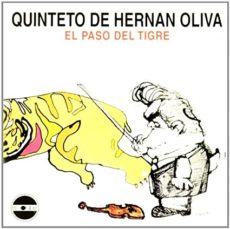
Hernán Oliva was born in Valparaíso, Chile on July 4, 1913 and began his violin studies at age 8 under a dominating mother. Around 1927 at the age of fourteen, he joined the Ernesto Davagnino Orchestra. Bohemian in character and dedicating himself to music over his father choice of law, his father disinherited and expelled from the home.
Around 1935 he crossed to Mendoza, Argentina and worked a few months on the LV10 radio in Cuyo, with his orchestra. Migrating to Buenos Aires, Argentina where Luis Davagnino, Ernesto’s brother, also a musician, lived, and after finding him whistling from corner to corner of Calle Alsina a tune that he knew Luis would recognize received him at his home after. Getting him a job as a companion to Betty Caruso and Fanny Loy on Radio Belgrano, then joined the René Cóspito Orchestra.
He played at the Boite La Chaumiere, with Enrique “Mono” Villegas on piano, David Washington on trumpet, and the English Phillips on sax. The following year Hernán joined the Oscar Alemán orchestra and by 1944 he began working with Ahmed Ratip’s Cotton Pickers, then with Tito Alberti and José Finkel they formed the Jazz Casino in 1951 with singer Lorna Warren.
His later years were spent hanging around the bars of San Telmo playing for whoever asked, sometimes for a glass of whiskey and for many who never appreciated his enormous talent. Violinist Hernán Oliva, who recorded six albums as a leader, passed away in the early morning of June 17, 1988 in Buenos Aires, Argentina lying on a sidewalk in the Palermo neighborhood, hugging his violin case.
More Posts: bandleader,history,instrumental,jazz,music,violin