

Daily Dose Of Jazz…
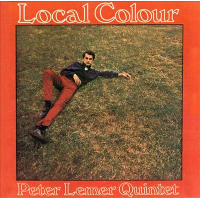
Peter Naphtali Lemer was born June 14, 1942 in London, England and studied piano and composition at the Royal Academy of Music with Sven Weber and John Gardner, privately with Thomas Rajna, and then at workshops in London run by Jack Goldzweig. He then went to New York to study double bass with David Walter, attended workshops run by Bill Dixon, and studied piano with Jaki Byard and Paul Bley.
In 1965, Lemer formed a trio with John Stevens and Jeff Clyne, which opened the Little Theatre Club. In 1966, he formed the Peter Lemer Quintet, with drummer Jon Hiseman, tenor saxophonist George Khan, baritone saxophonist John Surman and bassist Tony Reeves. They successfully played a season at Ronnie Scott’s that helped to pave the way for the British free jazz movement of the late 1960s and early 1970s.
In 1969 Peter delved into experimental jazz with the group Spontaneous Music Ensemble,then joined Barbara Thompson that developed into Thompson forming Paraphernalia with husband Jon Hiseman. Paraphernalia became the most frequently performing jazz-oriented group in Europe. By 1974 he joined Gilgamesh, then became an in-demand session player and became a member of rock band Ken Elliot’s Seventh Wave.
The following year he joined Ginger Baker, Mr Snips, and The Gurvitz brothers in the Baker Gurvitz Army. His next move was with Jan Dukes de Grey briefly and then on to Mike Oldfield’s fifty-piece touring band as one of two keyboard players. Most recently Lemer has worked with the band In Cahoots, recording with them as well as with Paraphernalia.
Pianist and keyboardist Peter Lemer currently plays with the Spanish Harlow Orchestra and coaches piano, improvisation, and music technology. He is active in lobbying to end global hunger and poverty.

More Posts: bandleader,history,instrumental,jazz,keyboard,music,piano
Daily Dose Of Jazz…
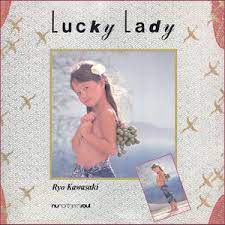
Ryo Kawasaki was born February 25, 1947 in Kōenji, Tokyo during Japan’s recovery in the early post World War II period. His mother encouraged him to take piano and ballet lessons, and he took voice lessons and solfege at age four and violin lessons at five, and he was reading music before elementary school. As a grade scholar, he began a lifelong fascination with astronomy and electronics. When he was 10, he bought a ukulele and at 14 he got his first acoustic guitar. The album Midnight Blue by Kenny Burrell and Stanley Turrentine inspired him to study jazz.
In high school, he began hanging out at coffee-houses that featured live music, formed a jazz ensemble and built an electronic organ that served as a primitive synthesizer. By the time he was 16, his band was playing professionally in cabarets and strip joints. Although he continued to play music regularly, he attended Nippon University, majored in physics and earned his Bachelor of Science Degree. He also did some teaching and contest judging at the Yamaha musical instrument manufacturer’s jazz school. Additionally, he worked as a sound engineer for Japanese Victor Records and BGM/TBS Music, where he learned mixing and editing.
He recorded his first solo album for Polydor Records when he was 22. And was voted the No. 3 jazz guitarist in a Japanese jazz poll. He spent most of the next three years working as a studio musician on everything from advertising jingles to pop songs including countless radio and TV appearances. He recorded his second album for Toshiba when he was 24. He played with B.B. King at a blues festival and also met George Benson and they jammed for five hours at Kawasaki’s house.
Moving to New York City in 1973 he was offered an immediate gig with Joe Lee Wilson playing at the Lincoln Center as part of the Newport Jazz Festival. Soon Ryo was jamming regularly as part of the loft scene and was invited to play with Bobbi Humphrey. A few months later Gil Evans invited him to join The Gil Evans Orchestra which was then working on a jazz recording, The Gil Evans Orchestra Plays the Music of Jimi Hendrix. He would go on to record on Evan’s There Comes a Time. He became the guitarist in the Chico Hamilton Band, made his debut U.S. album, Juice, in 1976 for RCA and was one of the first Japanese jazz artists to sign with a major label in the States.
He explored Music of India, recorded with Dave Liebman and toured European jazz festivals with Joanne Brackeen as a piano/guitar duo and they recorded a pair of albums. In the mid-1980s, Kawasaki drifted out of performing music in favor of writing music software for computers. He also produced several techno dance singles, formed his own record company called Satellites Records, and later returned to jazz-fusion in 1991.
He continued to release albums up to 2017 and had two retrospective Ep’s released spanning years of 1976~1980 and 1979~1983. Guitarist and keyboardist Ryo Kawasaki transitioned on April 13, 2020 in Tallinn, Estonia at the age of 73.

More Posts: audio engineer,bandleader,composer,guitar,history,instrumental,jazz,keyboard,music
Daily Dose Of Jazz…
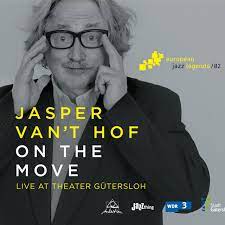
Jasper van ‘t Hof was born on June 30, 1947 in Enschede, Overijssel, Netherlands. He began studying piano at the age of five. He played in jazz bands at school and by 19 was playing at jazz festivals with drummer Pierre Courbois. In 1969, he became a member of Courbois’ early European jazz rock band Association P.C. with German guitarist Toto Blanke.
In 1974, Van’t Hof founded Pork Pie and teamed up with guitarist Philip Catherine, saxophonist Charlie Mariano, drummer Aldo Romano, and bass guitarist Jean-François Jenny Clark, He went on to join the band Eyeball with saxophonist Bob Malach and violinist Zbigniew Seifert.
Jasper had two bands ~ Face to Face with Danish bassist Bo Stief and saxophonist Ernie Watts; and Pili Pili featuring African singer Angelique Kidjo. He played keyboards with Archie Shepp, although he is best known for his solo piano playing.
As part of Piano Conclave he played with pianists George Gruntz, Joachim Kühn, Wolfgang Dauner, and Keith Jarrett. He has recorded more than four dozen albums as a leader and another nineteen as a sideman. Pianist and keyboardist Jasper Van’t Hof, who is a textural player, comfortably blends impressionistic writing with freer concerns, continues to compose, perform and record.
More Posts: bandleader,history,instrumental,jazz,keyboard,music,piano
Daily Dose Of Jazz…
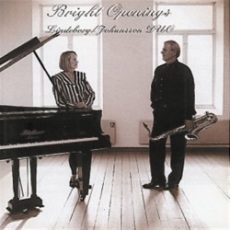
Susanna Lindeborg was born on April 18, 1952 in Gothenburg, Sweden and began classical training on piano at a young age which turned into work with jazz and improvisation, showing to be her right element. She started her professional musical career in the middle of the Seventies.
Susanna went on to mix acoustic and electronic instruments, which has been known most of all through the group Mwendo Dawa, which she leads and tours together with saxophone player Ove Johansson. Writing her own music for the group, she also toured with the female jazz group Salamander during the beginning of the 1980s. Both Mwendo Dawa and Salamander attracted a lot of attention on the European continent and in the United States.
She currently tours with her Lindeborg/Johansson Duo and Natural Artefacts. Her performances are both in the world of improvisation music, the world of electro~acoustic music, and solo improvisations. With the release of her first solo compact disc in 1989, she parlayed the acceptance into some work in Germany with some radio and TV recordings. Avant~garde pianist Susanna Lindeborg continues to push the boundaries of her music.
More Posts: bandleader,history,instrumental,jazz,keyboard,music,piano
Three Wishes
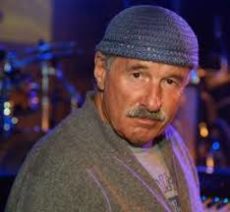
Joe Zawinul replied to Pannonica when she inquired of him the three wishes he would ask for:
- “To be able to play better my instrument.”
- “Love. Period.”
- “To make a decent living, and not play no bullshit.”
*Excerpt from Three Wishes: An Intimate Look at Jazz Greats ~ Compiled and Photographed by Pannonica de Koenigswarter
More Posts: baroness,history,instrumental,jazz,keyboard,music,pannonica,three,wishes