

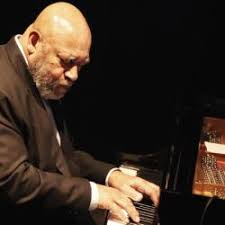
KENNY BARRON QUINTET
w/ Kiyoshi Kitagawa, Johnathan Blake, Mike Rodriguez, Dayna Stephens
Kenny Barron is an American jazz pianist, who has appeared on hundreds of recordings as leader and sideman and is considered one of the most influential mainstream jazz pianists since the bebop era.
More Posts: adventure,album,club,festival,genius,jazz,museum,music,piano,preserving,restaurant,travel
Requisites
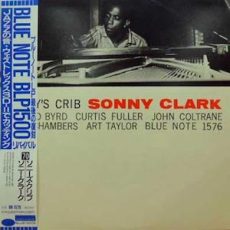
Sonny’s Crib ~ Sonny Clark | By Eddie Carter
Sonny Clark steps into the spotlight with his third LP as a leader, Sonny’s Crib (Blue Note BLP 1576/BST 81576), released in 1957. He was considered the label’s house pianist appearing on many albums with some incredible musicians. On this date, he heads a stellar sextet of heavy hitters; Donald Byrd on trumpet; Curtis Fuller on trombone; John Coltrane on tenor sax; Paul Chambers on bass; and Art Taylor on drums. My copy used in this report is the 1990 Toshiba-EMI Limited Japanese Mono reissue (Blue Note BLP 1576 – BN 1576).
Side One starts with a rapid burner; the 1929 show tune With a Song In My Heart by Richard Rodgers and Lorenz Hart. The sextet takes off on a brisk run through the melody stepping aside for Byrd who gives an electrifying first solo. Coltrane emerges with a vengeance delivering passionate fire at a high velocity on the next reading. Fuller responds with a robust, resonant tone releasing plenty of energy during his turn. Afterward, Clark offers an exhilarating reading that cooks and swings into the climax.
Speak Low by Kurt Weill and Ogden Nash is a popular song from 1943 that starts at mid-tempo. John takes the lead on the Latin-flavored melody with the ensemble manufacturing a firm foundation behind him. He continues with a fervent opening statement that heightens the trio’s flawless accompaniment. Curtis and Donald share the next reading; both men bring out the best in each other with two presentations showcasing their technical chops. Sonny steps in last, summing up the song with a captivating solo before the close. Come Rain or Come Shine by Harold Arlen and Johnny Mercer brings the first side to a close as a beautiful slow-tempo ballad. Fuller opens the melody with a simple statement that’s seductively tender. Clark guides his way sensuously through the next reading presenting an ardently touching interpretation. Coltrane follows with a beautifully constructed, elegant reading and Byrd takes the ensemble home on the ending theme into a gentle climax.
The final two tracks are by the leader Clark and occupy Side Two. Sonny’s Crib is a blues with everyone laid-back and taking it easy on the carefree melody. John goes first swinging expressively with rhythmic verses that are enjoyable listening; Curtis comes in next also contributing some fine solo work. Donald takes the next turn, making his mark with an easy swing that’s cheerfully bright. Sonny is artfully tasteful on the next solo with nimble piano lines that affirm his capability as a great interpreter of Hard-Bop. Paul cuts into the final reading with an exceptionally articulate statement that says plenty about the ensemble’s exit.
Sonny’s News For Lulu closes out the album giving everyone a solo opportunity except Art. The song opens with a brief introduction by the trio followed by a collective midtempo melody presentation and the solo order is piano, trumpet, tenor sax, trombone, and bass. The leader’s opening statement shows his rhythmic vitality on spirited lines that move freely and confidently. Donald reciprocates with a happy, infectious groove on the next solo that shows the workings of a very creative mind. John comes in next, infusing his performance with an energetic effervescence that’s bold, and assertive. Curtis sparkles on the fourth reading with a flow of musical ideas that are brimming with vitality. The finale is a delectable dish served up by Paul anchored by just Art’s tranquil brushwork that swings very nicely into the sextet’s closing chorus and the album’s climax concluding an enjoyable album.
The original recording by Rudy Van Gelder has been lovingly remastered by Toshiba-EMI Limited with a superb soundstage that surrounds your listening spot as if you’re in the studio with the musicians. In addition to Sonny’s Crib, Clark recorded eight more albums for Blue Note as a leader and with many other stars on the label as a sideman. He passed away on January 13, 1963, at the age of thirty-one from a heroin overdose in New York City although the official cause was listed as a heart attack. On this album, Clark and his colleagues leave a lasting impression on the listener through their outstanding interplay together that makes the music come alive. If you’re seeking some Hard-Bop on your next vinyl hunt, I offer for your consideration, Sonny’s Crib by Sonny Clark. It’s an excellent album of good tunes with great solos by six remarkable musicians who together, make highly delectable listening that should appeal to any jazz collector who’s also a fan of jazz piano!
~ Come Rain or Come Shine, Speak Low – Source: JazzStandards.com ~ Sonny Clark, With a Song In My Heart – Source: Wikipedia.org © 2022 by Edward Thomas Carter

More Posts: choice,classic,collectible,collector,history,instrumental,jazz,music,piano
Daily Dose Of Jazz…
Edgar “Puddinghead” Battle was born on October 3, 1907 into a musical family in Atlanta, Georgia. In 1921 while a student at Morris Brown University he started playing trumpet and formed his own band, the Dixie Serenaders. A few years later the group changed their name to Dixie Ramblers.
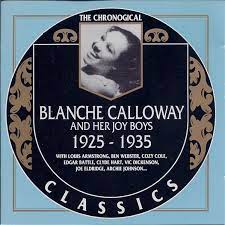
Battle played with Eddie Heywood Sr., and toured with the 101 Ranch Boys traveling show. During the 1920s he worked with Gene Coy, Andy Kirk, Blanche Calloway, Ira Coffey, and Willie Bryant. A move to New York City in the early Thirties saw him doing short stints with Benny Carter and Sam Wooding before joining George White’s ensemble on Broadway.
Over time, he began doing more work as a studio musician and arranger, writing charts for Cab Calloway, Paul Whiteman, Fats Waller, Earl Hines, Rudy Vallee, and Count Basie. During World War II, Edgar held a position as an electrician in a shipyard, while simultaneously running a big band with Shirley Clay.
In the 1950s, he founded Cosmopolitan Records and continued to play in big bands part-time through the 1960s. Among his numerous jazz compositions are the pieces Topsy, co-composed with Eddie Durham and Doggin’ Around with Herschel Evans.
Trumpeter, trombonist, saxophonist and pianist Edgar “Puddinghead” Battle, who was also a composer and arranger, transitioned in New York City on February 6, 1977, at the age of 69.

More Posts: bandleader,history,instrumental,jazz,music,piano,saxophone,trombone,trumpet
Daily Dose Of Jazz…
Graham Burbridge was born on October 1, 1933 in Stepney, London, England. He started drumming about the age of six, playing things like British Grenadiers with Boy Scouts Bands. It was only after the war when he was around twelve that he found jazz and progressed from Spike Jones through Spanier, Bunk Johnson to Lennie Tristano. It was a fairly rapid musical education that sat him on the modern side of the fence in his genre choice.
Graham played drums in the RAF with a Military Band, but also managed to get into the dance band. Back in civilian life in 1954 he worked a daytime job and played in a trio in the evening with Pete Elderfield and Maurice Hinson. His early interests in jazz led him to all the clubs, sitting in whenever he could. One night in Humph’s he was invited to play with the Sandy Brown Band and the next day was asked to join the band full time, and his professional career took off. He played with Brown until Sandy retired.
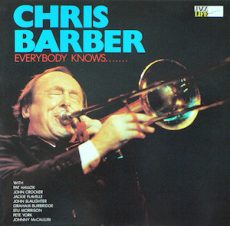
Joining the Chris Barber Band in 1957 was fortuitous, as the relationship lasted nearly two decades. Off stage Burbridge’s interests ran towards new and antique guns, and building model aircraft, something that had been a part of his life for a long time. His interest in guns was a new endeavor but also helped to re-energize and replace the nervous energy used on stage.
Drummer Graham Burbridge transitioned in 2003.
More Posts: bandleader,history,instrumental,jazz,music,piano

JOHNNY O’NEAL TRIO
BIRTHDAY CELEBRATION!!!
Sets At
More Posts: adventure,album,club,festival,genius,jazz,museum,music,piano,preserving,restaurant,travel