


Daily Dose Of Jazz…
Don Elliott was born on October 21, 1926 in Somerville, New Jersey. He played mellophone in his high school band and played trumpet for an army band. After study at the University of Miami he added vibraphone to his arsenal of instruments. He recorded with Terry Gibbs and Buddy Rich before forming his own band.
From 1953 to 1960 he won the Down Beat readers poll several times for “miscellaneous instrument-mellophone.” Known as the “Human Instrument”, Elliott additionally performed jazz as a vocalist, trombonist, flugelhornist and percussionist. He pioneered the art of multi-track recording, composed over 5000 jingles with a countless number being prize-winning advertising jingles, prepared film scores, recorded over 60 albums and built a thriving production company.
Don scored several Broadway productions, such as The Beast In Me and A Thunder Carnival, the latter of which he performed with the Don Elliott Quartet, provided one of the voices for the novelty jazz duo the Nutty Squirrels, and lent his vocal talents to such motion picture soundtracks as The Getaway, $ (Dollars), The Hot Rock and The Happy Hooker.
His album Calypso Jazz is considered by some jazz enthusiasts to be one of the definitive calypso jazz albums. He worked with Paul Desmond, Bill Taylor, Billy Eckstine, Bill Evans, Urbie Green, Michel Legrand, George Shearing and Mundell Lowe among others over his career. Multi-instrumentalist, vocalist, publisher and producer Don Elliott, who was a longtime associate of Quincy Jones, passed away of cancer in Weston, Connecticut on July 5, 1984.

More Posts: flugelhorn,mellophone,percussion,trombone,trumpet,vibraphone,vocal
Daily Dose Of Jazz…
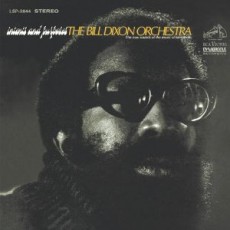
Bill Dixon was born on October 5, 1925 in Nantucket, Massachusetts and his family later moved to Harlem, New York City when he was about 7. It wasn’t until some twenty years later that he became interested in music and trumpet began his five-year studies at the Hartnette Conservatory of Music in 1946. He studied painting at Boston University, the WPA Arts School and the Art Students League. During the early 1950s while employed at the United Nations, he founded the UN Jazz Society.
By the 1960’s Dixon established himself as a major force in the jazz avant-garde movement, organizing and producing the “October Revolution in Jazz”. This first free-jazz festival comprised four days of music and discussions at the Cellar Café in Manhattan with musicians such as Cecil Taylor and Sun Ra participating.
Bill would later found the Jazz Composers Guild, become a professor of music at Bennington College, establish their Black Music Division, and was one of four featured musicians in the Canadian documentary Imagine the Sound in 1981 with Cecil Taylor, Archie Shepp and Paul Bley.
Dixon recorded relatively little over the decade and a half beginning in the late Sixties but co-led a few sessions with Archie Shepp, appeared on Cecil Taylor’s “Conquistador!” and some solo trumpet recordings has emerged. His recording career as a leader and sideman would pick up in the 80s into the new millennium with his last album being issued posthumously in 2011. On June 16, 2010, Bill Dixon, who played trumpet, flugelhorn and piano died in his sleep at his home after suffering from an undisclosed illness.

More Posts: flugelhorn,piano,trumpet
Requisites
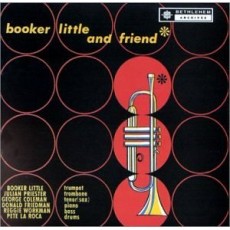
Booker Little and Friends: At the time of Booker Little’s death in 1963, he was just 23 years old, he was already far more than a promising trumpet talent. This reissue of his landmark fourth and final session as a leader, “Victory And Sorrow”, showcases his compositions with trumpet voiced against a backdrop of tenor and trombone. It demonstrates Little’s interest in a mix of complex moods and advanced harmonies, use of multiple keys to create simultaneous joy and mourning, and rhythmic shifts, flaring runs, and surprising intervals.
Personnel: Booker Little – trumpet, Julian Priester – trombone, George Coleman – tenor saxophone, Donald Friedman – piano, Reggie Workman – bass, Pete LaRoca – drums
Record Date: Bethlehem / August 1961 – September 1961
Songs: Victory And Sorrow, Forward Flight, Looking Ahead, If I Should Lose You, Calling Softly, Booker’s Blues, Matilde, plus two previously unreleased takes – Matilde (Alt. Take 4), Matilde (Alt. Take 7)

More Posts: collectible,trumpet
Requisites
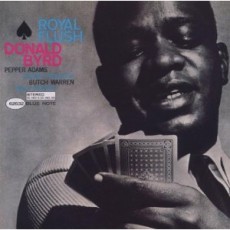
Royal Flush: This album was recorded by jazz trumpeter Donald Byrd and is notable for introducing pianist Herbie Hancock in his first Blue Note session.
Personnel: Donald Byrd – trumpet, Pepper Adams – baritone saxophone, Herbie Hancock – piano, Butch Warren – bass, Billy Higgins – drums
Record Date: Blue Note – 1961
Songs: Hush, I’m A Fool To Want You, Jorgie’s, Shangri-La, 6M’s, Requiem
More Posts: collectible,trumpet
Requisites
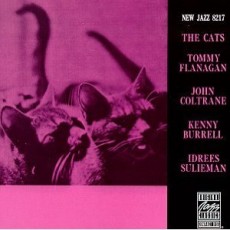
The Cats: In the Fifties, Tommy Flanagan was one of the most highly valued pianists in jazz. His appearance on record was primarily as a sideman, well appreciated by his fellow musicians but not recognized for their display of his superior abilities by a wider audience.
This album contains a Flanagan trio track “How Long Has This Been Going On?” surrounded with the choice, empathetic soloists as Coltrane, Burrell and Sulieman. It is still a delight to hear their interaction to this day with Tommy and the all-Detroit rhythm section of Doug Watkins and Louis Hayes. Flanagan penned all of the originals on this album.
Personnel: Tommy Flanagan – piano, John Coltrane – tenor saxophone, Idrees Sulieman – trumpet, Kenny Burrell – guitar, Doug Watkins – bass, Louis Hayes – drums
Record date: Hackensack, New Jersey – April 18, 1957
Supervised by: Bob Weinstock
Songs: Minor Mishap; How Long Has This Been Going On; Eclypso; Solacium; Tommy’s Tune
More Posts: bass,collectible,drums,guitar,piano,saxophone,trumpet