


Daily Dose Of Jazz…
Emmett Berry was born on July 23, 1915 in Macon, Georgia and began to study classical trumpet, but by 18 had switched to jazz and moved to New York City. Becoming a member of Fletcher Henderson’s band he later replaced Roy Eldridge as soloist.
In the 1940s he worked in Eldridge’s Little Jazz Trumpet Ensemble. He also played in Count Basie’s band. He is known as an accompanist for Billie Holiday, was in the photograph known as A Great Day in Harlem, and the special The Sound of Jazz.
He recorded 39 albums as a sideman with Buck Clayton, Johnny Hodges, Sammy Price, Jimmy Rushing, Cannonball Adderley, Count Basie, Sidney Bechet, Ruby Braff, Bobby Donaldson, Dizzy Gillespie, Edmond Hall, Coleman Hawkins, Fletcher Henderson, Claude Hopkins, Jo Jones, Red Prysock, Buddy Rich, Pee Wee Russell, Maxim Saury, Buddy Tate, Joe Williams, and Jimmy Witherspoon.
Trumpeter Emmett Berry, who also played flute, piano, vibraphone, congas, and drums, died in Cleveland, Ohio on June 22, 1993.

More Posts: history,instrumental,jazz,music,trumpet
Daily Dose Of Jazz…
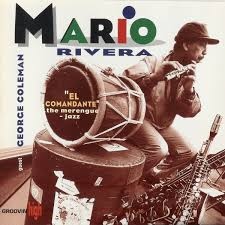
Mario Rivera was born on July 22, 1939 in Santo Domingo, Dominican Republic and learned to play during his childhood. Moving to New York City in 1961 at 22 he started working with singer Joe Valle as his accompanist. He spent two years with bandleader Tito Rodríguez. During his career he worked with Mongo Santamaria, Eddie Palmieri, and Machito.
From the 1970s to the 1990s he worked with Tito Puente. Both appeared in the films Calle 54 and The Mambo Kings. In 1988 he became a member of the United Nations Orchestra led by Dizzy Gillespie. He was also a member of the Afro-Cuban Jazz Band led by Chico O’Farrill. His only solo album, El Commandante, was released in 1996.
He recorded seventy-six albums as a sideman with Willie Colon, Cheo Feliciano, Dizzy Gillespie, Kip Hanrahan, Conrad Herwig, Giovanni Hidalgo, Chico O’Farrill, Eddie Palmieri, Tito Puente, Tito Rodriguez, Típica 73, Africando, Alfredo “Chocolate” Armenteros, Soledad Bravo, George Coleman, Junior Cook, Rafael Cortijo, Tito Gomez, Jerry Gonzalez, Juan Luis Guerra, La Lupe, Machito, Arturo O’Farrill, Pat Patrick, Bobby Paunetto, Daniel Ponce, Louie Ramirez, Paquito D’Rivera, Alfredo Rodriguez, Mongo Santamaria, Laba Sosseh, Juan Pablo Torres, Stanley Turrentine, Dave Valentin, Fernando Villalona, and Pete Yellin.
Saxophonist Mario Rivera, who also played trumpet, flute, piano, vibraphone, congas, and drums, died from cancer on August 10, 2007 in New York City.
More Posts: bandleader,congas,drums,flute,history,instrumental,jazz,music,piano,saxophone,trumpet,vibraphone
Daily Dose Of Jazz…
Pierre Cullaz was born July 21, 1935 in Paris, France and was the son of jazz writer Maurice Cullaz. He learned piano and cello in 1949, then moved to guitar as his main instrument.
In 1955 he started his professional career with Dexter Gordon, Johnny Griffin, and Hal Singer. Two years later he worked with Michel Hausser, Sarah Vaughan, Claude Bolling and Stéphane Grappelli.
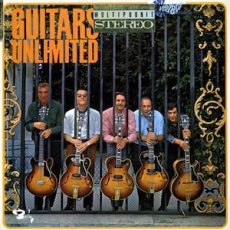
After serving in the military Pierre became a studio musician and worked with Martial Solal and Eddy Louiss. In 1965 he formed Guitars Unlimited with Victor Apicella, Raymond Gimenez, Francis Lemaguer, and Tony Rallo. The band recorded for Barclay.
Over the course of his career he collaborated with Elvin Jones, Andre Hodeir, Ivan Jullien, and Guy Lafitte, accompanied singer Claude Nougaro and was an arranger for Michel Legrand.
Besides being a musician, he taught guitar at the CIM in Paris and wrote the textbook Methode de Guitare. Guitarist and cellist Pierre Cullaz died on January 1, 2014.
More Posts: guitar,history,instrumental,jazz,music
Daily Dose Of Jazz…
Yve Evans was born in El Paso, Texas on July 20, 1950 into an Army family and was around music while growing up as her mother was a gospel singer. When she was three years old she made her first recording of The Lord’s Prayer acapella. In addition to the church music, she began singing and memorizing songs from the radio including all the cartoon favorites like the Mickey Mouse Club.
She learned to play the piano at the age of nine while rehabilitating from injuries she sustained after being struck by a car. The family followed her dad to Germany at age 12 and she began taking lessons from piano virtuoso Frau Anna Benkel, who introduced her to her love of classical piano. In 1964 Yve was hit by a truck and told she would never walk again or have children. The doctors were wrong and while bedridden at home she would still sit up to practive her piano lessons, take a correspondence course in behavioral psychology plus her regular homework.
Yve eventually walked again and began producing in addition to performing and pursuing the art of storytelling while living in Germany. She spent her summers from age13 to 16 playing in a big band, light opera productions and touring Germany with choral groups. At 16 after moving back to America a teacher attempted to discourage her to not rely on a career in music. She continued in the high school and University choral, mentored and encouraged by Carmen Dragon and Jester Harriston.
Evans cites Sarah Vaughn, Ernie Andrews, Joe Williams, Ella Fitzgerald, June Christie, Della Reese, Bobby Darin and Rosemary Clooney as her main influences. As a pianist, she has leaned over the shoulders of, swapped chord changes with and stolen licks from Dorothy Donegan, Bill Evans, Erroll Garner, George Gafney, Carmen McCrae and Shirley Horn.
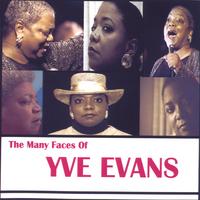
Vocalist and pianist Yve Evans, who has seven live recordings and is a Grammy nominated artist, continues to tell stories through her music, sing on the local jazz scene and perform around the world at festivals.
More Posts: bandleader,history,instrumental,jazz,music,vocal
Daily Dose Of Jazz…
Matthew Mitchell was born July 19, 1975 and grew up in Exton, Pennsylvania. He first played the piano aged six, and composed from the age of 10. He had lessons in jazz and theory at a university from the age of twelve and at this stage he was influenced by pianists Keith Jarrett and Herbie Hancock.
He attended Indiana University for three years and then completed a master’s degree at the Eastman School of Music in the late Nineties before settlling in New York City. After holding down several jobs in the city Matt decided to move to Philadelphia, Pennsylvania where he worked in a library at The University of the Arts for nine years before leaving when he had too many gigs to fit in.
2011 saw him leading the sextet Central Chain, the following year he introduced a new trio with bassist Chris Tordini and Dan Weiss on drums. During this decade Mitchell was also part of Berne’s Snakeoil band, and John Hollenbeck’s Large Ensemble and Claudia Quintet. He joined and recorded with saxophonist Rudresh Mahanthappa’s band.
Mitchell was awarded a Pew Fellowships in the Arts in 2012. He has released fifteen albums as a leader or co-leader and recorded as a sideman on thirty albums.
Pianist and composer Matt Mitchell, who is a faculty member at New York’s Center for Improvisational Music, continues to expand his jazz catalogue through performance, composition and recordings.
More Posts: composer,educator,history,instrumental,jazz,music,piano