

Daily Dose Of Jazz…
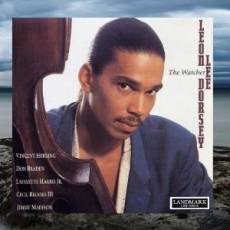
Leon Lee Dorsey was born on March 12, 1958 in Pittsburgh, Pennsylvania. The post bop genre bassist began as a child and matriculated through Oberlin College receiving two Bachelor of Music Degrees and the University of Wisconsin and the Manhattan School of Music receiving Maters degrees from both.
Dorsey’s chops for composing and arranging are witnessed on his 1995 debut album on the Landmark label titled The Watcher with Don Braden, Vincent Herring, Lafayette Harris Jr., Cecil Brooks III and Jimmy Madison followed by his 1999 release of Song of Songs that maintains a supreme sense of melody throughout the session.
He has performed and recorded with Lionel Hampton, Art Blakey, John Lewis, Cassandra Wilson, Freddie Hubbard, Dizzy Gillespie, Wynton Marsalis, Kenny Clarke, Jon Hendricks, Gloria Lynn, Harry “Sweets” Edison, has played with symphonies, orchestras and big bands of Duke Ellington, Benny Carter and Charlie Persip, with opera diva Marilyn Horne and with Frank Sinatra at Carnegie Hall.
Bassist Leon Dorsey completed his doctorate in Classical Double Bass under Ron Carter and is currently Assistant Professor of Jazz Performance at the University of Pittsburgh.
More Posts: bass
Daily Dose Of Jazz…
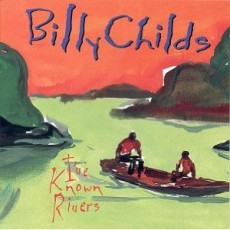
Billy Childs was born William Edward Childs on March 8, 1957 in Los Angeles, California and began piano lessons when he was six. By age 16 he started attending the Community School of the Performing Arts, a prestigious music program sponsored by the University of Southern California, in which he ultimately attended in 1975.
Playing professionally as a teenager, he made his recording debut in 1977 with the J. J. Johnson Quintet’s Yokohama Concert during a tour of Japan. He would gain significant attention during his six-year stint playing with trumpeter Freddie Hubbard’s group from 1978 to ’84.
His early playing influences were Herbie Hancock, Keith Emerson and Chick Corea and in his composing came by Paul Hindemith, Maurice Ravel and Igor Stravinsky. Adept in both the jazz and classical idioms, Childs develop his own voice with an original conception near the start of his career. His solo recording career began in 1988 with the release of Take for Example, This… the first of four critically Windham Hill Jazz label. He would go on to record two albums for Stretch/GRP and Shanachie.
In 2000 Childs arranged, orchestrated and conducted for Dianne Reeves’ project The Calling: Celebrating Sarah Vaughan that won a Grammy for Best Jazz Vocal. He has also arranged for Sting, Yo-Yo Ma, Chris Botti, Gladys Knight, Michael Bublé, David Foster, Phil Ramone and Claudia Acuna.
Billy’s 2005 “Lyric, Jazz-Chamber Music, Vol. 1”, a jazz chamber music ensemble recording, influenced by the Laura Nyro-Alice Coltrane collaboration, garnered three Grammy nominations. He has received a Guggenheim Fellowship, and Chamber music grant, and has been commissioned for more than a dozen jazz and classical compositions and arrangements.
Pianist Billy Childs has been nominated for seven Grammys, of which he has won six. He has fifteen albums to his leader roster with his latest album, The Winds Of Change, was released in 2024. He continues to make music on stage and in the studio.
More Posts: piano
Daily Dose Of Jazz…
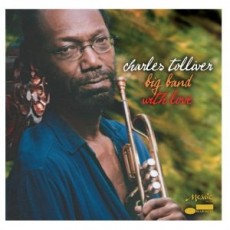
Charles Tolliver was born on March 6, 1942 in Jacksonville, Florida and while still a child received his first trumpet from his grandmother. He attended Howard University in the early Sixties as a pharmacy student, but when he decided to pursue music as a career he moved to New York City.
Coming to prominence in 1964, playing and recording on Jackie McLean’s Blue Note albums, seven years later he and Stanley Cowell founded Strata-East Records. The label was one of the pioneer jazz artist-owned and Tolliver released many albums and collaborations as a leader.
Following a long hiatus, he reemerged in the late 2000 decade, releasing two albums arranged for big band “With Love” that was nominated in 2007 for a Grammy award for Best Large Jazz Ensemble and “Emperor March: Live at the Blue Note” in 2009.
He has recorded with Herbie Hancock, Ron Carter, Paul Chambers, Gary Bartz, Cecil McBee, Jimmy Hopps, Alvin Queen, Jon Faddis, Charles McPherson, Reggie Workman, John Hicks, Billy Harper, Robert Glasper, Max roach, Horace Silver and McCoy Tyner to name a few.
Hard bop, post bop, modern big band, trumpeter Charles Tolliver continues to be a force in the jazz idiom.
More Posts: trumpet
Daily Dose Of Jazz…
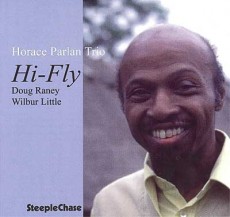
Wilbur Little was born on March 5, 1928 in Parmele, North Carolina and originally played piano but switched to bass after his military service. Steeped in the hard bop and post bop idioms, he moved to Washington, D.C. in 1949 and played with Sir Charles Thompson, Leo Parker, Margie Day and others. Little was also a member of a trio that supporting visiting jazz musicians like Miles Davis and John Coltrane.
Little’s wider recognition came when he joined J.J. Johnson’s trio from 1955 to 1958 and led to copious freelancing as a sideman with the Tommy Flanagan Trio, Sonny Stitt, Rahsaan Roland Kirk, Kenny Burrell, And Clark Terry.
Never leading his own sessions, Wilbur recorded albums with Elvin Jones, Archie Shepp, Bobby Jaspar, Tommy Flanagan, Randy Weston, Dave McKenna, Horace Parlan and Al Haig. In his latter years he worked with Charles Tolliver, Clifford Jordan and Barry Harris.
By 1976 he was in Japan with Duke Jordan, then moved to the Netherlands in 1977. He lived there for the rest of his life until his passing on May 4, 1987 in Amsterdam, Netherlands.
More Posts: bass
Daily Dose Of Jazz…
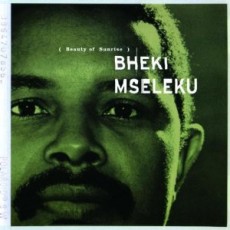
Bheki Mseleku was born Bhekumuzi Hyacinth Mseleku on March 3, 1955 in South Africa. Entirely self-taught, though his father was a musician and teacher, his religious belief denied musical access to his children. Growing up in Apartheid he was subjected to restricted healthcare and lost the upper joints of two fingers in a go-karting accident.
His musical career began in Johannesburg in 1975 as an electric organ player for the R&B band Spirits Rejoice. After performing at the Newport Jazz Festival in 1977, Mseleku settled in Botswana for a time, then moved to London in the late 1970s. He attempted to settle into the jazz scene in Stockholm from 1980 to 1983, but returned to London. It was not until 1987 that Bheki made his debut at Ronnie Scott’s Jazz Club, playing piano unaccompanied by other musicians, with a saxophone in his lap that a wider audience became familiar.
With the release and notoriety of his 1991 debut album Celebration, and subsequent nomination for a Mercury Music Prize that Verve Records signed him for several albums. The first of these featured Joe Henderson, Abbey Lincoln, and Elvin Jones.
Twelve years and five albums later Bheki recorded his final session “Home at Last” in 2003, having spent most of his last years in South Africa. He never found an outlet for his skills and established a new band in London that was very well received by fans. Over the course of his life Bheki Mseleku lived with diabetes and on September 9, 2008 the pianist, saxophonist, guitarist, composer and arranger passed away in his London flat at age 53.